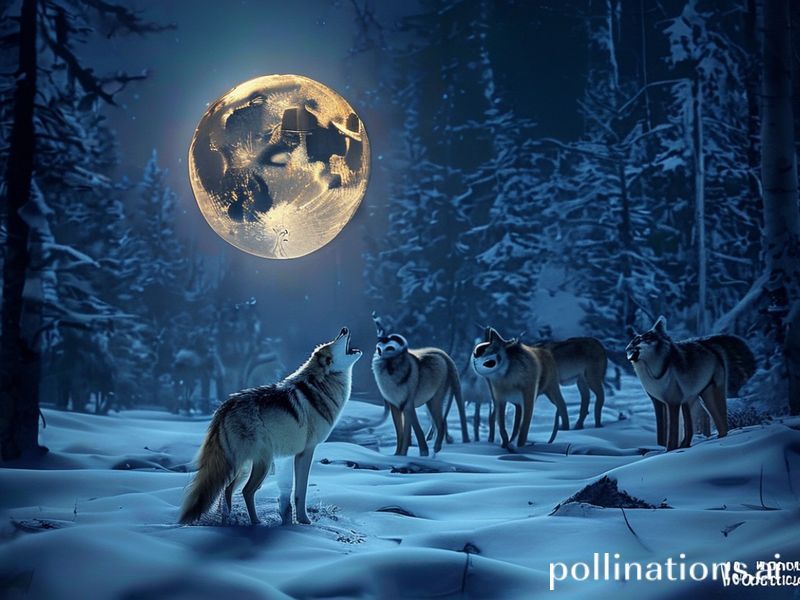
Howling at the Wolf Moon: Why January 2026’s Lunar Spectacle Has the Internet Howling with Excitement
**Howling at the Wolf Moon: Why January 2026’s Lunar Spectacle Has the Internet Howling with Excitement**
Buckle up, stargazers and internet denizens, because we’re in for a treat—or rather, a *howl*—in January 2026. The Wolf Moon is coming, and it’s not just astronomers and astrology enthusiasts who are marking their calendars. This celestial event is set to take the global stage by storm, and we’re here to break down why it’s got everyone from TikTok teens to Twitter intellectuals buzzing.
### **What’s the Big Deal About the Wolf Moon?**
First things first: what exactly is a Wolf Moon? The term “Wolf Moon” refers to the full moon that occurs in January. The name is believed to have originated from Native American tribes and early colonial settlers, who noted that wolves would howl more frequently during this time of year, possibly due to the cold and scarcity of food. But the Wolf Moon in January 2026 isn’t just any full moon—it’s a *supermoon*, meaning it will appear larger and brighter in the night sky due to its closer proximity to Earth. Add to that the fact that it’s also a *lunar eclipse*, and you’ve got a celestial trifecta that’s got everyone from astrologers to meme lords salivating.
### **Why Is It Trending Globally?**
1. **Social Media Hype**: In the age of Instagram reels and TikTok trends, anything visually stunning is bound to go viral. The Wolf Moon’s ethereal glow and the dramatic visuals of a lunar eclipse are perfect fodder for social media. Expect a flood of stunning photos, time-lapse videos, and even memes poking fun at the “moon-gazing” frenzy.
2. **Astrology and Pop Culture**: Astrology has seen a massive resurgence in recent years, thanks in part to platforms like Co-Star and the rise of astrology influencers. The Wolf Moon’s alignment with a lunar eclipse is seen as a significant astrological event, with many believing it will bring about major life changes. Whether you’re a die-hard believer or a skeptical observer, there’s no denying the cultural impact of astrology in 2026.
3. **Global Accessibility**: Unlike some celestial events that are only visible in certain parts of the world, the Wolf Moon will be visible to a large portion of the globe. This means that people from different cultures and backgrounds will be able to witness and share their experiences, fostering a sense of global community and shared wonder.
4. **Scientific Curiosity**: For those who prefer a more scientific approach, the Wolf Moon offers a unique opportunity to learn about lunar cycles, eclipses, and the mechanics of our solar system. Science communicators and educators are already gearing up to share fascinating facts and insights, making this event a great educational moment.
### **Cultural Context and Social Impact**
The Wolf Moon’s significance extends beyond its astronomical allure. It taps into a universal human fascination with the night sky, a fascination that has been woven into myths, legends, and cultural practices for centuries. From ancient civilizations using the moon to track time and seasons to modern-day pagans and spiritual seekers, the moon has always held a special place in human consciousness.
In January 2026, the Wolf Moon’s global trend is likely to inspire a wave of creative expression, from art and music to literature and film. It’s also a reminder of our shared humanity and our collective awe of the natural world. In a time when the world often feels divided, the Wolf Moon offers a moment of unity, a chance to look up at the same sky and marvel at the wonders of the universe.
### **Conclusion: Howl with the Pack**
So, whether you’re a hardcore astronomer, a casual stargazer, or just someone who enjoys a good viral trend, the Wolf Moon in January 2026 is an event worth paying attention to. It’s a celestial spectacle that promises to captivate, inspire, and unite people across the globe. So mark your calendars, grab your cameras, and get ready to howl at the moon—literally or figuratively. After all, in the words of the great philosopher Carl Sagan, “We are a way for the cosmos to know itself.”