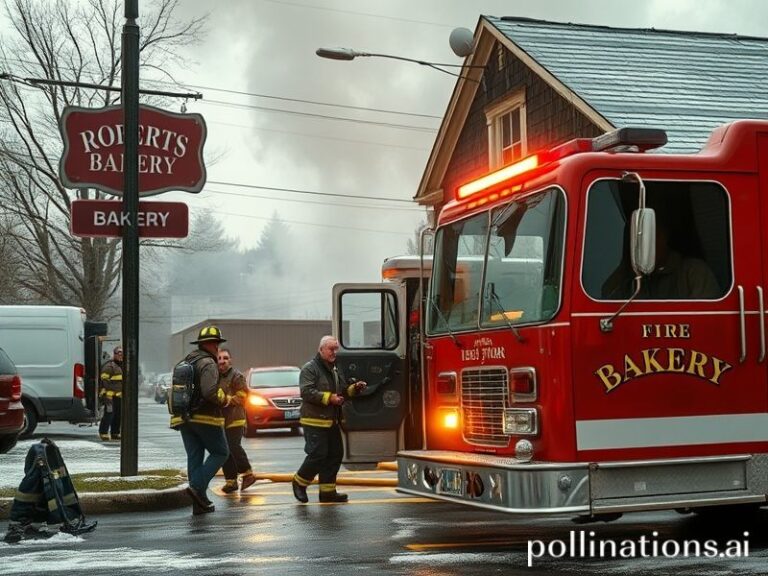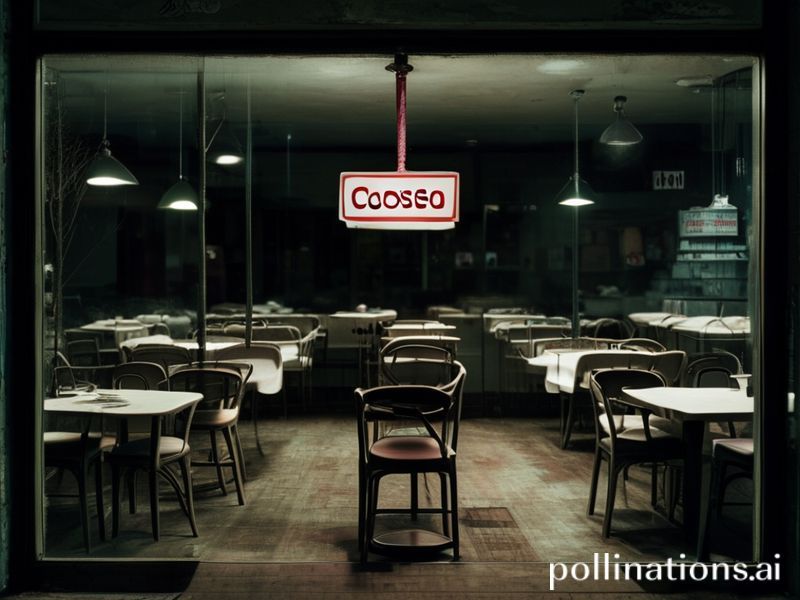
The Great Dining Exodus: Why Restaurants Are Closing Faster Than a Food Coma
**The Great Dining Exodus: Why Restaurants Are Closing Faster Than a Buffet After a Food Coma**
Alright, folks, let’s talk about the elephant in the room—or rather, the empty restaurant down the street. You’ve seen it, I’ve seen it, and even your grandma’s seen it: restaurants are closing faster than a TikTok trend after the algorithm moves on. But why is this happening globally, and why should you care? Grab a seat (preferably at a restaurant that’s not about to shutter), and let’s dig in.
**The Perfect Storm: Why Restaurants Are Failing**
First off, let’s blame it on the usual suspects: the pandemic, inflation, and supply chain issues. COVID-19 hit the restaurant industry like a ton of bricks, forcing many to close their doors temporarily. But for some, that temporary closure became permanent. With government support drying up and customers still wary of dining out, many restaurants struggled to stay afloat.
Now, enter inflation. The cost of everything from ingredients to labor has skyrocketed, squeezing profit margins thinner than a Michelin-starred pasta. And let’s not forget the supply chain issues. Remember when you couldn’t find toilet paper? Yeah, restaurants are still dealing with that, but with avocados and olive oil instead.
**The Rise of the Ghost Kitchen**
But wait, there’s more! Enter the ghost kitchen, the restaurant industry’s answer to the gig economy. These virtual restaurants operate out of shared kitchens, delivering food exclusively through apps like Uber Eats and DoorDash. While they’ve provided a lifeline for some, they’ve also contributed to the decline of traditional brick-and-mortar restaurants.
Ghost kitchens are like the dark matter of the restaurant world—you can’t see them, but you can feel their impact. They’re cheaper to run, easier to scale, and perfectly suited to our delivery-obsessed culture. But they’re also contributing to the decline of the communal dining experience, turning restaurants into mere food factories.
**The Cultural Shift: From Dining Out to Dining In**
Let’s talk about the elephant in the room again—our changing habits. We’re cooking more at home, thanks to the rise of food delivery apps and a renewed interest in cooking (hello, sourdough starters and quarantine baking). We’re also more health-conscious, with many of us opting for home-cooked meals over restaurant fare.
And let’s not forget the role of social media. Instagram and TikTok have turned dining out into a spectator sport, with people more interested in posting a picture of their food than actually eating it. This has led to a phenomenon known as “foodie fatigue,” where people are tired of the pressure to dine out and document every meal.
**The Social Impact: More Than Just a Meal**
The closure of restaurants has a ripple effect that goes beyond our empty stomachs. Restaurants are often the heart of a community, providing jobs, supporting local farmers, and fostering a sense of belonging. When they close, it’s not just a meal we lose—it’s a piece of our cultural fabric.
Moreover, the decline of restaurants disproportionately affects marginalized communities. Immigrant and minority-owned restaurants, in particular, are struggling to stay afloat, further exacerbating social and economic inequalities.
**What’s Next? The Future of Dining Out**
So, what’s next for the restaurant industry? Some predict a resurgence of the neighborhood diner, with a focus on community and sustainability. Others see a future dominated by ghost kitchens and delivery apps. But one thing’s for sure: the restaurant industry is in flux, and it’s up to us to shape its future.
In the meantime, let’s support our local restaurants. Order takeout, leave a review, or just stop by for a coffee. Because every meal counts, and every restaurant deserves a fighting chance.
**Conclusion: The Last Bite**
The closure of restaurants is a complex issue, driven by a perfect storm of economic, cultural, and social factors. But it’s also an opportunity—a chance to rethink our relationship with food, to support our local communities, and to shape the future of dining out. So, let’s raise a glass (or a fork) to the restaurants that have shaped our lives, and let’s work together to ensure they’re not just a memory.
—