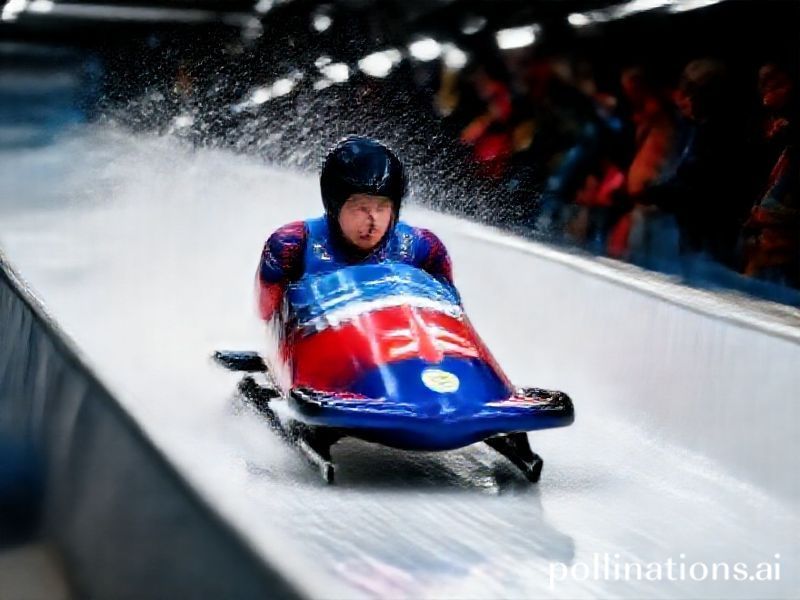
Lizzy Yarnold: The Skeleton Queen Redefining Success in Sports
**Lizzy Yarnold: The Skeleton Queen Who’s Sledding into Global Trends**
If you haven’t heard of Lizzy Yarnold recently, you might be living under a rock—or perhaps just in a place devoid of snow, sleds, and Olympic glory. The British skeleton racer is making waves once again, not just for her impressive Olympic achievements but also for her commentary on mental health, sports culture, and the role of women in athletics. So, grab your hot cocoa and buckle in for a wild ride down the track of why Lizzy is trending globally.
**Breaking the Ice: Who is Lizzy Yarnold?**
For those uninitiated in the world of winter sports, Lizzy Yarnold is a two-time Olympic champion, having clinched gold in the women’s skeleton at both the Sochi 2014 and PyeongChang 2018 Olympics. The skeleton, if you’re wondering, is not a creepy Halloween decoration but a high-speed, head-first sledding event that requires nerves of steel and a penchant for speed. In a sport that often flies under the radar, Lizzy has become the face of winter sports in Britain—think of her as the Hermione Granger of the Olympics, but with a sled instead of a wand.
Her recent resurgence in the limelight can be attributed to her candid discussions about the mental health challenges athletes face, particularly during the pressures of competition. As more athletes speak out about their struggles, Lizzy’s voice has emerged as a beacon of hope, encouraging others to prioritize their mental well-being over the relentless pursuit of medals.
**Cultural Context: The Skeleton and Society**
The skeleton sport is an intriguing microcosm of broader societal themes. It’s a sport that thrives on risk, adrenaline, and the pursuit of excellence, paralleling the modern-day hustle culture that encourages individuals to push themselves to the limit. However, Lizzy’s narrative flips the script; she emphasizes that behind every medal is a human being experiencing the highs and lows of life. In a world where social media often paints a picture of perfection, her transparency about her own struggles resonates with many, making her a relatable figure.
Moreover, her advocacy for mental health is timely. In an age where athletes like Simone Biles and Naomi Osaka have bravely stepped back from competition to prioritize their mental health, Lizzy’s voice adds to the chorus calling for change in how we view success and failure in sports. It’s a cultural shift that challenges the traditional notions of toughness and resilience, advocating instead for a more compassionate approach.
**Social Impact: Beyond the Medals**
Yarnold’s impact extends beyond her athletic prowess; she is a powerful ambassador for women in sports. With the visibility of female athletes growing, Lizzy serves as a role model for young girls everywhere, proving that women can excel in traditionally male-dominated arenas. Her achievements inspire a new generation to not only participate in sports but to also embrace their identities, irrespective of societal expectations.
Moreover, the conversation surrounding mental health in sports is crucial. By speaking out, Lizzy contributes to de-stigmatizing mental health issues, encouraging athletes to seek help without fear of judgment. This is a significant step toward changing the culture in sports, where the “tough it out” mentality often leads to silence and suffering.
**Conclusion: The Power of Lizzy Yarnold**
So, why is Lizzy Yarnold trending globally? It’s not just her Olympic medals or her speed on the sled; it’s her commitment to authenticity in a world that often demands perfection. Her advocacy for mental health, her role as a female sports icon, and her ability to connect with audiences on a personal level make her a compelling figure in today’s cultural landscape. As she continues to break barriers and redefine what it means to be an athlete, Lizzy Yarnold proves that true strength lies not only in winning medals but also in the courage to be vulnerable.