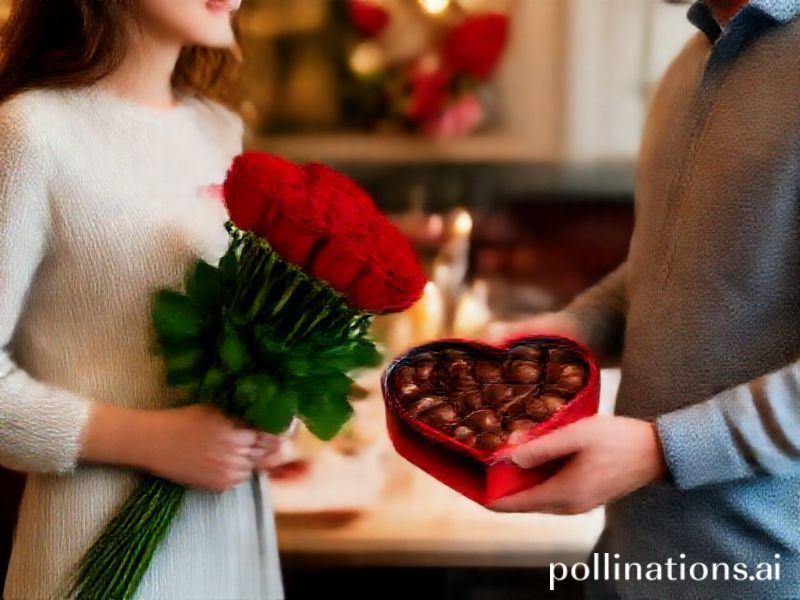
Love is Trending: Why Valentine’s Day Has Taken Over the World (And the Internet)
**💘 Love is in the Air, and So Are the Meme Lords: The Global Valentine’s Day Takeover 💘**
Ah, Valentine’s Day—the one day of the year when love is literally in the air, and so are the prices of roses, chocolates, and fancy dinners. But why is this romantic holiday trending globally, and what makes it such a cultural juggernaut? Let’s dive into the heart (pun intended) of the matter.
### **A Brief History of Valentine’s Day: From Ancient Rome to TikTok**
Valentine’s Day has its roots in ancient Roman festivals like Lupercalia, a fertility celebration that involved, well, let’s just say it wasn’t as PG as Hallmark cards. Fast forward to the Middle Ages, and the holiday morphed into a day of courtly love, thanks to poets like Geoffrey Chaucer. By the 19th century, it became the commercialized, lovey-dovey extravaganza we know today—thanks, Victorian era!
Now, in the age of social media, Valentine’s Day has evolved into a global phenomenon, complete with memes, viral challenges, and enough romantic comedies to make even the most cynical among us swoon. But why is it trending now more than ever?
### **The Social Media Effect: Love in the Digital Age**
Thanks to platforms like Instagram, TikTok, and Twitter, Valentine’s Day has become a 24/7 spectacle. Couples (and even singles) are sharing their love stories, posting #CoupleGoals content, and participating in viral trends like “Galentine’s Day” (a celebration of female friendships, thanks to *Parks and Recreation*). The internet has turned Valentine’s Day into a global lovefest, where everyone—whether they’re in a relationship or not—can join in on the fun.
And let’s not forget the memes. From “Single and Ready to Mingle” to “Love is Blind” reactions, the internet has turned Valentine’s Day into a meme goldmine. It’s a day when even the most sarcastic among us can’t resist sharing a cheesy love quote or a funny breakup meme.
### **Cultural Context: Love, Globally Speaking**
Valentine’s Day isn’t just an American or European thing—it’s a global celebration. In Japan, women traditionally give chocolates to men on Valentine’s Day, while in Brazil, they celebrate “Dia dos Namorados” (Lover’s Day) on June 12th. In the Philippines, mass weddings are a popular Valentine’s Day tradition, with hundreds of couples tying the knot in a single ceremony. And in South Korea, there’s a whole month of love celebrations, including White Day (March 14th) and Black Day (April 14th) for singles to commiserate.
The holiday has also become a way for brands to tap into the global market. From limited-edition Valentine’s Day merchandise to themed social media campaigns, companies are cashing in on the love bug. And let’s be real—who doesn’t love a good themed Starbucks cup?
### **The Social Impact: Love, Hate, and Everything in Between**
Valentine’s Day isn’t just about love—it’s about connection. In a world that often feels divided, it’s a day when people come together to celebrate the bonds they share, whether romantic, platonic, or familial. It’s a reminder that love is universal, and that everyone deserves to feel special.
But let’s not ignore the flip side. For some, Valentine’s Day can be a painful reminder of loneliness or heartbreak. That’s why movements like “Galentine’s Day” and “Palentine’s Day” (celebrating friendships) have gained traction. It’s a way to redefine the holiday and make it inclusive for everyone.
### **Why It Matters: The Power of Love (and Memes)**
Valentine’s Day matters because it’s a celebration of human connection. In a world that’s increasingly digital, it’s a reminder that love is still the most powerful force on the planet. And let’s be honest—it’s also a great excuse to eat a lot of chocolate and watch rom-coms.
So whether you’re celebrating with a significant other, your besties, or your pet, remember that love comes in many forms. And if all else fails, there’s always the internet to make you laugh (or cry) about the absurdity of it all.
Happy Valentine’s Day, internet. Now go hug someone (or at least send them a meme).