Bosnia vs Austria: A Balkan Derby for the Age of Collapsing Certainties
By L. V. Raković, Senior Continental Misanthrope
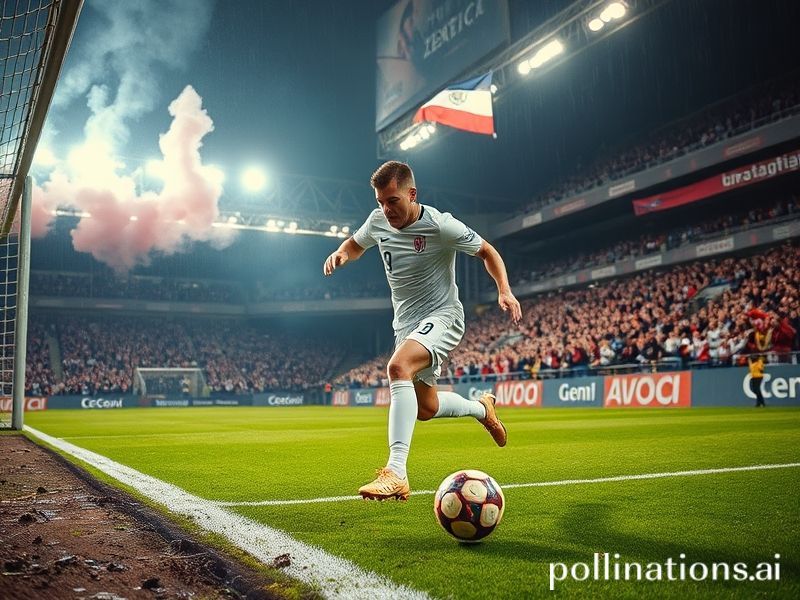
VIENNA—When the draw spat out “Bosnia-Herzegovina vs Austria” for the Nations League fixture this week, the world’s attention pivoted—briefly—from whichever apocalypse is currently trending to a collision of two nations nobody has confused since 1914. On paper it’s just football; in practice it’s a geopolitical stress test wrapped in polyester and sponsored by a betting company whose name none of us can pronounce.
Global Context, or Why Your Portfolio Manager Cares
Both squads are managed by men who grew up under sanctions: Bosnia’s Savo Milošević, who remembers when his country couldn’t import footballs, and Austria’s Ralf Rangnick, who remembers when his couldn’t export dignity at major tournaments. The match therefore doubles as a referendum on post-sanction soft power. Qatar’s beIN Sports has paid handsomely for rights, because nothing says “sportswashing” like broadcasting Balkan angst in 4K HDR. Meanwhile, Chinese investors circle both federations like polite vultures, offering stadium Wi-Fi in exchange for vague Belt-and-Road memoranda. If the game ends 0-0, expect a Shenzhen firm to trademark the concept.
The Players: Human Capital or Collateral?
Bosnia’s squad features three Bundesliga starters, two Premier League benchwarmers, and a striker whose agent is “exploring options in MLS”—a phrase that translates to “my client is one groin strain away from Cincinnati.” Austria counters with the sort of tactical pressing that made Rangnick the godfather of gegenpressing and, more importantly, of transferable LinkedIn endorsements. UEFA’s new “homegrown” rules mean half the Austrian roster qualifies as Viennese despite being born in Graz, which is like claiming you’re from Brooklyn because you once drank a flat white in Bushwick.
The Fans: Nationalism Lite, Now With 30% Less Tear Gas
Bosnian supporters will arrive via charter buses organized by diaspora WhatsApp groups that somehow outrank the UN in logistical efficiency. Austrian ultras, meanwhile, have promised a choreographed tifo depicting Mozart flipping the bird—because nothing says “multicultural harmony” like an 18th-century composer reimagined as an edgelord. Security services from five countries have been placed on “moderate anxiety” alert, which in EU jargon means free coffee but no overtime.
Worldwide Implications: From Sarajevo to Supply Chains
Should Bosnia win, expect a 0.03% uptick in national GDP based on increased beer sales alone—macroeconomists call this “the Euphoria Multiplier,” bartenders call it Tuesday. An Austrian victory will be spun by Vienna’s press as proof that Mitteleuropa can still punch above its demographic weight, conveniently ignoring that half the squad learned to punch in someone else’s weight class (see: Bundesliga). Either outcome will be weaponized by whichever think tank needs a metaphor that week; the Atlantic Council already has a draft paper titled “High Pressing as Hybrid Warfare.”
The Broader Significance: A Mirror for Our Own Mediocrity
In the end, Bosnia vs Austria is less about who advances to League A and more about what happens when two mid-sized nations realize they are starring in the same tragicomedy: aging populations, brain drains, and stadiums named after energy drinks. The match will be streamed in 190 countries, pirated in at least 30, and forgotten in 31. Yet somewhere in a basement in Tuzla and a wine bar in Graz, teenagers will watch the same pixelated stream, place the same bet on over 2.5 goals, and share the same existential dread that their parents’ wars were just pre-season friendlies for whatever comes next.
Final Whistle Conclusion
By the 94th minute, the score will matter only to statisticians and the poor souls compiling FIFA rankings. The rest of us will have moved on to the next outrage, the next scandal, the next cryptocurrency named after a dog. Bosnia and Austria will shake hands, swap shirts manufactured in Cambodia, and retreat to their respective corners of a continent that still can’t decide if it’s a union or merely a shared delusion. The real winner? Whoever sells the highlight reels to a streaming platform desperate for “authentic European drama.” The real loser? Anyone who still believes the final score can fix anything.