KABUL—So there I was, sipping tea that tasted faintly of diesel and regret, watching two very different flags flap in the same wind. On one side: Afghanistan, a geopolitical piñata that’s been whacked by every empire since Alexander the Great’s travel blog. On the other: Hong Kong, a neon-lit tax receipt with its own anthem and a landlord who answers to Beijing. One country can’t hold an election without half the candidates disappearing; the other just banned a protest song by reclassifying it as a national-security threat. Yet here we are, pretending this is a fair fight.
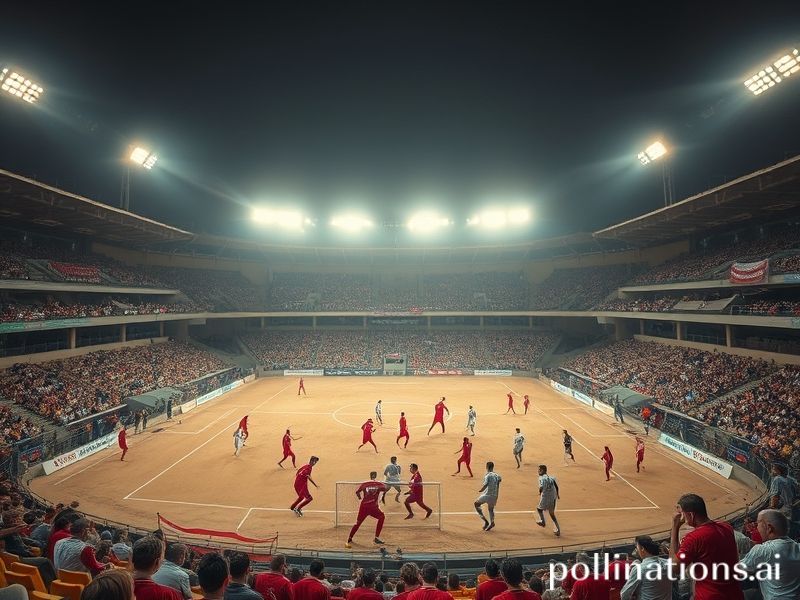
The pitch is nominally cricket—T20, three hours, more sixes than a bad divorce settlement—but the real game is optics. Afghanistan, freshly re-decorated with Taliban wall-to-wall carpeting, needs a win to prove it can still field eleven men whose passports haven’t been revoked. Hong Kong, meanwhile, is desperate to remind the planet it still exists outside Zoom press conferences on academic freedom. Both teams are technically “neutral venue” exiles, which is diplomacy-speak for “we couldn’t guarantee your limbs back home.” Abu Dhabi is hosting, presumably because the UAE enjoys collecting other people’s moral ambiguity the way normal people collect fridge magnets.
The global audience tunes in for the same reason we rubberneck at multicar pile-ups: a fascination with how spectacularly things can go sideways. Afghanistan’s squad features players who learned off-spin in Pakistani refugee camps and PTSD management on the job. Hong Kong’s lineup is stocked with accountants who bowl off-breaks between filing GST returns. One side fields a captain who once had to choose between a national contract and asylum; the other fields a captain who chooses between Uber Eats and Deliveroo. Same coin, opposite sides, currency devaluation pending.
Bookmakers, ever the moral barometers, have installed Afghanistan as favorites. The Taliban have, after all, banned everything except winning and long beards. But the odds overlook Hong Kong’s secret weapon: bureaucratic spite. The city’s cricket association was recently told its funding would be reviewed “in the context of national security,” so every run feels like passive-aggressive resistance. Imagine if the Boston Tea Party had been staged with yorkers instead of tea chests and you get the vibe.
Viewed from a satellite—one of the few things still flying over both jurisdictions—the match is a Rorschach test for the twenty-first century. Washington laments that Kabul’s boys are playing at all instead of attending gender-studies seminars. Beijing grumbles that the Hong Kong XI is using the wrong anthem, the wrong flag, and probably the wrong type of grass. Brussels files a strongly worded statement about human rights and then goes back to buying cheap lithium. The United Nations, ever punctual, expresses “deep concern” sometime around the 19th over.
For the rest of us, the broadcast is a masterclass in cognitive dissonance. Cheer for Afghanistan and you’re inadvertently endorsing medieval cosplay governance. Root for Hong Kong and you’re siding with a team whose parent government arrests people for clapping too loudly. Neutral spectators default to the only safe position left: praying nobody gets shot, literally or reputationally. The stadium DJ tries to keep spirits up with a playlist stuck in 2012, which is coincidentally the last year both polities could plausibly claim a future.
When the final ball is bowled—Afghanistan edges it by nine runs, because the universe likes tidy metaphors—both teams perform the now-obligatory joint photo, arms around shoulders like college freshmen who hate their roommates. Fireworks go off, presumably because somebody misread the memo about controlled explosions. And somewhere in the VIP box, a minor sheikh updates his LinkedIn: “Successfully brokered soft-power exchange between two entities no longer on speaking terms with themselves.”
Back home, Afghans celebrate by honking car horns until the morality police confiscate the batteries. Hong Kongers toast the effort with bubble tea, then check whether their group chat has been wiretapped. The rest of the planet scrolls to the next disaster, already half-forgetting who won. In the record books it’ll go down as a simple cricket fixture. In the footnotes, historians will note it was also the moment two collapsing timelines shared a pitch and discovered the only thing flatter than the wicket was our collective hope.