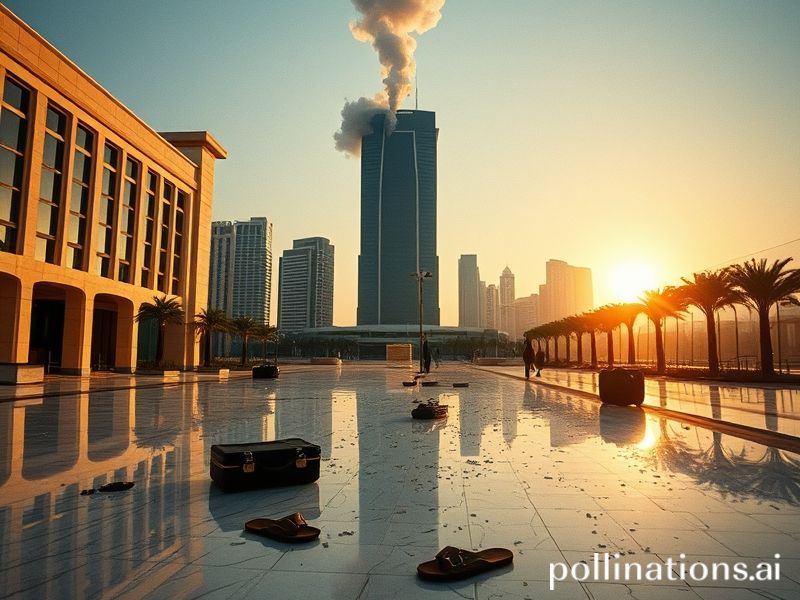
DOHA—This week’s bombing outside the National Museum of Qatar felt almost quaint: only three dead, a tidy crater, and—because the explosion happened at 3 a.m.—no influencers live-streaming their own immolation for “content.” In any other decade, the detonation of a car bomb in the Gulf’s squeaky-clean showcase would have merited wall-to-wall coverage. Today it merely trended at #7 on X, two slots below a viral clip of a cat riding a Roomba. Progress, naturally, has its priorities.
The device—roughly 20 kg of homemade fun, wired to a 1998 Land Cruiser that had already survived three previous owners and two export bans—went off within earshot of the Al-Thani family’s priceless collection of Islamic art. Irony bonus: the exhibit’s current centerpiece is a 13th-century Syrian incense burner shaped like a grenade. Curators say the irony will not be lost on visitors once the shrapnel is scraped off the gift-shop fridge magnets.
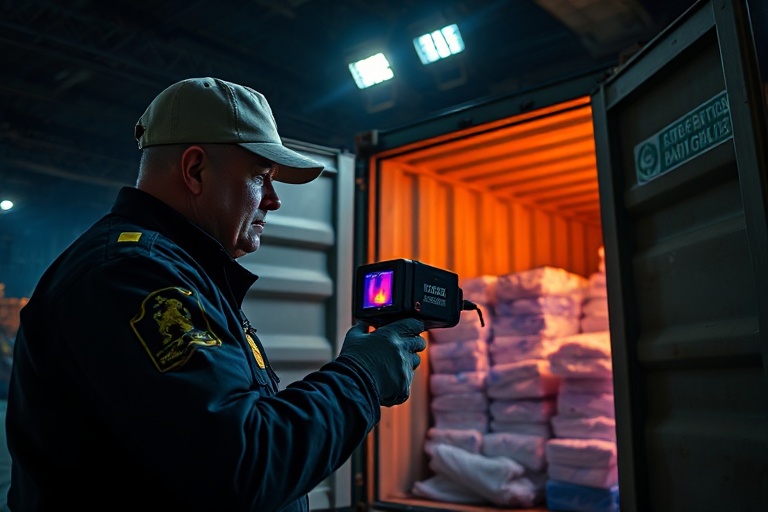
Within minutes, the Qatari interior ministry deployed the sort of emergency response that only petro-states can afford: drones with thermal imaging, a German bomb robot named “Fritz,” and a police corporal who speaks unaccented Surrey English for CNN’s convenience. By dawn, the emir had tweeted a frowning selfie with the caption “We will not allow terror to dictate our narrative.” The tweet garnered a million likes, 400 prayer-hands emojis, and exactly six replies asking where to buy his designer bisht.
International reaction arrived on autopilot. Washington condemned “in the strongest possible terms,” which is Beltway argot for “send talking points, not Marines.” The EU offered “enhanced cooperation on counter-radicalization,” code for another PowerPoint-heavy workshop in Brussels with lukewarm samosas. Moscow blamed “external forces trying to destabilize a sovereign state,” which is ironic coming from a country currently destabilizing several sovereign states at wholesale prices. Beijing issued a terse “hope for stability,” then quietly dispatched a team to price the crater for Belt-and-Road real estate.
Why Doha, and why now? Analysts—those well-fed creatures of think-tank symposia—cite three motives. First: the imminent Israel-Hamas cease-fire talks, which the Qataris host like reluctant wedding planners for a particularly violent couple. Second: next year’s FIFA Club World Cup, because nothing says “sportswashing” like exploding your own sidewalks. Third, and least mentioned on air: the global helium shortage. Qatar supplies 30 % of the world’s helium; a jittery market already has birthday-balloon vendors hoarding tanks like doomsday preppers. Expect squeaky voices at children’s parties to hit Mariah-Carey octaves by Christmas.
The broader significance is less cinematic but more depressing. The attack proves that even a city whose skyline looks like a screensaver for “late-capitalist serenity” cannot purchase immunity. Doha has spent two decades insulating itself with layers of soft power—Al Jazeera, PSG sponsorships, a Louis Vuitton-branded metro line—yet someone still found the one parking spot without ANPR cameras. Security consultants, billing by the syllable, call this “asymmetric risk.” Everyone else calls it Tuesday.
Meanwhile, the global implications ripple outward like a cheap cologne. Insurance underwriters in London already re-priced “political violence” premiums for Gulf construction sites; Korean shipyards report a 5 % spike in LNG carrier orders “just in case”; and Silicon Valley VCs are quietly pivoting from AI girlfriends to AI bomb-sniffing dogs, because nothing monetizes fear like a subscription-based terrier.
Final observation: the bomber remains unidentified, but Telegram channels are circulating a blurry photo of a man in a knock-off Messi jersey. Whether he’s a rogue contractor, a disgruntled falconer, or simply someone who lost a fortune on last-minute World Cup tickets is, for now, irrelevant. What matters is the choreography: the flash, the dust cloud, the inevitable candlelight vigil hashtagged #DohaStrong followed by a 30 % off sale at the Villaggio Mall. Humanity’s response to tragedy is now so algorithmically scripted that even the grief feels sponsored.
And so the crater will be paved, the museum will reopen, and a new plaque will remind tourists that “culture endures.” Until, of course, the next scheduled explosion—currently penciled in for sometime after the helium runs out and the last balloon squeaks its dying squeak.