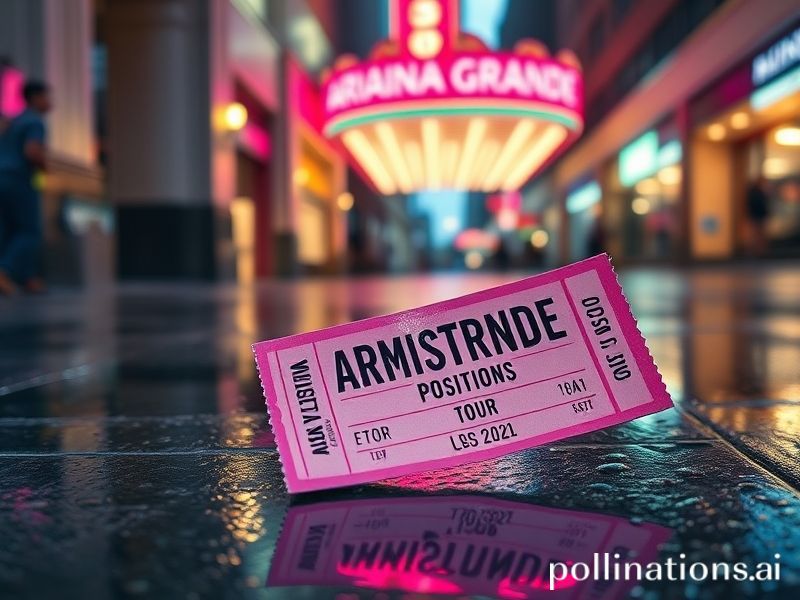
The Sweetener Index: How Ariana Grande Tickets Became a Global Economic Barometer
In the grand theater of late-stage capitalism, nothing quite captures the zeitgeist like watching grown adults mortgage their futures for three hours of perfectly choreographed regret. From Tokyo to Tulum, the Great Ariana Grande Ticket Scramble of 2024 has evolved from mere pop culture event into a fascinating anthropological study—equal parts pilgrimage, panic attack, and proof that we’ve collectively lost our minds.
The international implications are staggering. While BRICS nations discuss dedollarization, fans in São Paulo are converting reals to dollars on the black market faster than you can say “thank u, next.” In Istanbul, where inflation makes a Taylor Swift concert look like a bargain, Grande’s upcoming shows have triggered a run on the lira that would make Erdogan blush. The European Central Bank, presumably between solving actual crises, now monitors resale prices with the intensity usually reserved for Greek debt.
The dark genius lies in the globalization of FOMO. Chinese fans, unable to access Instagram without a VPN, have somehow mastered seventeen different ticketing platforms across three continents. They’re buying flights to Bangkok shows because, as one Beijing-based Arianator explained through Google Translate, “At least Thailand’s political instability won’t affect the acoustics.” Meanwhile, Australian fans have discovered that flying to Los Angeles is actually cheaper than buying resale tickets in Sydney—a development that has Qantas executives weeping into their flat whites.
The secondary market has achieved full financialization. Tickets now trade like emerging market bonds, complete with their own volatility indices and futures contracts. A hedge fund in Singapore reportedly made a killing shorting Barcelona show tickets after discovering the venue’s acoustics were “sub-optimal for whistle tones.” In Mexico City, cartels have diversified into ticket scalping—because apparently, drug trafficking was getting too ethical.
But perhaps the most telling development is how Grande’s tour has become the new citizenship test. Immigration lawyers report clients attending shows in multiple countries as “cultural integration evidence.” One Syrian refugee, now living in Berlin, tearfully explained that knowing every word to “7 rings” was more valuable than his engineering degree. “The government wants to see assimilation,” he shrugged. “Nothing says ‘I belong here’ like spending a month’s salary on nosebleed seats.”
The environmental impact deserves mention, if only for the exquisite irony. As glaciers melt and forests burn, tens of thousands fly across oceans to hear songs about self-love and healing. Carbon offsets are purchased with the same conviction that accompanies diet soda with a cheeseburger. One Swedish fan justified her transatlantic flight by planting a tree—via an app, naturally—creating the world’s first guilt-neutral pop experience.
The psychological toll transcends borders. Therapists from Copenhagen to Cape Town report a new condition: Post-Traumatic Ticket Disorder. Symptoms include compulsive checking of resale sites, conversion disorder when facing sold-out shows, and the delusion that being 40,000th in the Ticketmaster queue constitutes “almost there.” The WHO, busy with actual pandemics, has quietly classified it as a “first-world plague with developing world symptoms.”
As we hurtle toward this glitter-drenched abyss, the Grande Industrial Complex reveals our shared humanity: the universal desire to belong, to scream lyrics in unison, to feel something—anything—in an increasingly numb world. We’ve created a global economy where emotional validation is purchased at 200% markup, where connection is measured in Ticketmaster fees, where love is spelled V-I-P package.
The shows will happen. Memories will be manufactured. Credit cards will weep. And somewhere, in a dark corner of the internet, someone will already be speculating on the next tour, because hope springs eternal—and nothing says hope like paying triple face value for the privilege of watching someone else live their dreams.