The Last Free Men: How 1.6 Million Mariners Keep Your Avocado Toast from Being a Lie
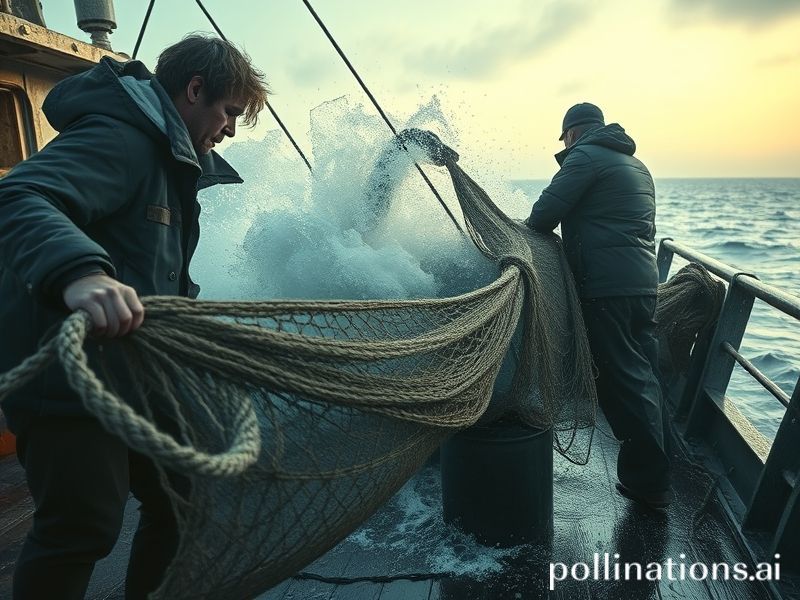
Somewhere between the 20-knot winds of the Drake Passage and the diesel fumes of the Singapore Strait, the modern world still depends on a caste of sun-blasted nomads who haven’t updated their LinkedIn since dial-up. Meet the 1.6 million merchant mariners—equal parts logistics miracle and human ballast—who ferry 90% of everything you pretend to need: Chilean blueberries in February, Korean flat-screens, and enough plastic tat to keep the Pacific Garbage Patch in business. Their workplace is a floating paradox: a nine-figure asset managed by a crew that earns less per month than your artisanal coffee budget.
In Rotterdam, the port resembles an M.C. Escher print commissioned by Amazon: cranes pirouetting 24/7, container stacks like Jenga for giants, and Filipino ABs (able-bodied seamen) who learned Tagalog karaoke before they learned the difference between NATO and FIFA. Half the world’s seafarers come from the Philippines, Indonesia, and India—countries whose greatest export is the willingness to endure loneliness at scale. They sign contracts longer than Russian novels, then discover the plot twist is that the Wi-Fi costs more than the beer.
The pandemic turned these invisible laborers into a geopolitical bargaining chip. When countries slammed borders shut, 400,000 sailors found themselves trapped aboard—human collateral in the great panic to keep toilet paper flowing. Some spent 18 consecutive months at sea, a maritime version of The Shining with better sunsets and worse pay. Meanwhile, shipping executives—safely Zooming from the Hamptons—called them “essential workers,” a phrase that translates to “expendable but temporarily useful.”
Climate change is adding a fresh coat of irony. The melting Arctic is opening the Northern Sea Route, shaving two weeks off the Asia-Europe run and giving mariners front-row seats to the apocalypse. Russian icebreakers now escort LNG tankers past polar bears auditioning for Planet Earth: The Requiem. Down south, the Suez Canal—scene of 2021’s Ever Given fiasco—remains a 120-mile metaphor for global fragility: one wrong turn and your Just-In-Time economy turns into Just-Kidding.
Automation looms like a ghost ship on the horizon. Rolls-Royce (yes, the jet-engine posh people) is prototyping drone vessels controlled from a landlocked bunker in Alesund, Norway. The pitch: fewer humans, fewer payroll headaches, zero chance of a crew mutiny over expired cabbages. The reality: a 300-meter algorithm with no one aboard to notice the crack in the hull until it becomes a CNN headline. Still, investors salivate, because nothing says progress like firing the last blue-collar workers who can actually read a storm map.
Yet the sea has its own dark humor. Every abandoned sailor becomes an accidental Robinson Crusoe, minus the plot armor. In the Gulf of Guinea, pirates now use GoPro helmets—content creators in the most literal sense. Off Somalia, private security firms sell “yacht insurance” that covers both RPG damage and the existential dread of cruising the Indian Ocean. And when a crew finally staggers ashore after a 12-month hitch, immigration officers greet them with the same enthusiasm reserved for a customs-sniffed durian.
So the next time you tap “track package,” spare a thought for the mariner whose passport has more entry stamps than your Instagram has filters. He’s out there tonight, somewhere between the phosphorescent wake and the indifferent stars, ensuring that your life remains an uninterrupted parade of next-day deliveries. The ocean doesn’t care about your quarterly targets or carbon offsets; it only notices when the music stops. And when it does, the silence will be deafening—unless, of course, you can still hear the karaoke echoing across the cargo holds of a world that forgot it floats on borrowed time.