Padres Game: America’s Pastime as Global Gladiator Spectacle
By Our Correspondent Who’s Seen Cricket Riots and Calcio Fistfights
PETCO Park, San Diego—While the rest of the planet debates grain-export corridors and which despot has the shiniest nuclear toys, 42,067 sunburned souls here have arranged themselves into a neat capitalist mandala to watch grown men in pajamas whack a horsehide sphere. The Padres are hosting the Dodgers, a rivalry that—if you squint through $15 IPA goggles—resembles the U.S.–China trade war in miniature: lots of posturing, astronomical payrolls, and the certain knowledge that neither side will genuinely redistribute power by sunset.
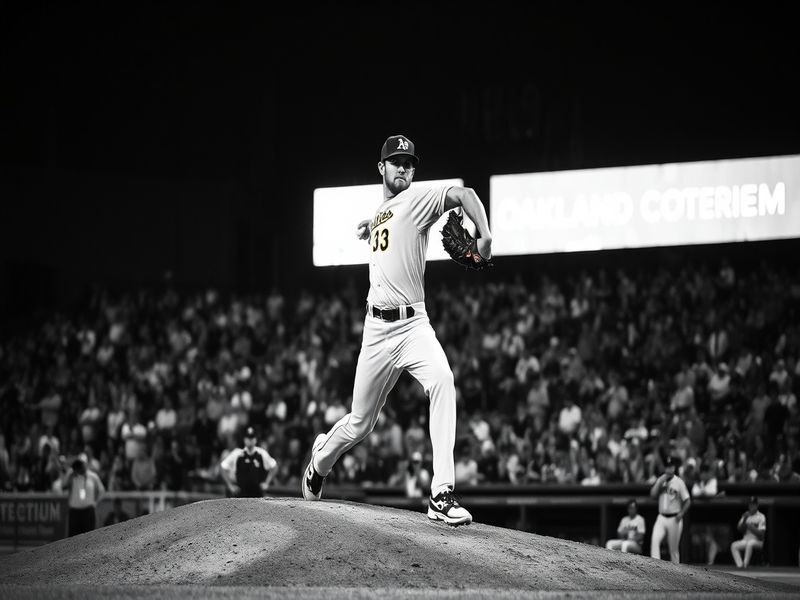
From the international press box (a converted luxury suite still sticky from last night’s influencer launch party) the scene looks less like sport than low-stakes geopolitics. The scoreboard flirts with bilingual pandering—“¡Vamos Padres!”—because nothing says cultural sensitivity like monetizing an entire colonized language one souvenir cup at a time. Down on the field, a Mexican shortstop, a Japanese slugger, and a Floridian pitcher whose fastball could overthrow a small Caribbean government all share the same dirt. It’s a UN Security Council with sunflower seeds.
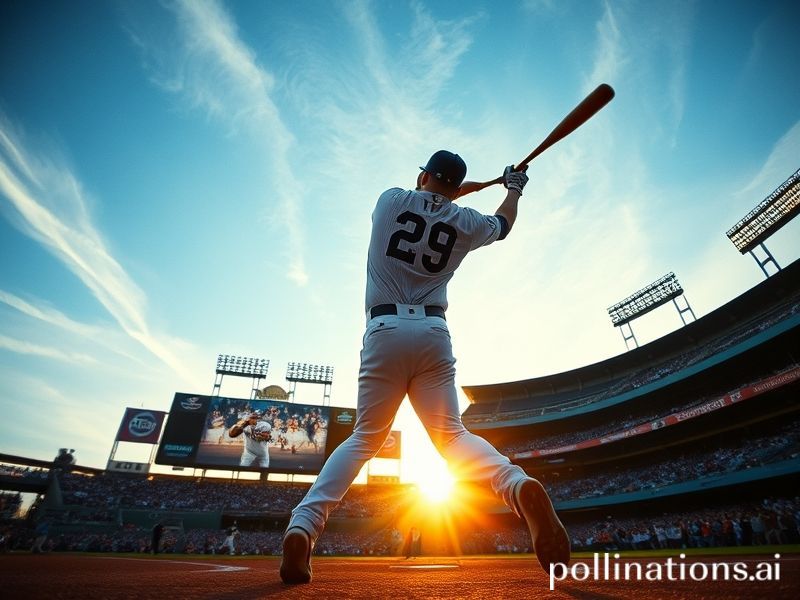
Global implications? Start with the supply chain. That ash bat once swayed in a Pennsylvania forest, was milled in China, laser-engraved in Tijuana, and tax-sheltered in Delaware before it splintered on a 97-mph heater. The ball itself is stitched in a Costa Rican factory where workers earn roughly the price of a ballpark hot dog per hour—an irony not lost on them, assuming they can afford a radio to follow the product’s glamorous afterlife. Every foul ball into the stands is, economically speaking, a miniature offshore dividend landing in the lap of a tech bro who’ll later post it on social media next to his gluten-free poke bowl.
Meanwhile, the broadcast feed beams to 211 countries, although most viewers outside North America treat it as ambient Americana—baseball as moving wallpaper for insomniacs. In Seoul sports bars, patrons glance up only when the camera finds Kim Ha-seong, Korea’s favorite son, who is currently batting .224 and therefore proof that diaspora success stories come with batting-average caveats. In Madrid, a insomniac student live-streams on mute while cramming for a finance exam, subconsciously absorbing the notion that three strikes—whether in debt, romance, or nuclear diplomacy—constitute an acceptable margin of error.
Back here in Section 107, the home crowd performs the seventh-inning stretch, a tradition that resembles a North Korean mass-gymnastics display if everyone were slightly drunk and wearing $80 hoodies. They warble “God Bless America,” a song that has replaced “Take Me Out to the Ball Game” because nothing loosens the vocal cords like vague theocratic nationalism. Somewhere in the cheap seats a man in a T-shirt that reads “San Diego: America’s Finest City” argues with his brother-in-law about border policy between mouthfuls of carne asada fries, blissfully unaware that the shortstop’s cousin still waits in Tijuana for a visa interview that may outlast the player’s career.
The game ends 5–3, Dodgers. Forty-two thousand people shuffle out to a parking lot the size of Liechtenstein, their disappointment tempered by the certainty that tomorrow’s existential crises will still be there—unlike the bullpen, which imploded in the eighth but will be traded before the debt ceiling does. Outside the stadium, a homeless veteran holds a cardboard sign: “Veteran, Need Strike Zone.” Even he scores more moral clarity than Congress.
So what does a Padres game signify on the world stage? Roughly the same as a Davos panel on inequality: expensive seats, corporate logos, and the comforting illusion that competition is always fair if you ignore the luxury-tax loopholes. The difference is that baseball admits it’s only entertainment. The planet keeps spinning, 108 stitches at a time, until the next shipment of bats arrives from wherever labor is cheapest. Play ball, or don’t; the apocalypse will still be in extra innings when you get back.