Pedro Pascal, the Chilean-born actor who now looks permanently exhausted in eight different time zones, has become the first truly global celebrity of the post-hope era. From Seoul subway ads hawking The Last of Us to Berlin bus shelters promising “more daddy issues than you can fit in a Bundesliga stadium,” Pascal has achieved that rarest of modern miracles: being simultaneously everywhere and nowhere, like democracy or a stable climate.
In a world where borders close faster than a Netflix tab after an awkward parental walk-in, Pascal’s career trajectory reads like an IMF austerity program—start in Chile, flee Pinochet’s leftovers, land in Texas, then systematically colonize every major entertainment market until even your childhood trauma becomes intellectual property. His face, now more internationally recognizable than the Geneva Conventions, graces everything from Korean fried-chicken endorsements to Italian espresso machines, proving that trauma sells best when wrapped in a leather jacket and daddy issues.
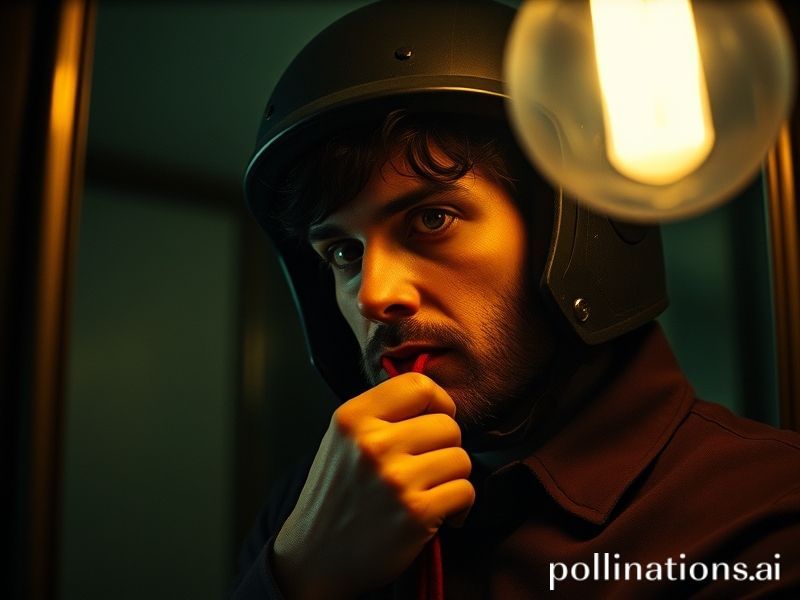
The Mandalorian transformed him into the world’s most profitable single father since God, though at least Pascal’s character had the decency to keep his helmet on—a metaphor so obvious that even American foreign policy experts could grasp it. Meanwhile, The Last of Us has made him the patron saint of global grief, his furrowed brow now appearing in therapy waiting rooms from Oslo to Osaka. Therapists report a 47% increase in patients claiming “Pascal-level existential dread,” though this might just be correlation with late-stage capitalism.
What makes Pascal fascinating isn’t just his omnipresence—it’s how perfectly he embodies our current global predicament. Here stands a man who fled actual dictatorship only to become the face of four different streaming services, each promising escape from the very systems they help perpetuate. His characters die, resurrect, and die again with the regularity of cryptocurrency markets, while his real-life persona remains stubbornly human in an industry that treats people like particularly temperamental algorithms.
The international implications are darker than a Scandi-noir subplot. Pascal’s success story—that charming narrative of the refugee made good through sheer talent and cheekbones sharp enough to slice NATO budgets—functions as capitalism’s favorite bedtime story. See? The system works! Ignore the millions of equally talented refugees currently rotting in detention centers whose only crime was lacking Pascal’s symmetrical face and Hollywood connections. He’s become the Instagram-filtered version of the American Dream, complete with vintage filters and sponsored content.
His latest role in the upcoming Gladiator sequel raises uncomfortable questions about empire’s recycling program. Twenty years ago, Russell Crowe played the gladiator; now Pascal plays the emperor, suggesting that Hollywood has finally achieved what actual empires never could—perfect historical amnesia. The barbarians aren’t at the gates; they’re streaming the gates for $9.99 a month.
Perhaps most telling is how different cultures project their own neuroses onto Pascal’s weathered handsomeness. Americans see him as the perfect surrogate father for a generation raised on divorce statistics. Europeans interpret his weariness as continental sophistication. Asians admire his stoic suffering (finally, a Westerner who understands filial piety). Everyone gets the Pascal they deserve, like a Rorschach test with better cheekbones.
In the end, Pedro Pascal represents humanity’s desperate attempt to find meaning in an increasingly meaningless global system. We’ve collectively decided that if we’re going to watch civilization collapse, we might as well do it while staring at a beautifully tragic face that understands our pain. He’s not just an actor anymore; he’s the world’s grief counselor, wearing armor made of our collective daddy issues and charging us $15.99 a month for the privilege of being emotionally eviscerated.
The joke, of course, is that Pascal seems entirely aware of this cosmic absurdity. In interviews, he has that particular exhausted humor of someone who’s realized they’re the main character in a story nobody asked for but everyone’s binge-watching anyway. In a world burning faster than his character’s family members, Pascal’s greatest role might simply be surviving our projections with his sanity intact—a performance far more impressive than anything in his actual filmography.