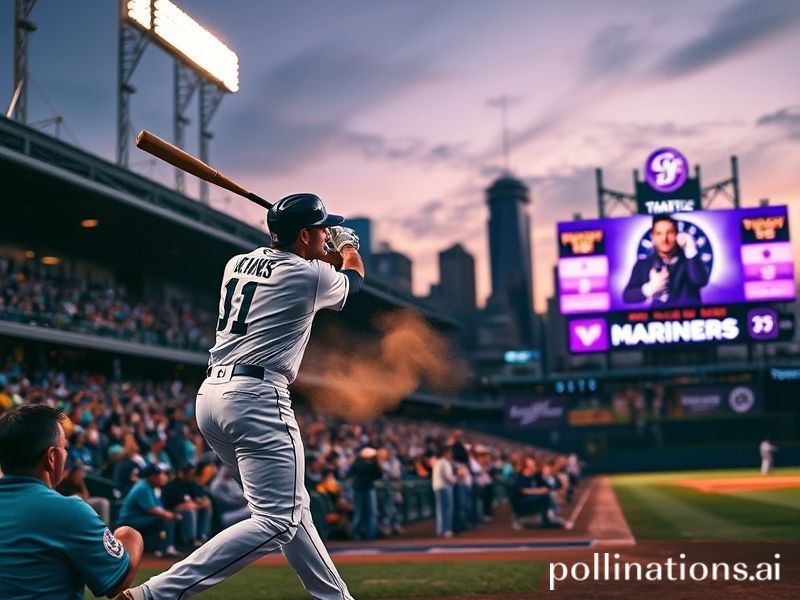
SEATTLE—While the planet’s stock markets convulsed like a drunk on a mechanical bull and diplomats traded insults thick enough to butter bread, some sixty thousand souls squeezed into T-Mobile Park on Tuesday to ask the only question that still unites a fractured world: can the Mariners string together more hits than the Houston Astros before the sun burns out?
From Kyiv to Kuala Lumpur, anyone with a cracked phone screen and a morbid curiosity about American optimism tuned in, because nothing screams “global superpower in late-stage decadence” like a nation that schedules 162 baseball games per year—then acts surprised when the roof leaks. The Mariners, bless their emerald hearts, entered the contest three games above .500, a record so perfectly mediocre it could be the UN’s official batting average on cease-fires.
Overseas, the game’s first pitch landed with the soft thud of a diplomatic cable. In London, currency traders streaming the MLB app in Canary Wharf bathrooms momentarily forgot that the pound is now worth less than Spotify Premium. In São Paulo, a bar full of insomniacs raised caipirinhas to Julio Rodríguez, who—like Brazil—remains talented, photogenic, and chronically underfunded. Meanwhile in Beijing, state censors let the broadcast slip through because nothing illustrates the decline of American manufacturing quite like a $200 million roster that still can’t find a reliable lefty reliever.
The Astros, baseball’s answer to a Bond villain who escapes every scandal with the trophy and the girl, jumped to a 4-0 lead before most viewers had figured out what time zone Seattle stubbornly insists on occupying. That deficit felt oddly reassuring; in a year when oceans recorded their hottest temperatures ever, watching the Mariners fall behind early is one of the last climate patterns you can still set your watch to.
Yet the home side clawed back, scoring five runs on a parade of seeing-eye singles and Houston errors so generous they should qualify for OECD development aid. When Cal Raleigh launched a seventh-inning slider into the right-field seats, the roar could be heard on cargo ships drifting through the Puget Sound—sailors mistaking it, perhaps, for the latest North Korean missile test or another TikTok trend crashing ashore.
By the final out—a strikeout that froze the Astros’ Yordan Álvarez like a man reading his 401(k) statement—the Mariners had won 6-5. Fireworks erupted, drowning out the city’s ambient sounds of fentanyl wrappers and overheated Amazon scooters. Somewhere in Geneva, a WHO bureaucrat sighed, closed his laptop, and muttered that if humanity devoted half this energy to vaccine distribution we could eradicate influenza by Christmas. He was ignored, because the post-game show was analyzing exit velocity.
What does it mean, this small victory in a sport increasingly played only in countries wealthy enough to afford elbow ligament insurance? Maybe nothing. Maybe everything. The game lasted three hours and fourteen minutes—roughly the time it takes for another billionaire to decide democracy is too slow and buy himself a rocket. Still, for one night, people in 127 countries shared the same buffering icon, the same collective groan at a called third strike, the same fragile hope that the next inning might be better than the last.
That’s the cruel miracle of baseball: it teaches you to believe in comebacks even as the globe circles the drain. The Marengers will lose tomorrow, or next week, or in the postseason they haven’t visited since the invention of the iPod. But today they won, which in the arithmetic of late capitalism counts as foreign-aid to the human spirit—tax-deductible, non-refundable, and gone by morning.
So toast them, world. Then get some sleep. Wednesday’s first pitch is in twelve hours, and the planet’s rotation waits for no closer.