The Global Pursuit of “Pubs Near Me”: Humanity’s Noble Quest for Oblivion
In the grand tapestry of human civilization, few searches unite us quite like “pubs near me.” From the frostbitten streets of Reykjavik to the sweltering alleys of Bangkok, this digital cry for help transcends language barriers, economic systems, and the increasingly thin veneer of social decorum. It’s humanity’s collective admission that yes, we could use a drink, and no, we don’t particularly care about tomorrow’s consequences.
The international significance of this search query cannot be overstated. While diplomats debate trade agreements and climate accords in air-conditioned conference rooms, the real negotiations happen over sticky bar tops worldwide. In Moscow, oligarchs and poets alike huddle over vodka, united in their shared liver damage. Meanwhile, in Tokyo’s izakayas, salarymen conduct the sacred ritual of nominication—a portmanteau that somehow makes “drinking with colleagues” sound like a legitimate business strategy rather than institutionalized alcoholism.
The beauty of the global pub ecosystem lies in its remarkable adaptability. In countries where alcohol is prohibited, coffee houses serve as acceptable surrogates, proving that humans will find literally any excuse to congregate and complain about their lives. In Iran, tea houses buzz with political discourse so charged it could power a small city. In Utah, the state that solved alcoholism by simply making cocktails weaker than most people’s coffee, residents have mastered the art of pretending that 3.2% beer is somehow worth the existential dread.
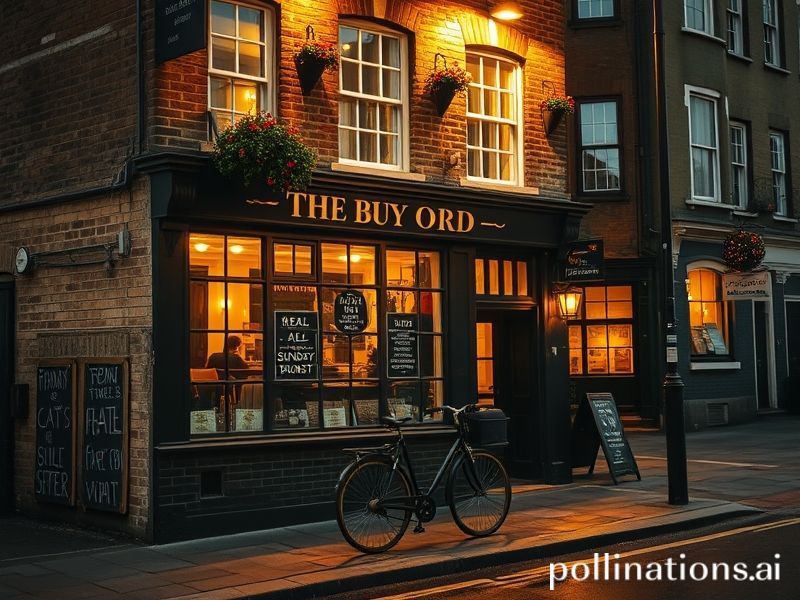
European pubs, those cathedral-like monuments to human disappointment, operate on their own temporal plane. The British pub, that great leveler where dukes and dustmen alike pretend to understand cricket, has somehow survived two world wars, countless economic collapses, and the invention of sobriety. The French café, where existentialism was invented primarily as an excuse to extend drinking hours, continues to host philosophical debates that solve absolutely nothing but look incredibly sophisticated while doing so.
In developing nations, the proliferation of “pubs near me” searches often correlates suspiciously with IMF loans and the arrival of multinational breweries. Nothing says “economic development” quite like replacing traditional drinking customs with standardized corporate beer—it’s globalization at its most refreshingly predictable. From Lagos to Lima, local brews that once connected communities to their ancestral heritage are being replaced by the same three lagers that taste like regret everywhere.
The digital age has transformed this ancient pursuit into a data-driven expedition. Algorithms now predict our thirst with unsettling accuracy, suggesting pubs before we’ve even acknowledged our existential crisis. In a world where privacy is dead but at least the beer is cold, our search histories reveal more about our mental state than any therapy session. The person who searches “pubs near me open now” at 7 AM isn’t just looking for breakfast—they’re conducting a personal performance review of their life choices.
Climate change, that persistent party pooper, is even reshaping our drinking habits. As temperatures rise, previously unthinkable locations are becoming viable pub destinations. Somewhere, an entrepreneur is already planning Greenland’s first tiki bar, complete with ironically melting ice sculptures. The melting permafrost will probably reveal ancient Sumerian tablets complaining about the local pub’s happy hour prices—because some things truly are universal.
As we stumble toward an uncertain future, one thing remains comfortingly constant: humans will continue searching for places to gather, drink, and collectively avoid thinking about tomorrow. Whether it’s a Berlin beer hall, a Rio beach bar, or a Mongolian yurt serving fermented mare’s milk, the pub represents our species’ noblest achievement: creating spaces where we can be beautifully, authentically human—flawed, hopeful, and just drunk enough to believe things might actually work out.
In the end, perhaps “pubs near me” isn’t just a search query—it’s a prayer, a pilgrimage, and a profound acknowledgment that despite everything, we still believe in the transformative power of sharing a drink with strangers who might become friends, or at least fellow witnesses to our gradual descent into cheerful oblivion.