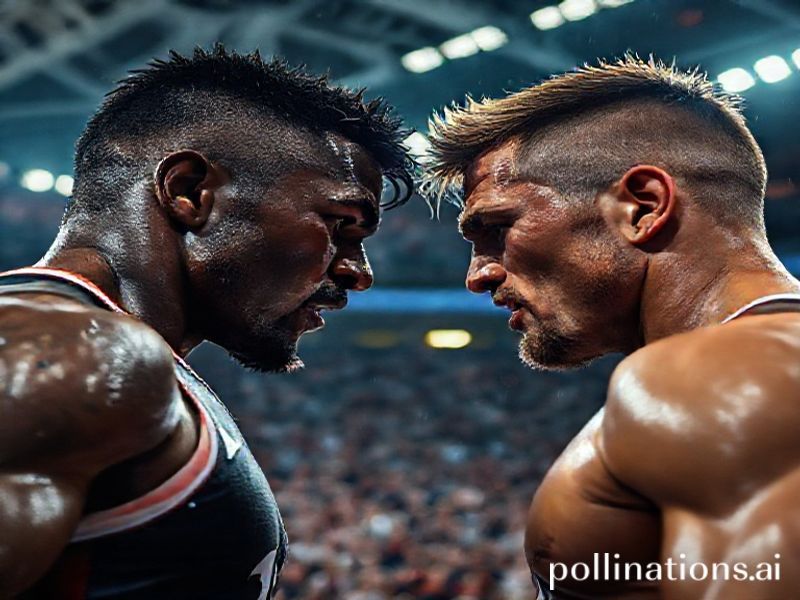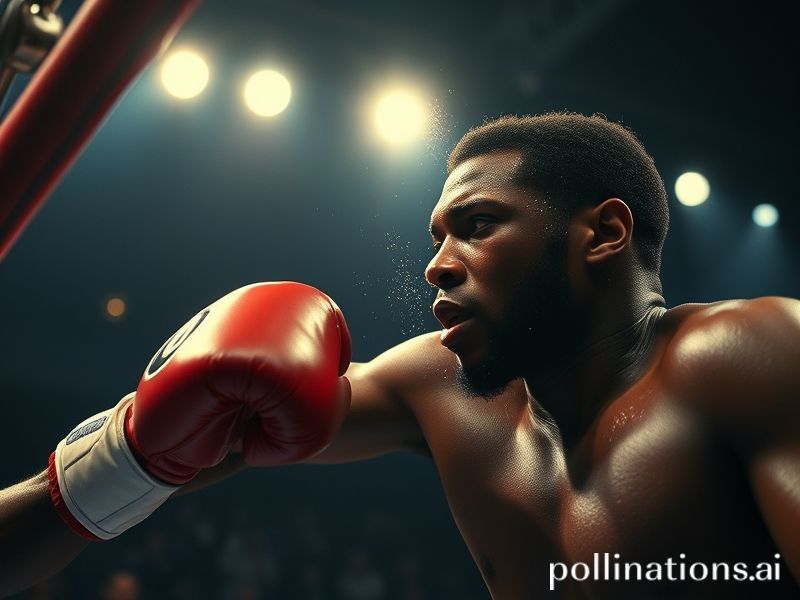
Gervonta “Tank” Davis has never filled out a customs form in his life, yet he exports violence with the efficiency of a multinational arms dealer. At just 28, the Baltimore southpaw has turned concussive left hooks into a globally traded commodity: pay-per-view rights sold from Lagos to Lahore, highlight reels dissected in Seoul sports bars, and knockouts GIF-looped on phones from Quito to Qatar. Somewhere in Davos, a brand manager is probably pitching him as “the Tesla of trauma—zero emissions, maximum impact.”
Davis fights under the Mayweather Promotions umbrella, itself a Cayman-registered cloud of paperwork that would make an oligarch blush. That means every time he steps through the ropes, a battalion of accountants in three time zones holds its breath. If he wins, hedge funds in London who’ve bought his future earnings like pork-belly futures get to pop another bottle. If he loses, well, Dubai’s commodity exchanges merely reprice the contract and life moves on—just another blood-spattered arbitrage opportunity.
The geopolitical subplot is delicious. Davis’s next likely payday is a rumored stadium bout in Saudi Arabia, because nothing says “sportswashing” like hosting a man whose job description is “render unconscious for money.” Riyadh can whitewash a golf tourney with pastel logos, but a boxing crowd roaring for brain trauma is trickier to curate for Instagram. Still, the Kingdom’s PIF fund will happily bankroll it; after all, they’ve already bought Newcastle United and half of Silicon Valley—why not a human highlight reel with a charming gap-toothed grin?
Meanwhile, in Mexico—where Canelo’s cinnamon-red braids have long been a national export—matchmakers are praying Davis looks their way. A Davis-Canelo superfight would be the first pay-per-view to earn its own entry in the IMF’s quarterly reports. Ratings? Bigger than the World Cup final in countries whose names you can’t spell. Economic impact? Somewhere between a midsized coup and a modest tsunami. Social fallout? Entire WhatsApp group chats would spontaneously combust the moment the undercard is announced.
Europe, for its part, watches with the detached amusement of a continent that gave up boxing for artisanal bread. The French sports daily L’Équipe ran a cartoon of Davis wearing a beret, flattening the Eiffel Tower with a body shot. The caption: “L’art brut américain.” Germans debate him on late-night talk shows, where a philosopher inevitably compares his footwork to Walter Benjamin’s theory of mechanical reproduction—because nothing screams Weimar nostalgia like a man who can end a discussion with a liver punch.
Asia has its own flirtation. Japanese broadcasters love Davis because his knockouts fit perfectly between bullet-train ads and ramen commercials. In the Philippines, they whisper he’s the only man alive who might have given Pacquiao nightmares—though that could just be Manny’s tax lawyers talking. China’s state censors, meanwhile, aren’t sure whether to ban or brand him; a man who can flatten opponents in under three rounds is dangerously close to a metaphor for Party efficiency.
Back home, the American press toggles between hagiography and criminal court updates—Davis’s rap sheet reads like a noir novella: hit-and-run here, domestic incident there, all settled with the sort of legal gymnastics that make you believe justice is just another weight class. The irony, of course, is that the more chaos he courts outside the ring, the more the market rewards him inside it. Risk equals reward; morality is just the entry fee.
Conclusion: Gervonta Davis is not merely a boxer; he is a walking, snarling futures contract wrapped in Everlast satin. In a world where attention is the scarcest resource, he monetizes brutality with the precision of a Swiss watch and the ethics of a Cayman holding company. Whether he fights in Riyadh, Tijuana, or the metaverse, the global takeaway remains the same: we’ve turned human fragility into prime-time entertainment, and the only thing more bruised than his opponents is our collective conscience—currently trading at an all-time low with no signs of a comeback.