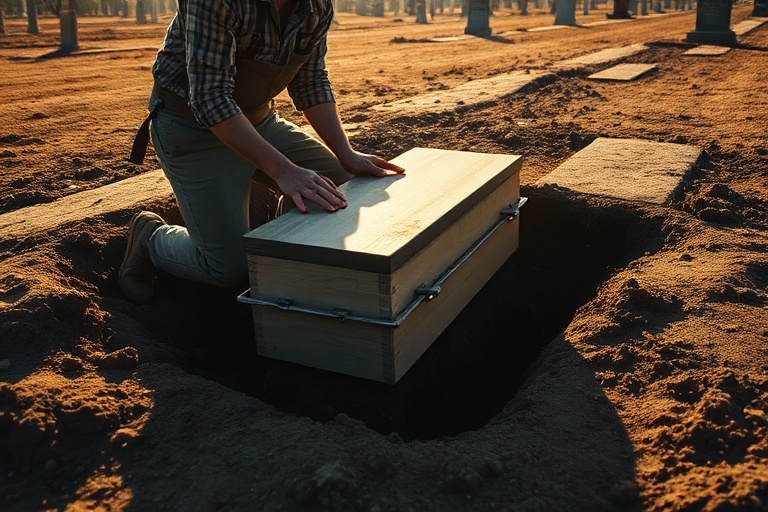
we bury the dead
Rituals of Remembrance: A Global Perspective on Burying the Dead
The act of burying the dead is one of humanity’s most enduring traditions. Across cultures and centuries, the disposal of human remains has taken many forms—from elaborate tombs to simple graves in the earth. These practices are not merely about laying the deceased to rest; they reflect beliefs about life after death, social hierarchies, and communal identity.
In some societies, burial is a sacred duty. The Zoroastrians of ancient Persia practiced sky burials, where bodies were exposed to vultures to avoid contaminating the earth. Meanwhile, the Māori of New Zealand traditionally interred their dead in caves or carved wooden coffins, ensuring their ancestors remained close to the community. These customs highlight how burial methods are deeply tied to cultural values and environmental realities.
The Role of Burial in Religious and Spiritual Traditions
Religions around the world prescribe specific burial rites, each with symbolic meaning. In Christianity, burial often involves a casket lowered into the ground, accompanied by prayers for the soul’s journey. The Catholic Church, for instance, teaches that burial in consecrated ground is essential for spiritual peace. Similarly, Islam mandates swift burial without a coffin, with the body placed directly into the earth facing Mecca.
Hinduism, on the other hand, practices cremation as the primary method of disposal, believing fire liberates the soul from the cycle of rebirth. The ashes are often scattered in sacred rivers like the Ganges. Judaism also prefers burial over cremation, emphasizing the sanctity of the body as a divine creation. These traditions demonstrate how burial customs are woven into theological frameworks, shaping how communities grieve and remember.
Cultural Variations in Burial Practices
Burial traditions vary widely based on geography, climate, and historical influences. In Mexico, Día de los Muertos (Day of the Dead) blends indigenous and Catholic traditions, where families build altars and decorate graves with marigolds and sugar skulls to honor deceased loved ones. This vibrant celebration contrasts sharply with the somber tone of Western funerals.
In Japan, cremation dominates due to limited burial space and Buddhist influences. Families often keep ashes in family graves or columbaria for generations. Meanwhile, in Ghana, elaborate fantasy coffins—shaped like animals or objects—reflect the deceased’s life or aspirations, turning burial into a celebration of individuality.
Here are some notable burial customs from around the world:
- Sky Burial (Tibet): The body is left on a mountaintop to decompose naturally, feeding vultures in a ritual called “jhator.”
- Mummification (Egypt): The body is preserved and entombed with treasures to aid the afterlife.
- Tree Burial (Indonesia): The deceased is placed in a hollowed-out tree trunk, allowing the body to decompose and nourish the tree.
- Catacombs (Italy): Bones of the dead are arranged artistically in underground chambers, reflecting urban space constraints.
The Modern Shift: Environmental Concerns and Alternative Burials
As environmental awareness grows, traditional burials face scrutiny. Conventional cemeteries require embalming fluids, caskets, and land use, contributing to pollution and resource depletion. In response, eco-friendly alternatives have emerged, such as:
- Biodegradable Coffins: Made from willow, bamboo, or cardboard, these coffins decompose naturally.
- Water Cremation (Alkaline Hydrolysis): Uses heated water and alkali to break down the body, producing fewer emissions than flame cremation.
- Reef Burials: Ashes are mixed into artificial reefs, turning burial sites into marine habitats.
- Human Composting: The body is placed in a vessel with organic material, transforming it into nutrient-rich soil over weeks.
These innovations reflect a broader trend toward sustainability, even in death. Countries like Sweden and the Netherlands have seen a rise in “green burials,” where the focus is on minimal environmental impact. However, adoption remains uneven, as cultural and religious beliefs often clash with modern environmental ethics.
The Psychological and Social Dimensions of Burial
Beyond practical and spiritual considerations, burial practices serve psychological and social functions. Psychologist Robert Kastenbaum noted that rituals like burial provide a sense of closure, helping survivors process grief. The physical act of visiting a grave or memorial can be a crucial part of mourning, offering a tangible place to connect with the deceased.
Socially, burial customs reinforce community bonds. In many cultures, funeral rites involve extended families and neighbors, ensuring collective support during grief. For example, in Ireland, the “wake” involves days of visitation, storytelling, and shared meals, strengthening familial ties. Similarly, Jewish shiva calls for seven days of mourning, where the community gathers to comfort the bereaved.
Conclusion: A Reflection of Life and Death
The ways we bury the dead reveal much about how we live. Whether through sacred rituals, environmental adaptations, or cultural expressions, burial practices are a testament to humanity’s need for meaning in the face of mortality. As societies evolve, so too will these traditions—balancing ancient customs with modern imperatives.
One thing remains constant: the desire to honor the dead in ways that reflect both individual identity and communal values. In this, burial is not just an end, but a continuation of the stories we tell about life, loss, and legacy.