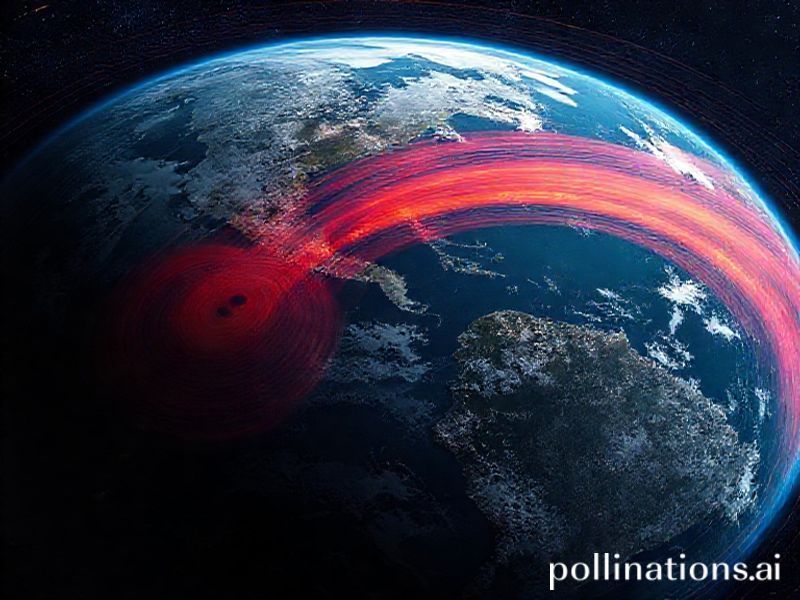
The South Atlantic Anomaly: Earth’s Cosmic Speed Bump
Imagine you’re driving down a highway, and suddenly, your car’s GPS starts glitching, your phone’s signal drops, and your radio picks up nothing but static. You’ve just hit the South Atlantic Anomaly (SAA), but instead of a pothole, it’s a cosmic speed bump that’s been making headlines worldwide. So, why is this mysterious region of the Earth’s magnetic field suddenly trending?
What Is the South Atlantic Anomaly?
The SAA is a vast area stretching from South America to Africa, where the Earth’s magnetic field is significantly weaker than elsewhere on the planet. This weakness allows charged particles from the sun to dip closer to the Earth’s surface, creating a hotspot for cosmic radiation. Think of it as the Earth’s magnetic field taking a nap—leaving us vulnerable to solar tantrums.
Scientists have known about the SAA for decades, but recently, it’s been making waves (or should we say, magnetic ripples?) across the internet. Why now? Well, for starters, the SAA is growing and shifting, and that’s got everyone from NASA to your local conspiracy theorist buzzing.
Why Is It Trending Globally?
1. NASA’s Warnings
NASA has been keeping a close eye on the SAA, and their latest findings suggest it’s splitting into two separate anomalies. This isn’t just a minor cosmic hiccup—it could have real-world implications for satellites, GPS systems, and even airline routes. When NASA talks, the internet listens, and this time, they’re not just whispering; they’re shouting.
2. Social Media Hype
From TikTok to Twitter, the SAA has become the latest topic du jour. Memes about “Earth’s Wi-Fi dead zone” and jokes about “cosmic buffering” have gone viral, turning a complex scientific phenomenon into a relatable internet joke. Who doesn’t love a good cosmic punchline?
3. Conspiracy Theories
Of course, where there’s a mysterious phenomenon, there are conspiracy theories. Some folks are convinced the SAA is evidence of a secret government experiment gone wrong, while others think it’s a sign of an impending pole shift. Whether you’re a believer or a skeptic, there’s no denying the SAA has sparked some wild (and wildly entertaining) speculation.
4. Real-World Impact
Beyond the memes and theories, the SAA has tangible effects. Airlines reroute flights to avoid increased radiation exposure, satellites experience glitches, and scientists are scrambling to understand what this means for our planet’s magnetic field. It’s not just a trending topic—it’s a real-world challenge.
Cultural Context and Social Impact
The SAA isn’t just a scientific curiosity; it’s a cultural moment. It’s a reminder that we’re all connected—not just to each other, but to the cosmos. In an era where we’re hyper-aware of climate change and environmental shifts, the SAA adds another layer to the conversation about our planet’s health.
It’s also a testament to the power of the internet to turn complex scientific concepts into viral sensations. The SAA has become a symbol of our collective curiosity and our love for a good mystery. Whether you’re a science buff or just here for the memes, the SAA has something for everyone.
What Makes This Topic Significant?
The SAA is significant for several reasons. First, it’s a reminder that our planet is dynamic and ever-changing. The Earth’s magnetic field isn’t static—it’s a living, breathing part of our world, and understanding it is crucial for our future.
Second, the SAA highlights the importance of space weather research. As we become more reliant on technology, understanding and mitigating the effects of cosmic radiation is more important than ever. The SAA is a wake-up call to invest in science and innovation.
Finally, the SAA is a cultural touchstone. It’s a topic that bridges the gap between science and pop culture, making complex ideas accessible and engaging. In a world that often feels divided, the SAA is a reminder that we can all come together over a shared fascination with the unknown.
Conclusion
The South Atlantic Anomaly is more than just a trending topic—it’s a cosmic curiosity that’s captured the world’s imagination. From NASA’s warnings to viral memes, the SAA has become a symbol of our collective curiosity and our love for a good mystery. Whether you’re a scientist, a conspiracy theorist, or just here for the jokes, the SAA has something for everyone. So, buckle up and enjoy the ride—because the cosmic speed bump is here to stay.