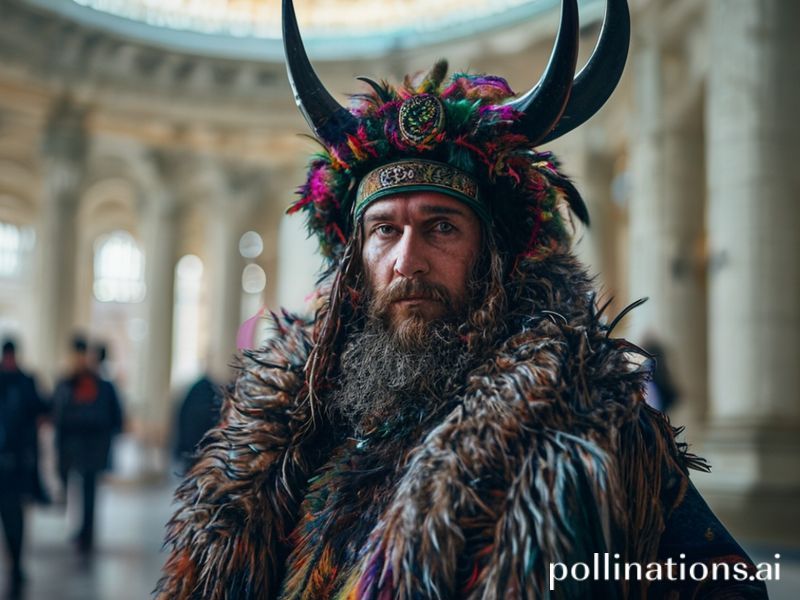
The QAnon Shaman: A Horned Hero for the Meme Age
In the grand theater of the internet, where memes are born and trends take flight, a new star has emerged from the shadows of the Capitol riot: the QAnon Shaman. With his face paint, headdress, and bare chest, this man—Jacob Chansley—has become an unlikely icon of the digital age, a symbol of the bizarre intersection between conspiracy theories, political unrest, and internet culture.
The Rise of the Shaman
Chansley, a 33-year-old from Arizona, stormed the Capitol on January 6th, not with a weapon, but with a spear topped with an American flag. His appearance was striking: his face painted in red, white, and blue, his body adorned with tattoos and a fur headdress. He was a sight to behold, a walking meme waiting to happen.
But why did this particular figure capture the internet’s imagination? Part of it is the sheer absurdity of his appearance. In a sea of rioters, he stood out like a peacock in a flock of pigeons. His look was a mashup of Native American imagery, patriotic fervor, and something straight out of a fantasy novel. It was, in a word, meme-worthy.
Cultural Context: Conspiracy Theories and Internet Culture
To understand the QAnon Shaman, we need to understand QAnon itself. QAnon is a conspiracy theory that has been brewing in the dark corners of the internet for years. It posits that a secret cabal of Satan-worshipping pedophiles is running a global child sex-trafficking ring and is plotting against former President Donald Trump. The theory has been debunked time and again, but that hasn’t stopped it from gaining traction, especially among certain factions of the internet.
The QAnon Shaman is a product of this culture. He’s a man who has bought into the conspiracy theories, who believes he’s part of a grand battle between good and evil. And in the age of the internet, where everyone can be a hero in their own narrative, he decided to take his beliefs to the streets—or rather, to the halls of Congress.
Social Impact: Memeification and Polarization
The QAnon Shaman’s impact on internet culture has been profound. He’s been memeified, turned into a symbol of both the absurdity of the Capitol riot and the dangerous allure of conspiracy theories. On one hand, he’s a figure of ridicule, a laughing stock. On the other, he’s a cautionary tale, a reminder of the power of misinformation and the lengths to which people will go when they believe they’re fighting for a cause.
His image has been shared, remixed, and parodied countless times. He’s been photoshopped into everything from ancient cave paintings to scenes from “The Lord of the Rings.” He’s been turned into a meme, a joke, a symbol of the times we live in.
But beneath the humor, there’s a darker side. The QAnon Shaman is a symptom of a larger problem: the polarization of society, the rise of misinformation, and the blurring of lines between reality and fantasy. He’s a reminder that the internet, for all its wonders, can also be a breeding ground for dangerous ideologies.
Why This Topic Matters
The QAnon Shaman is significant because he embodies the spirit of our times. He’s a product of the internet age, a man who has taken his beliefs from the dark corners of the web and brought them into the real world. He’s a symbol of the power of memes and the danger of conspiracy theories.
But he’s also a reminder that we live in a world where anyone can be a hero, where anyone can believe they’re part of a grand narrative. And in that world, it’s up to us to separate fact from fiction, to laugh at the absurdity but also to recognize the danger.
So here’s to the QAnon Shaman, the horned hero of the meme age. May he serve as a reminder of the power of the internet, the danger of misinformation, and the importance of critical thinking in the digital age.