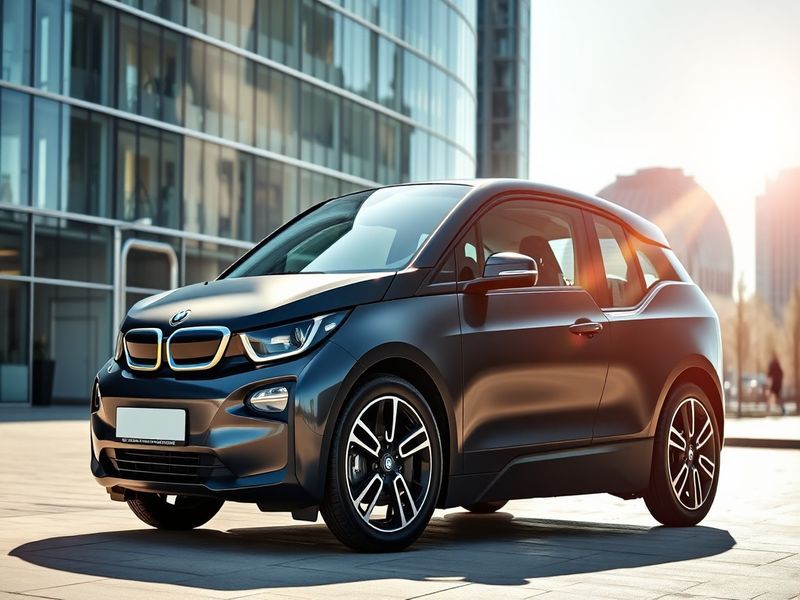
The BMW i3 arrived in 2013 as more than just another electric car. It represented a bold statement from one of the world’s premier automakers: that sustainability and performance could coexist without compromise. Over a decade later, the i3 remains a touchstone in the evolution of electric vehicles (EVs), particularly for urban drivers seeking efficiency, style, and driving pleasure in a compact package.
The Genesis of a Vision: Why the i3 Was Ahead of Its Time
The i3 wasn’t born from a reaction to market trends. It emerged from BMW’s strategic foresight in the early 2010s, when most automakers still viewed EVs as niche curiosities. The Munich-based manufacturer recognized that cities were becoming increasingly choked by pollution and congestion. Rather than waiting for regulators to force change, BMW built a car designed specifically for the urban environment—lightweight, agile, and emissions-free.
Its architecture broke convention. The i3 featured a carbon-fiber-reinforced plastic (CFRP) passenger cell mounted on an aluminum chassis, a design that shaved hundreds of pounds compared to traditional steel bodies. This material innovation wasn’t just about weight savings; it allowed engineers to maximize interior space despite the car’s diminutive footprint. The result was a two-box design—short overhangs, upright seating, and a tall greenhouse—that prioritized practicality over sporty proportions.
Initially offered with a 22-kWh lithium-ion battery and a 170-horsepower electric motor, the i3 delivered a real-world range of around 80 miles. While modest by today’s standards, that figure was ambitious for 2013, when long-range EVs were rare and charging infrastructure was in its infancy. BMW positioned the i3 not as a compromise, but as a lifestyle choice—a statement of progressive urban living.
Driving Experience: A Symphony of Efficiency and Refinement
The i3 delivered something unexpected: an electric car that felt like a BMW. The steering was precise, the suspension tuned for urban comfort, and the regenerative braking system—operated via paddle shifters behind the wheel—allowed drivers to tailor energy recovery to their style. The eDrive system offered instant torque, launching the i3 from 0 to 30 mph in under four seconds, a feat that made city driving surprisingly engaging.
Inside, the cabin embraced minimalism with a focus on sustainability. Recycled materials, renewable raw materials like eucalyptus wood, and even optional leather tanned without chrome made the i3 one of the most eco-conscious interiors of its time. The dashboard featured a single large digital display and a circular control interface, a nod to BMW’s digital-first ethos. Despite its compact size, the i3 could comfortably seat four adults, and the rear seats folded to expand cargo space from 2.8 to 10.7 cubic feet.
Noise levels were impressively low, with only wind and tire hum audible at highway speeds. The lack of a traditional engine meant no vibrations, no gear shifts, and no need for warm-up time—just turn the key and drive. For city dwellers who valued both comfort and conscience, the i3 offered a compelling alternative to gas-powered hatchbacks.
Evolution and Legacy: How the i3 Adapted Over Time
BMW didn’t rest on its laurels. The i3 received several updates throughout its production run, reflecting both technological progress and shifting consumer expectations. In 2017, the battery capacity increased to 33 kWh, boosting real-world range to about 114 miles. A year later, the i3s variant arrived, adding 14 horsepower, sportier suspension tuning, and unique styling cues like larger wheels and darkened trim.
The most significant change came in 2019 with the introduction of the i3s with a 42.2 kWh battery, pushing range to approximately 153 miles on the WLTP cycle. This version also featured the latest iteration of BMW’s iDrive infotainment system, with a 10.25-inch touchscreen and improved voice control. Despite these enhancements, the i3 retained its core identity: a compact, city-focused EV with character.
By the time production ended in 2022, over 250,000 i3s had been sold worldwide. Its legacy extends beyond sales numbers. The i3 proved that electric mobility could be accessible, enjoyable, and stylish. It influenced subsequent generations of compact EVs, from the Mini Cooper SE to the Honda e, both of which borrowed elements of the i3’s design philosophy and urban-focused engineering.
More importantly, the i3 helped normalize EVs among mainstream buyers. It wasn’t a luxury sedan or a futuristic hypercar. It was a practical, premium hatchback that happened to run on electrons. In doing so, it demystified electric driving for millions of people.
Broader Implications: What the i3 Taught the Automotive World
The i3 wasn’t just a car—it was a catalyst. Its impact can be seen in three key areas: material innovation, urban mobility, and consumer psychology.
- Material Science: The widespread use of CFRP in the i3 demonstrated that carbon fiber could be cost-effectively integrated into mass production. This technology has since trickled down to other models, including BMW’s own iX and i4, as well as performance cars from Porsche and Audi.
- Urban Planning: By prioritizing compact dimensions and zero emissions, the i3 influenced city policies around congestion charges and low-emission zones. Cities like London and Paris began incentivizing small EVs, and the i3 became a poster child for sustainable urban transport.
- Consumer Acceptance: The i3 proved that EVs didn’t need to sacrifice design, comfort, or brand prestige. This helped shift public perception from “electric cars are for hippies” to “electric cars are for everyone.”
There’s also a cultural dimension. The i3 became a symbol of progressive urban living. In cities like San Francisco, Berlin, and Tokyo, the i3 was adopted by artists, entrepreneurs, and tech workers who saw it as an extension of their values: innovative, eco-conscious, and uncompromising. It wasn’t just transportation; it was a lifestyle statement.
Yet, the i3 also highlighted the limitations of early EV technology. Its limited range and reliance on Level 2 charging infrastructure made it less suitable for long-distance travel. As battery technology advanced and fast-charging networks expanded, the i3’s role evolved from a primary vehicle to a secondary or urban-only car for many owners. This transition reflected a broader shift in the EV market, where versatility became as important as efficiency.
A Lasting Influence
As the automotive industry accelerates toward full electrification, the BMW i3 remains a touchstone. It demonstrated that electric mobility could be intelligent, desirable, and practical—qualities that are now table stakes for new EV models. While newer BMWs like the i4 and i7 have taken the spotlight, the i3’s influence persists in the DNA of the brand’s electric lineup.
For enthusiasts and industry observers, the i3 represents more than a discontinued model. It’s a reminder that innovation doesn’t always come from the biggest or fastest vehicles. Sometimes, it comes from reimagining the familiar in a new light. The i3 took the humble hatchback, infused it with electric power, and created something timeless.
In an era where EVs are increasingly common, the i3 stands as a testament to visionary thinking. It wasn’t just ahead of its time—it helped shape the time we’re living in today.
For those interested in exploring more about electric vehicles and their cultural impact, visit our Technology section, where we cover the latest trends in automotive innovation. You can also dive deeper into sustainable mobility trends in our Automotive category.