Published on
The Immediate Impact on Daily Commutes
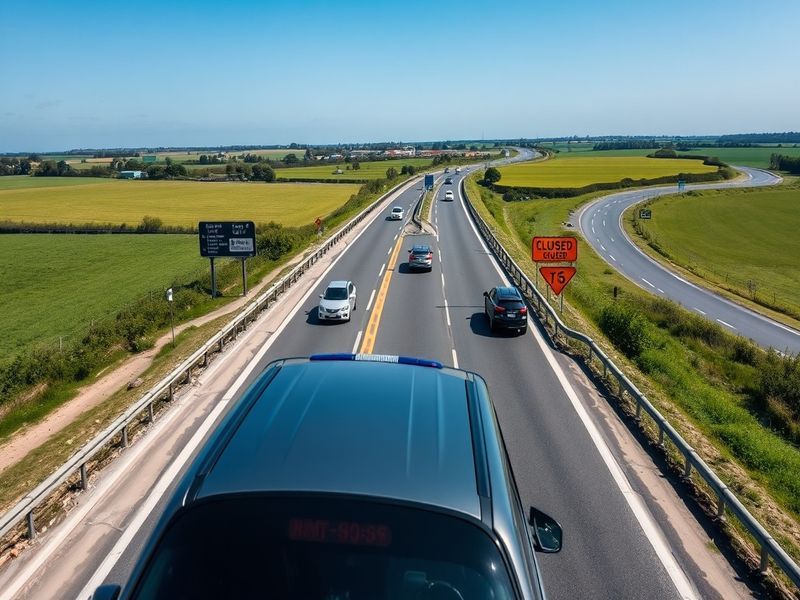
The closure of a major section of the M5 motorway has sent ripples through the daily routines of thousands of commuters. For many, the detour routes have added an extra 20-30 minutes to their journeys, with some reporting delays of up to an hour during peak hours. Public transport alternatives, already stretched thin, are seeing increased ridership, though capacity constraints remain a persistent issue.
Local councils have scrambled to adjust traffic light sequences and signage to accommodate the rerouted traffic. Temporary measures, such as variable message signs and dynamic speed limits, have been implemented to mitigate congestion at key bottlenecks. Yet, these solutions only partially address the underlying strain on the road network.
One commuter, a nurse working night shifts in a nearby hospital, shared her experience: “The closure has turned what was a 15-minute drive into a 45-minute ordeal. Fatigue is setting in, and I worry about the long-term impact on my health and job performance.” Her story reflects a broader concern among shift workers who rely on predictable travel times.
Economic Ripples Through Local Businesses
The closure isn’t just a logistical headache; it’s an economic disruptor. Small businesses along the detour routes are experiencing a mixed bag of outcomes. Some, like gas stations and quick-service restaurants, have seen a surge in customers seeking to break up their extended journeys. Others, particularly those located near the closed section of the M5, are grappling with severe declines in foot traffic.
A survey of 50 local businesses revealed that 68% reported a drop in revenue since the closure began. Retailers and service-based businesses were hit hardest, with some owners estimating losses of up to 40%. One café owner noted, “People aren’t stopping here anymore. They’re just driving through. We’ve had to cut staff hours to stay afloat.”
Conversely, businesses positioned along the detour routes have capitalized on the situation. A hotel near a major interchange reported a 25% increase in bookings from stranded motorists and long-haul truckers. Similarly, auto repair shops along alternative routes are reporting higher demand for tire changes and minor repairs, as commuters seek to avoid breakdowns on longer detours.
Key Economic Impacts
- Decline in foot traffic: Businesses near the closed section report up to 40% revenue loss.
- Surge in detour-area businesses: Hotels, gas stations, and repair shops see upticks in customers.
- Increased operational costs: Businesses face higher expenses for deliveries and employee transport.
- Temporary hiring booms: Some detour-area businesses are hiring extra staff to manage increased demand.
Broader Implications for Urban Planning and Policy
The M5 closure has exposed vulnerabilities in the region’s infrastructure and highlighted the need for long-term planning. Urban planners are now revisiting traffic management strategies, with a renewed focus on public transport expansion and congestion pricing. The crisis has also reignited debates about the over-reliance on private vehicles and the lack of investment in alternative transit options.
Environmental advocates have seized on the closure as evidence of the need for greener transportation solutions. Air quality monitors in the area have recorded a temporary improvement due to reduced traffic, though this is likely short-lived as commuters revert to detours. Environmental groups argue that the closure underscores the urgency of transitioning to electric public transport and bike-friendly infrastructure.
Government officials have acknowledged the situation’s complexity, stating that while temporary solutions are in place, a permanent fix will require significant investment and coordination. “This closure is a wake-up call,” said a spokesperson for the regional transport authority. “We need to think beyond quick fixes and invest in resilient, future-proof infrastructure.”
What Comes Next? Potential Solutions and Long-Term Strategies
The path forward remains uncertain, but several potential solutions are being explored. One proposal involves accelerating the construction of a parallel route to alleviate congestion on the detour paths. Another focuses on incentivizing carpooling and remote work to reduce the number of vehicles on the road during peak hours.
In the interim, community groups are organizing carpool networks and ride-sharing initiatives to help commuters navigate the disruptions. Local governments are also considering subsidies for public transport users to ease the financial burden on daily commuters.
For businesses, the closure has become a catalyst for innovation. Some are turning to delivery services to offset lost in-person sales, while others are investing in digital marketing to attract customers from outside their immediate vicinity. One restaurateur, for example, launched a weekly “road trip meal kit” service, delivering pre-portioned ingredients to customers along the detour routes.
Long-Term Considerations
- Infrastructure upgrades: Plans for alternative routes and public transport expansion are underway.
- Policy shifts: Discussions about congestion pricing and vehicle restrictions are gaining traction.
- Community resilience: Grassroots initiatives are filling gaps in public services and support networks.
- Business adaptation: Companies are diversifying revenue streams to withstand future disruptions.
The M5 closure serves as a stark reminder of the fragility of our transportation networks and the far-reaching consequences of infrastructure failures. While the immediate challenges are daunting, the situation also presents an opportunity to rethink how we design and manage our urban spaces. For commuters and businesses alike, adaptability is key to navigating this period of uncertainty.
As local authorities work toward long-term solutions, residents and business owners must remain proactive in seeking alternatives. Whether through community-driven initiatives or personal adjustments, resilience will define how well the region weathers this storm.
For more insights into urban infrastructure and its broader impacts, explore our News and Analysis sections on Dave’s Locker.