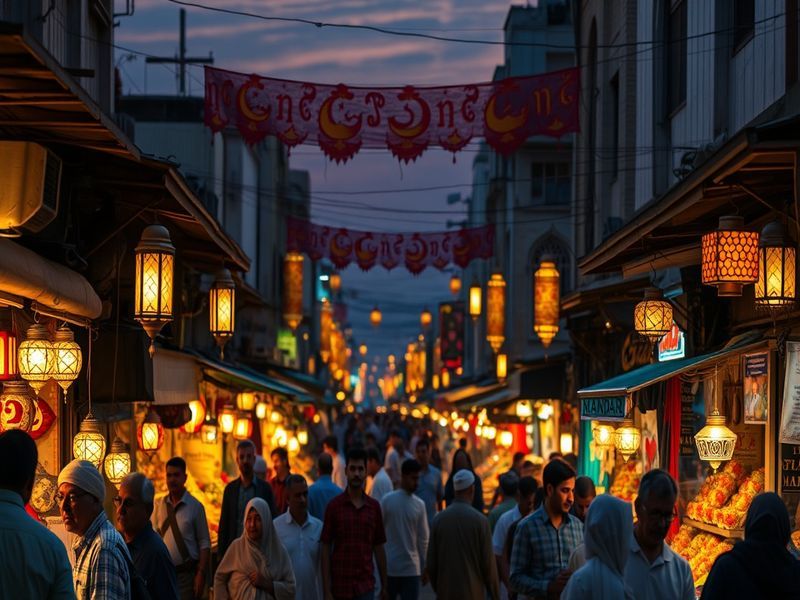
The Islamic holy month of Ramadan holds profound spiritual significance for Muslims worldwide. Observed as a time of fasting, prayer, and reflection, its conclusion is marked by the sighting of the new moon, which signals the start of Eid al-Fitr. This festival celebrates the completion of the month-long fast and is one of the most joyous occasions in the Islamic calendar.
In 2024, Ramadan began on March 10, following the sighting of the crescent moon. The exact end date depends on lunar observations, which vary slightly by region due to differences in moon sighting methodologies and time zones. While the majority of Muslim-majority countries follow the sighting of the moon in Saudi Arabia, some communities rely on local moon sightings or astronomical calculations.
How Is the End of Ramadan Determined?
The conclusion of Ramadan is traditionally determined by the sighting of the new crescent moon, known as the Shawwal moon. This practice stems from the Hadith (sayings of the Prophet Muhammad), which emphasize the importance of moon sightings in Islamic worship. Here’s how the process typically unfolds:
- Moon Sighting: Religious authorities and community leaders look for the crescent moon on the 29th night of Ramadan. If the moon is sighted, Ramadan ends, and Eid al-Fitr begins the following day.
- Astronomical Calculations: Some Muslim communities and organizations use astronomical data to predict the moon’s visibility, especially in regions where weather conditions or geographical location make moon sighting difficult.
- Regional Differences: While Saudi Arabia and many Middle Eastern countries rely on the official sighting in Mecca, other regions may follow local sightings or defer to the decision of their respective religious bodies.
- Eid Announcements: Once the moon is confirmed, mosques and Islamic centers announce the start of Eid al-Fitr, often through official statements or social media. This announcement triggers celebrations, family gatherings, and charitable acts.
In 2024, the moon sighting for Shawwal is expected to occur on the evening of April 8, which would make Eid al-Fitr fall on April 9. However, this date may vary slightly depending on the region. For instance, the Culture section on Dave’s Locker provides updates on global religious and cultural events, including Ramadan and Eid observances.
The Global Impact of Ramadan’s End
The conclusion of Ramadan extends beyond spiritual observance, influencing social, economic, and cultural dynamics. Here’s how the end of Ramadan creates ripple effects around the world:
- Economic Boost: Eid al-Fitr triggers a surge in spending on food, clothing, gifts, and travel. Retailers and businesses, particularly in Muslim-majority countries, experience a significant uptick in sales as families prepare for celebrations.
- Travel and Tourism: Airports and transportation networks see increased traffic as Muslims travel to be with family or visit religious sites. Hajj and Umrah operators also prepare for the upcoming pilgrimage season, which follows Ramadan.
- Cultural Exchange: Non-Muslim communities often participate in Eid festivities, fostering interfaith dialogue and cultural exchange. Cities with diverse populations, such as London, New York, and Toronto, host public Eid events, including markets and festivals.
- Charitable Giving: Zakat al-Fitr, a mandatory charitable donation, is distributed before Eid prayers. This practice ensures that even the less fortunate can partake in the celebrations, reinforcing the values of compassion and community.
The economic impact is particularly notable in countries with large Muslim populations. For example, in Indonesia—the world’s largest Muslim-majority nation—Eid al-Fitr is a major holiday that leads to a nationwide exodus, known as mudik, where millions travel to their hometowns. This annual event causes traffic congestion and strains transportation infrastructure but also boosts local economies in rural areas.
What to Expect in 2024: Key Dates and Preparations
As Ramadan 2024 approaches its end, here’s what Muslims and observers can anticipate in the coming weeks:
- April 8-9: The most probable dates for the moon sighting and Eid al-Fitr, though regional variations may occur. Muslims should check local mosque announcements or Islamic organizations for updates.
- Eid Prayer Timings: Eid prayers are typically held at dawn on the first day of Shawwal. The exact timing depends on local sunrise times and mosque schedules.
- Fasting on Eid Day: Fasting is prohibited on Eid al-Fitr, as it marks the end of the month-long fast. Instead, Muslims are encouraged to eat breakfast before prayers and share meals with family and friends.
- Charity and Gifts: Zakat al-Fitr, equivalent to the cost of a meal, is given before Eid prayers. Additionally, families exchange gifts, especially for children, as part of the celebrations.
For those looking to stay informed about global cultural events, Dave’s Locker’s News section offers timely updates on religious observances and their broader implications. Understanding the nuances of Ramadan’s end can enhance appreciation for its cultural and spiritual significance.
Beyond the Calendar: The Lasting Meaning of Ramadan’s End
While the end of Ramadan is often reduced to a date on the calendar, its true significance lies in the lessons it imparts. The month of fasting is not merely about abstaining from food and drink; it is a period of self-discipline, empathy for the less fortunate, and spiritual growth. The transition to Eid al-Fitr serves as a reminder of these values, encouraging Muslims to carry the spirit of Ramadan forward into the rest of the year.
Eid al-Fitr also underscores the diversity within the global Muslim community. The variations in moon sighting and regional customs highlight the adaptability of Islamic traditions. Whether celebrated with grand feasts in Istanbul, communal prayers in Jakarta, or intimate gatherings in suburban America, Eid reflects the unity and diversity of Muslims worldwide.
As we look ahead to April 2024, the end of Ramadan will not only mark the conclusion of a month of devotion but also the beginning of a new cycle of reflection and renewal. For observers and non-observers alike, it presents an opportunity to appreciate the cultural richness of Islamic traditions and their place in the modern world.