By [Your Name] | Published [Date]
From Humble Beginnings to Global Energy Leader
Nestled along Qatar’s northeastern coast, the industrial city of Ras Laffan has transformed from a quiet fishing village into one of the most critical energy hubs on the planet. This rapid evolution reflects Qatar’s strategic pivot from a pearl-diving economy to a global liquefied natural gas (LNG) superpower. The transformation began in earnest in the 1970s when Qatar discovered vast offshore gas reserves, but the real acceleration came decades later with the North Field gas discovery.
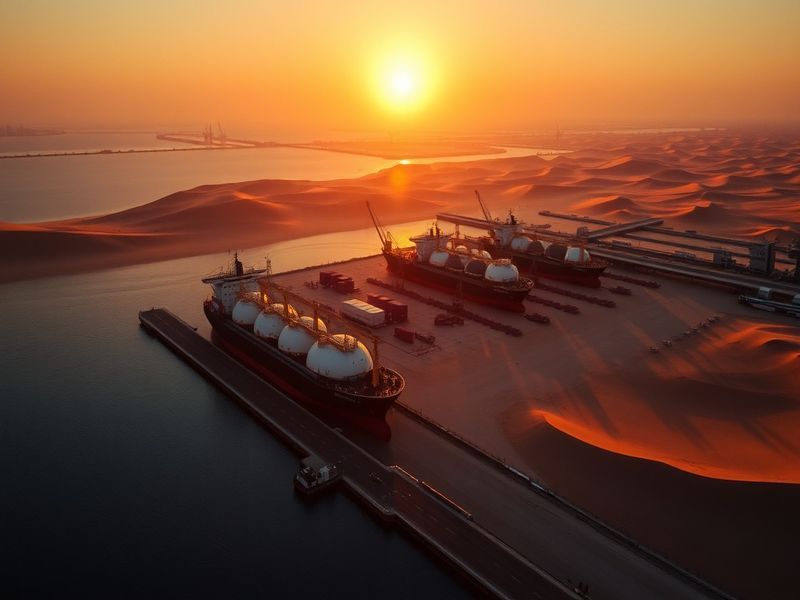
The city’s name itself tells part of the story—”Ras” means “cape” in Arabic, while “Laffan” likely derives from the Arabic word for “soft” or “gentle,” perhaps referring to the calm waters that made the area historically suitable for fishing and trade. Today, those same calm waters host some of the world’s largest LNG carriers, while the once-arid landscape is now dominated by sprawling industrial complexes and processing plants.
What makes Ras Laffan particularly fascinating is how it embodies the intersection of Qatar’s ambitious national vision and the practical realities of global energy demand. The city isn’t just an industrial zone; it’s a testament to how a small nation can leverage its natural resources to become an indispensable player in the world economy.
The Engine Behind Qatar’s LNG Dominance
Ras Laffan’s significance cannot be overstated when examining Qatar’s rise as the world’s top LNG exporter. The city hosts three massive LNG plants—Qatargas, RasGas, and the more recent Golden Pass LNG terminal—and together they account for approximately 30% of global LNG production capacity. This concentration of infrastructure isn’t accidental; it’s the result of deliberate planning and massive investment.
The North Field, which extends beneath the waters of the Persian Gulf, is the source of this wealth. Discovered in 1971, it’s one of the largest non-associated gas fields in the world, containing an estimated 900 trillion cubic feet of recoverable gas. Processing this gas into LNG for export requires not just the extraction infrastructure but also the massive liquefaction plants, storage tanks, and export terminals that now define Ras Laffan’s skyline.
Key to Ras Laffan’s success is its integrated approach to energy production. The city doesn’t just export raw materials; it adds value through complex processing, creating high-purity LNG products tailored to different markets. This vertical integration has allowed Qatar to maintain premium pricing and secure long-term supply contracts with major economies across Asia, Europe, and increasingly, the Americas.
Why Ras Laffan Matters for Global Energy Markets
- Supply Security: In an era of energy transition, Ras Laffan provides a stable, long-term supply of cleaner-burning fossil fuels that can complement renewable energy sources.
- Price Stability: The sheer volume of LNG flowing from Ras Laffan helps moderate global gas prices, particularly in Asia where demand is surging.
- Technological Innovation: The extreme conditions of Qatar’s gas fields have driven advances in LNG technology, including more efficient liquefaction processes and larger cargo ships.
- Geopolitical Leverage: Control over such a significant portion of global LNG supply gives Qatar diplomatic influence, particularly with major energy importers like China, Japan, and India.
Beyond Energy: The Broader Implications of Ras Laffan’s Growth
While Ras Laffan’s primary function is energy production, its influence extends far beyond the energy sector. The city’s development has catalyzed broader economic diversification in Qatar, creating opportunities in logistics, construction, and specialized engineering services. The presence of international oil companies and service providers has also fostered a more globally integrated workforce, with thousands of expatriate workers living in the city’s purpose-built communities.
The environmental impact of such concentrated industrial activity is another critical consideration. Ras Laffan’s operations have faced scrutiny over their carbon footprint, particularly as global climate goals tighten. Qatar has responded with ambitious sustainability initiatives, including carbon capture projects and commitments to reduce methane emissions from its LNG facilities. These efforts reflect a pragmatic approach to balancing economic interests with environmental responsibilities.
Socially, Ras Laffan represents a unique model of planned urban development. Unlike many industrial cities that grow organically around their facilities, Ras Laffan was designed from the ground up with worker welfare in mind. The city features modern housing, healthcare facilities, recreational areas, and educational institutions, creating a self-sustaining community that minimizes the need for workers to commute long distances.
Looking Ahead: The Future of Ras Laffan and Qatar’s Energy Strategy
The next decade will be pivotal for Ras Laffan as it navigates several transformative trends. The global push toward net-zero emissions presents both challenges and opportunities. While some countries may reduce their dependence on fossil fuels, others—particularly in Asia—are expected to increase their LNG imports as they transition away from coal. Qatar is positioning itself to capitalize on this demand through its North Field East expansion project, which will boost LNG production capacity by 40% by 2026.
Technological advancements will also play a crucial role. Qatar is investing in digitalization and automation to improve efficiency and safety across its LNG operations. Innovations like predictive maintenance and real-time monitoring are being implemented to minimize downtime and reduce operational risks in the harsh desert environment.
However, Ras Laffan faces challenges that could reshape its trajectory. Geopolitical tensions in the Middle East, competition from other LNG exporters like the United States and Australia, and the accelerating cost-competitiveness of renewable energy all pose potential threats. Qatar’s response has been to double down on its core strengths: reliability, quality, and long-term supply agreements with trusted partners.
What to Watch in Ras Laffan’s Future
- Expansion Projects: The North Field East expansion will be the most significant development, with new liquefaction trains and infrastructure coming online in stages.
- Sustainability Initiatives: Expect to see more investments in carbon capture, renewable energy integration, and emissions reduction technologies at the facilities.
- Workforce Evolution: As automation increases, the skills required in Ras Laffan will shift, creating demand for tech-savvy workers alongside traditional energy expertise.
- Global Market Shifts: Changes in European energy policies post-Ukraine war and Asia’s evolving energy mix will directly impact Ras Laffan’s export strategies.
Conclusion: A City That Defines an Era
Ras Laffan stands as a monument to what can be achieved when strategic vision meets natural endowment. From its origins as a coastal settlement to its current status as the beating heart of Qatar’s energy sector, the city embodies the country’s transformation from a regional player to a global force. Its story is one of ambition, innovation, and resilience—qualities that will be essential as it navigates an increasingly complex energy landscape.
The lessons from Ras Laffan extend beyond energy. They offer insights into how nations can leverage their unique advantages, how industrial development can coexist with community building, and how even in a shifting global order, certain assets remain indispensable. As the world continues its energy transition, Ras Laffan’s role may evolve, but its importance is unlikely to diminish. For now, it remains a critical node in the global energy grid, a testament to human ingenuity, and a reminder of the enduring power of natural resources when harnessed wisely.
For those interested in exploring more about Qatar’s energy sector or the broader implications of LNG in global markets, visit our News and Analysis sections for in-depth coverage and expert perspectives.