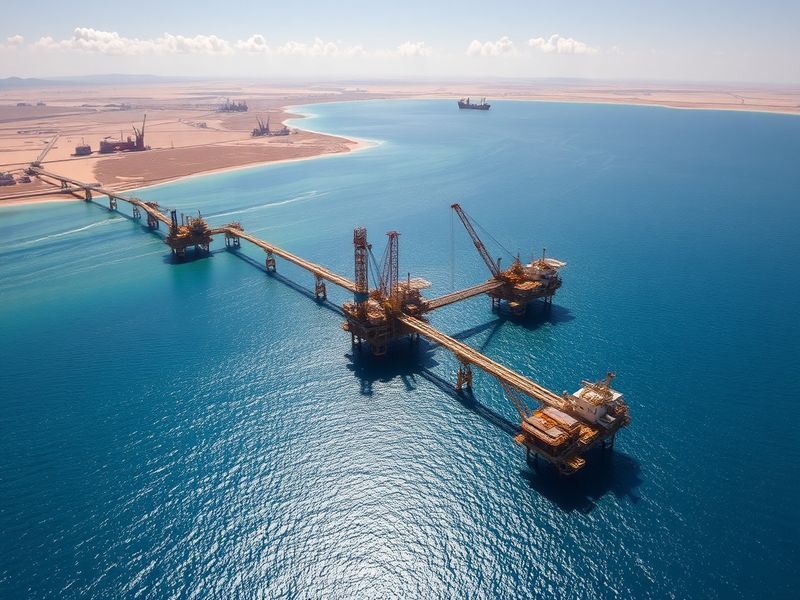
Nestled beneath the warm waters of the Persian Gulf lies one of the world’s most significant energy reserves. The South Pars field isn’t just a geological formation; it’s a cornerstone of Iran’s energy strategy, a source of national pride, and a critical player in global natural gas markets. Stretching across 9,700 square kilometers, this offshore natural gas reservoir is the largest in the world, shared diplomatically with Qatar, where it’s known as the North Field.
The significance of South Pars extends far beyond its sheer size. For Iran, it represents an economic lifeline, a geopolitical asset, and a technological challenge. Developing this field has required decades of investment, international cooperation (and conflict), and innovative engineering solutions. Its reserves, estimated at 14 trillion cubic meters of natural gas, could power economies for generations—if extraction and distribution challenges can be overcome.
The Geological and Economic Might of South Pars
South Pars is part of the larger Pars Oil and Gas Company (POGC) concession, a geological marvel formed over millions of years. The field’s structure is a massive anticline trap, where natural gas accumulated in porous carbonate rocks beneath impermeable layers. This geological formation extends into Qatar as the North Field, making it the largest single natural gas reservoir on Earth.
Economically, South Pars is a juggernaut. The field holds approximately 14 trillion cubic meters of natural gas, along with significant condensate reserves. To put this into perspective, Iran’s total natural gas reserves are estimated at 34 trillion cubic meters, meaning South Pars accounts for nearly half of the country’s entire gas wealth. Beyond raw gas, the field produces valuable natural gas liquids (NGLs) like ethane, propane, and butane, which are essential for petrochemical industries.
Development phases have unfolded in a staggered manner. The Iranian government has divided the field into 24 phases, each designed to extract gas, condensates, and other hydrocarbons. As of 2024, 20 phases are operational, with phases 21-24 still under development. The phased approach allows for gradual investment, technological adaptation, and incremental revenue generation.
Key Economic Contributions
- Revenue Generation: South Pars contributes roughly $15 billion annually to Iran’s economy through gas and condensate sales.
- Employment: The project supports over 100,000 direct and indirect jobs across engineering, construction, and operations sectors.
- Energy Security: It reduces Iran’s reliance on imports and enhances its position as a regional energy exporter.
- Petrochemical Hubs: Gas from South Pars feeds major petrochemical complexes in Assaluyeh, Bandar Imam, and Mahshahr.
Development Challenges and Delays
The journey to harness South Pars’s potential has been anything but smooth. Political isolation, international sanctions, and technical hurdles have repeatedly stalled progress. The project’s timeline, initially optimistic, has stretched over decades due to these obstacles.
International sanctions, particularly those imposed between 2010 and 2015, crippled foreign investment and obstructed technology transfers. Companies like TotalEnergies and Shell withdrew from the project, leaving Iranian firms to navigate complex engineering challenges alone. Domestic contractors stepped in, but without access to cutting-edge equipment and expertise, progress slowed.
Technical difficulties have also played a role. The field’s complex geology demands advanced drilling techniques, and sour gas (high in hydrogen sulfide) poses corrosion risks to infrastructure. Managing such conditions requires specialized materials and constant monitoring, which adds to operational costs.
Notable Milestones and Setbacks
- 1990s: Initial exploration begins, with phases 1 and 2 awarded to foreign contractors.
- 2000s: Phases 3-10 launched, but progress stalls due to sanctions and funding shortages.
- 2010s: Phases 12-19 kick off, leveraging domestic expertise as foreign participation declines.
- 2020s: Phases 20-24 face delays due to budget constraints and pandemic-related disruptions.
Despite these challenges, South Pars remains a testament to Iran’s resilience. Domestic companies like Petropars and Pars Oil have taken the lead, proving Iran’s capability to develop its resources independently. The government continues to emphasize South Pars in its economic plans, allocating funds and prioritizing its completion.
Geopolitical Implications and Regional Competition
South Pars isn’t just an economic asset; it’s a geopolitical chess piece. Its shared nature with Qatar’s North Field makes it a focal point of regional diplomacy and competition. The two countries have navigated decades of overlapping claims, with Qatar’s early development of the North Field giving it a head start in liquefied natural gas (LNG) exports.
Iran’s development of South Pars has been slower, but its potential to challenge Qatar’s dominance in gas markets is significant. Both countries are members of OPEC+, though Iran’s gas sector operates largely outside OPEC’s purview. The rivalry extends to pipeline politics as well. Iran has proposed the Persian Pipeline to export gas to Europe via Turkey, bypassing Western sanctions, though this project remains stalled.
Meanwhile, Qatar has expanded its LNG production capacity, becoming the world’s top LNG exporter. Iran, facing sanctions and infrastructure gaps, has struggled to match Qatar’s export volumes. However, the 2023 reopening of the Iranian nuclear deal briefly raised hopes for renewed foreign investment in South Pars, though such prospects remain uncertain.
Iran vs. Qatar: A Regional Gas Rivalry
- Reserves: Both countries share the Pars field, but Qatar’s North Field is more fully developed.
- Exports: Qatar exports 77 million tons of LNG annually; Iran exports roughly 10 billion cubic meters via pipeline.
- Infrastructure: Qatar has 14 LNG trains; Iran has fewer operational processing units.
- Geopolitics: Qatar maintains strong ties with Western powers; Iran faces sanctions and regional isolation.
South Pars also plays a role in Iran’s relationships with its neighbors. Pipeline projects with Iraq, Pakistan, and even Europe have been proposed, but political tensions and economic constraints have limited progress. The field’s potential to stabilize regional energy markets remains unrealized, partly due to geopolitical fragmentation.
The Future of South Pars: Opportunities and Hurdles
The next decade will determine whether South Pars can fulfill its promise. For Iran, the field represents a path to economic recovery, energy independence, and geopolitical influence. But achieving these goals requires overcoming persistent challenges.
One opportunity lies in petrochemical expansion. Iran aims to increase its petrochemical output by leveraging South Pars’ condensates. Projects like the Persian Gulf Star Refinery in Bandar Abbas are designed to process raw gas into higher-value products, reducing reliance on crude oil exports. This strategy aligns with Iran’s broader goal of diversifying its economy away from oil.
Another potential breakthrough is the revival of foreign investment. If sanctions are eased, companies like TotalEnergies or China’s CNPC could return to South Pars, bringing much-needed capital and technology. China, in particular, has shown interest in long-term energy deals with Iran, though U.S. pressure complicates such arrangements.
However, hurdles remain substantial. U.S. sanctions continue to limit Iran’s access to global financial systems, making large-scale projects difficult to finance. Domestic mismanagement and corruption have also plagued development efforts, leading to cost overruns and inefficiencies. Environmental concerns, including gas flaring and marine ecosystem risks, add another layer of complexity.
Pathways Forward
- Domestic Innovation: Investing in local R&D to improve extraction efficiency and reduce costs.
- Regional Alliances: Strengthening gas export agreements with neighbors like Iraq and Afghanistan.
- Sanctions Relief: Pursuing diplomatic solutions to unlock foreign investment and technology transfers.
- Environmental Safeguards: Implementing stricter regulations to minimize ecological damage from drilling and processing.
For energy analysts, South Pars offers a case study in resource nationalism, geopolitical maneuvering, and the challenges of developing a world-class asset under adverse conditions. Its story reflects broader themes in the global energy sector: the tension between national sovereignty and international cooperation, the impact of sanctions on economic development, and the race to harness fossil fuels while transitioning to renewables.
Conclusion: A Field of Unfulfilled Potential
South Pars remains one of the most underdeveloped major natural gas fields in the world. Its vast reserves could transform Iran’s economy, reduce global dependence on Russian gas, and reshape energy markets in Asia and Europe. Yet, its full potential remains constrained by political isolation, technical challenges, and economic mismanagement.
As Iran navigates its future, South Pars will continue to be a symbol of both its struggles and its aspirations. The field’s development—or lack thereof—will influence Iran’s energy security, regional influence, and economic trajectory for decades to come. For now, South Pars stands as a reminder of what could be: a treasure trove of energy waiting to power progress, if only the right conditions align.
For those interested in Iran’s broader energy strategy, the Energy section on Dave’s Locker offers deeper insights into the country’s evolving role in global markets. Similarly, the Geopolitics category explores the regional dynamics shaping South Pars’ future.