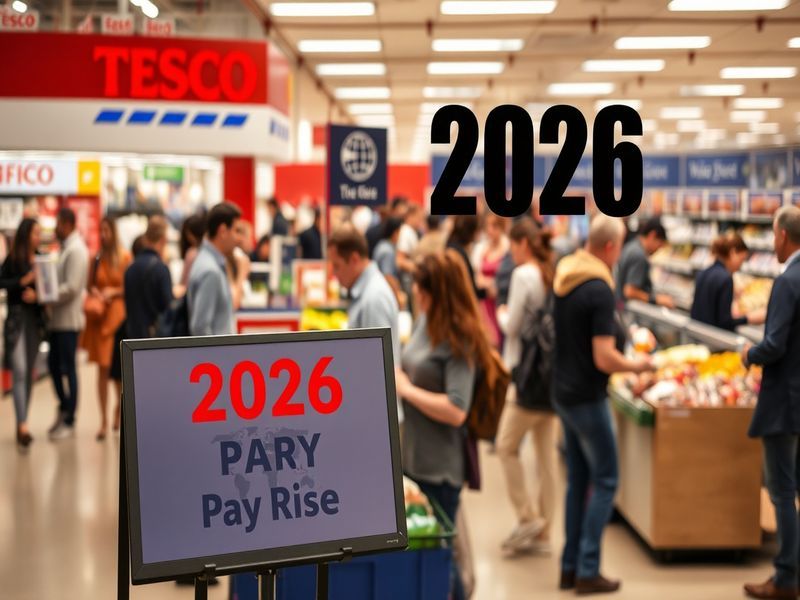
In a move that could redefine compensation standards within the retail sector, Tesco—the United Kingdom’s largest supermarket chain—has announced plans to implement a significant pay rise for its workforce by 2026. This decision arrives amid a period of escalating inflation, labor shortages, and growing demands for fair wages across industries worldwide. The implications of this pay rise extend far beyond Tesco’s aisles, potentially influencing global retail labor practices and setting a precedent for competitors.
The announcement follows years of pressure from unions, activist groups, and employees advocating for better wages. According to reports, Tesco’s pay rise will be phased in over the next two years, with the goal of aligning compensation with the rising cost of living. This strategy is particularly notable in the context of the UK’s economic challenges, where retail workers have faced stagnant wages despite record corporate profits in the sector.
The Broader Context: Retail Wages in a Global Economy
Tesco’s decision must be understood within the wider global retail landscape, where wage disparities and labor conditions vary dramatically. In the United States, for example, retail workers have increasingly turned to unionization efforts, such as those led by the United Food and Commercial Workers (UFCW), to negotiate better pay and benefits. Meanwhile, in countries like Germany and the Netherlands, retail employees benefit from strong labor protections and collective bargaining agreements that ensure competitive wages.
In contrast, many developing nations face the opposite challenge: retail workers often earn wages that barely cover basic living costs. Tesco’s pay rise could serve as a benchmark for multinational corporations operating in these regions, potentially pressuring them to reassess their own compensation structures. The move also reflects a growing trend where companies are prioritizing employee retention and morale as critical components of long-term business strategy.
How Tesco’s Pay Rise Compares to Global Standards
To contextualize Tesco’s announcement, it’s useful to compare its planned pay rise to wages in other major retail markets. Below is a snapshot of average hourly wages for retail workers in select countries:
- United Kingdom: £11.44 (current minimum wage for workers aged 23 and over)
- United States: $15.00 (federal minimum wage for tipped workers varies by state)
- Germany: €12.41 (minimum wage as of 2024)
- Australia: AUD $23.23 (minimum wage as of 2024)
- Japan: ¥1,002 (approximately $6.70) per hour for part-time workers
While Tesco’s pay rise aims to bridge the gap between these figures and the cost of living in the UK, the company must also navigate the complexities of international operations. Tesco’s global workforce spans 12 countries, each with its own economic conditions and labor laws. This diversity presents both challenges and opportunities for the company as it seeks to implement a uniform wage policy.
The Economic Ripple Effect: What This Means for Consumers and Competitors
The financial implications of Tesco’s pay rise are multifaceted. On one hand, higher wages could lead to increased operational costs, which may be passed on to consumers in the form of higher prices. However, proponents argue that better-paid employees are more productive, provide superior customer service, and contribute to lower turnover rates—a significant cost-saving factor for retailers.
Competitors in the UK retail sector are already monitoring Tesco’s move closely. Supermarkets like Sainsbury’s, Asda, and Morrisons may face pressure to follow suit to retain their own workforce. This could spark a wage war in the sector, benefiting employees but potentially squeezing profit margins for companies that fail to adapt. Internationally, retailers like Walmart in the US and Carrefour in France may reassess their own wage policies to avoid losing talent to Tesco or facing similar labor disputes.
For consumers, the direct impact of higher wages remains to be seen. While some may worry about rising prices, others argue that a well-compensated workforce could lead to a better shopping experience, ultimately justifying the cost. The long-term effects on Tesco’s market position will depend on how the company balances these competing priorities.
Cultural Shifts: How Workplace Expectations Are Evolving
Tesco’s pay rise is not just an economic decision; it’s a cultural one. The announcement reflects a broader shift in societal expectations around work and compensation. Younger generations, in particular, are prioritizing job satisfaction, work-life balance, and fair pay over traditional career ladders. This mindset is reshaping industries, including retail, where historically low wages have been the norm.
The COVID-19 pandemic further accelerated these changes. Frontline retail workers, often underpaid and undervalued, became essential to society’s functioning. This newfound recognition has emboldened workers to demand better conditions, and companies like Tesco are responding. The pay rise could be seen as a response to this cultural awakening, where corporate responsibility is increasingly tied to social impact.
Moreover, the gig economy’s rise has created a precedent for flexible, on-demand work, which has influenced traditional retail jobs. Employees today expect more than just a paycheck; they want stability, benefits, and a sense of purpose. Tesco’s initiative may signal a broader industry trend where companies invest in their workforce not just as a cost, but as a strategic asset.
Looking Ahead: The Future of Retail Compensation
As Tesco rolls out its pay rise over the next two years, the retail sector will be watching closely. If successful, the move could set a new standard for fair wages in global retail, encouraging other companies to follow suit. However, challenges remain. Inflationary pressures, supply chain disruptions, and economic uncertainty could complicate the implementation process, requiring Tesco to strike a delicate balance between employee welfare and financial sustainability.
For now, the announcement serves as a reminder of the evolving nature of work and compensation. In a world where labor rights and corporate responsibility are increasingly intertwined, Tesco’s decision is a bold step toward redefining the employer-employee relationship. Whether this trend will spread globally remains to be seen, but one thing is clear: the conversation around fair wages is far from over.
For more insights into how wage trends are shaping industries, explore our coverage of Business and Finance on Dave’s Locker.
As the retail landscape continues to evolve, Tesco’s pay rise may well be remembered as a turning point—not just for the company, but for workers around the world.