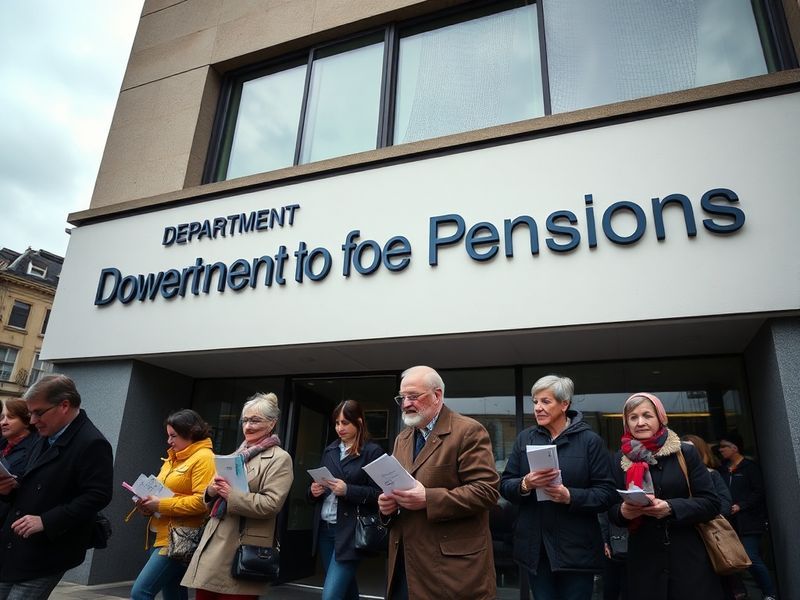
What Does the UK Department for Work and Pensions Actually Do?
“`html
Understanding the UK’s Department for Work and Pensions: Functions and Impact
The Department for Work and Pensions (DWP) serves as the UK government’s largest public service department, responsible for welfare, pensions, and employment support. With a budget exceeding £200 billion annually, its decisions shape the lives of millions. Yet, beyond the headlines, the DWP’s work remains poorly understood by many citizens. This article examines its core functions, the challenges it faces, and the broader implications of its policies.
Core Responsibilities of the DWP
The DWP’s remit is broad, covering everything from financial support for low-income families to retirement planning for older adults. At its heart, the department aims to reduce poverty, promote employment, and deliver pensions fairly and efficiently. Its key responsibilities can be grouped into several areas:
- Benefits Administration: The DWP manages major welfare programs such as Universal Credit, Jobseeker’s Allowance, Pension Credit, and Disability Living Allowance. These programs provide financial assistance to people out of work, on low incomes, or with disabilities.
- State Pension Delivery: It oversees the State Pension, ensuring eligible individuals receive payments based on their National Insurance contributions. This system underpins financial security for over 12 million retirees.
- Employment Support: Through initiatives like the Work and Health Programme, the DWP helps unemployed individuals find work, offering training, job coaching, and financial incentives to employers.
- Fraud and Error Reduction: The department invests significant resources in detecting and preventing benefit fraud, which it estimates costs the taxpayer over £1 billion annually.
These roles place the DWP at the centre of Britain’s social safety net. However, the scale of its operations also makes it a frequent subject of public debate, particularly when policies change or when errors occur in benefit calculations.
Policy Challenges and Public Perception
The DWP operates in a political and social environment where expectations are high and margins for error are slim. One of its most contentious challenges is balancing fiscal responsibility with compassion. Austerity measures introduced after 2010 reduced welfare spending, but critics argue this deepened poverty in vulnerable communities. The rollout of Universal Credit, intended to simplify the benefits system, has faced repeated delays and criticism over design flaws that left claimants in financial hardship during the transition.
Public perception of the DWP is often polarised. Supporters highlight its role in preventing destitution, pointing to the State Pension as a lifeline for retirees. Detractors, however, cite bureaucratic inefficiencies, long wait times for support, and the psychological toll of benefit sanctions. A 2023 report by the National Audit Office found that while the DWP had improved service delivery in some areas, claimants still experienced significant stress navigating the system.
Moreover, the DWP’s approach to disability benefits has come under intense scrutiny. Changes to Personal Independence Payment (PIP) assessments have led to accusations of unfair reassessments that strip support from those who need it most. The department insists these reforms are necessary to ensure sustainability, yet the human cost remains a point of contention.
Technology and Reform: The Digital Transformation
The DWP has undergone a significant digital transformation over the past decade. Its online portal, launched in 2012, allows claimants to manage benefits, report changes, and submit evidence without visiting a jobcentre. While digitalisation has improved efficiency, it has also created new barriers for those without internet access or digital literacy, particularly older adults and homeless populations.
Artificial intelligence and data analytics are increasingly used to detect fraud and assess eligibility. The department claims these tools reduce errors and speed up processing, but privacy advocates warn of potential misuse of personal data. The DWP has defended its practices, stating that all data processing complies with GDPR and is subject to oversight.
Looking ahead, the DWP is exploring further automation, including the use of chatbots to handle initial benefit inquiries. While this could reduce waiting times, it risks depersonalising a system that deals with life’s most vulnerable moments. The balance between efficiency and empathy remains a defining challenge.
Broader Implications: Economic and Social Impact
The DWP’s policies ripple through the economy and society in ways that extend far beyond individual claimants. Welfare spending acts as an economic stabiliser during recessions, injecting demand into local economies when private sector activity declines. For example, the uplift in Universal Credit during the COVID-19 pandemic helped prevent a surge in poverty and supported businesses by maintaining consumer spending.
On a social level, the department’s decisions influence health outcomes. Studies have shown that financial insecurity is linked to higher rates of mental health issues, chronic illness, and even premature mortality. By providing a financial floor, the DWP helps mitigate these risks, though critics argue that current benefit levels are insufficient to achieve this goal.
The DWP also plays a role in shaping workforce participation. Policies encouraging employment can reduce long-term dependency on benefits, but overly punitive sanctions may push people into informal or precarious work. The department’s Work Programme has had mixed success, with some participants gaining stable employment, while others remain trapped in cycles of low pay and insecurity.
Ultimately, the DWP reflects the values of the society it serves. A welfare system can be viewed either as a safety net or a safety valve—either a reflection of collective responsibility or a tool for cost control. The direction the DWP takes in the coming years will reveal much about Britain’s priorities as it grapples with an ageing population, rising living costs, and the legacy of austerity.
For those seeking to understand the UK’s social fabric, the DWP is not just an administrative body—it is a mirror. And like any mirror, its clarity depends on how closely we choose to look.
Key Takeaways
- The DWP is the UK’s largest public service department, managing welfare, pensions, and employment support.
- Its policies have faced criticism for contributing to poverty and administrative inefficiencies, particularly during the rollout of Universal Credit.
- Digital transformation has improved accessibility but excluded those without online access.
- The department’s work has wide-ranging economic and social consequences, influencing health, employment, and inequality.
- Future reforms will test whether the DWP can balance efficiency, fairness, and compassion.
For further reading on related topics, explore our News and Politics sections, where we analyse the intersection of policy, society, and public life.