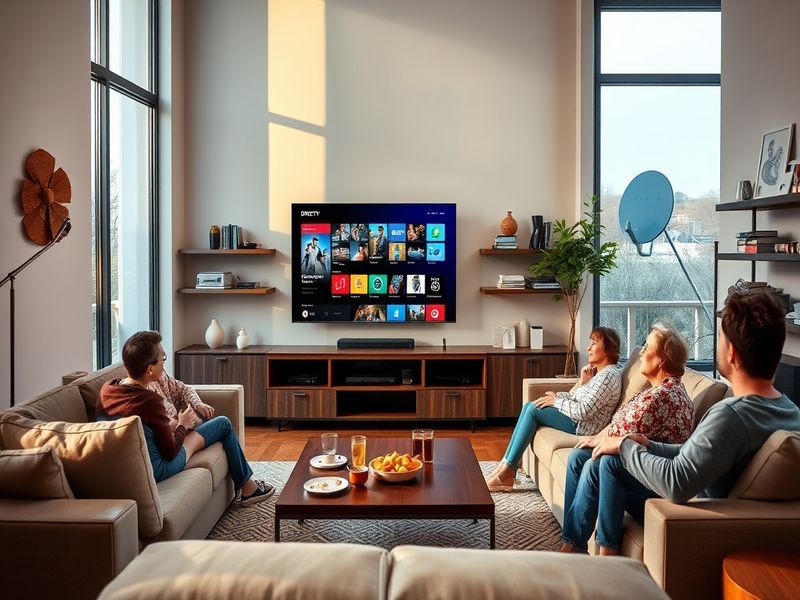
DIRECTV: A Global Overview of Satellite TV’s Evolution
For decades, DIRECTV has stood as a cornerstone in the satellite television industry, reshaping how audiences consume entertainment worldwide. Since its launch in 1990, the service has expanded from a niche offering into a global powerhouse, adapting to technological shifts while maintaining its core promise: delivering premium content to millions of homes. Its journey reflects broader trends in media consumption, from the rise of pay-TV to the challenges posed by streaming services.
Today, DIRECTV operates in over 20 countries, serving a diverse audience that spans from urban centers in the United States to rural communities in Latin America. Its influence extends beyond mere broadcasting, touching on cultural exchange, economic growth in local markets, and the democratization of high-quality television. To understand its impact, it’s essential to examine its history, technological innovations, and the evolving role of satellite TV in the digital age.
The Early Years: Pioneering Satellite Television
DIRECTV’s origins trace back to a bold vision: bringing television into homes without relying on traditional cable infrastructure. Founded by Hughes Electronics, a subsidiary of General Motors, the company launched its first satellite in 1990, offering viewers a new way to access hundreds of channels via a small dish installed on rooftops. This innovation was groundbreaking at the time, as most households were still dependent on cable providers or over-the-air broadcasts.
The early 1990s were a period of rapid change in the media landscape. Cable companies dominated urban areas, but DIRECTV filled gaps in rural and underserved regions where cable was unavailable or unreliable. Its subscription model—combining a one-time equipment fee with monthly charges—proved attractive to consumers seeking more choices. By 1994, DIRECTV had surpassed one million subscribers, a milestone that solidified its place in the industry.
Culturally, DIRECTV’s arrival coincided with a growing appetite for diverse content. The service capitalized on this by offering niche programming, including international channels and premium movie packages. This strategy not only attracted viewers but also set a precedent for how satellite TV could cater to specialized tastes, a trend that would later influence streaming platforms.
A Global Expansion: Adapting to Local Markets
DIRECTV’s international growth began in earnest in the late 1990s and early 2000s, as the company recognized the potential of emerging markets. Latin America became a key focus, where cable penetration was low and satellite TV offered a viable alternative. In countries like Brazil, Mexico, and Argentina, DIRECTV positioned itself as a premium service, targeting middle- and upper-class households with exclusive sports and entertainment packages.
One of the service’s most significant moves was its partnership with local broadcasters to secure rights to popular regional content. This approach allowed DIRECTV to blend global offerings with familiar programming, making the transition to satellite TV smoother for consumers. For example, in Mexico, DIRECTV’s collaboration with Televisa helped it dominate the pay-TV market, offering a mix of telenovelas, soccer matches, and Hollywood films.
However, global expansion wasn’t without challenges. Regulatory hurdles, competition from local providers, and economic fluctuations in some regions tested DIRECTV’s adaptability. In Europe, for instance, the company faced stiff competition from established cable operators and later from streaming services like Netflix. Despite these obstacles, DIRECTV’s ability to tailor its offerings to local preferences—such as emphasizing soccer in Latin America or cricket in India—helped it carve out a sustainable niche.
Technological Innovations: From Analog to Digital
DIRECTV’s longevity can be attributed in part to its commitment to technological advancements. In the early 2000s, the company transitioned from analog to digital broadcasting, a move that improved picture quality and expanded channel capacity. This shift was crucial as high-definition (HD) television gained popularity, and consumers began demanding sharper, more immersive viewing experiences.
The introduction of DVR (Digital Video Recorder) technology in the mid-2000s further cemented DIRECTV’s appeal. The service’s “Genie” DVR system allowed users to record multiple shows simultaneously and access them from any room in the house, a feature that set it apart from competitors. This innovation aligned with changing viewing habits, as audiences sought greater control over their entertainment schedules.
More recently, DIRECTV has embraced 4K Ultra HD and advanced audio technologies like Dolby Atmos, catering to the demands of tech-savvy consumers. The company has also integrated streaming capabilities, offering apps like DIRECTV Stream to compete directly with platforms like YouTube TV and Hulu Live. These adaptations reflect a broader industry trend: the blurring of lines between traditional TV and digital streaming.
The Streaming Era: Challenges and Opportunities
The rise of streaming services has posed a significant challenge to traditional pay-TV providers like DIRECTV. Platforms such as Netflix, Amazon Prime Video, and Disney+ have redefined how audiences consume content, prioritizing on-demand viewing and personalized recommendations. In response, DIRECTV has had to reinvent itself, balancing its legacy as a satellite provider with the need to stay relevant in a streaming-dominated world.
One of DIRECTV’s strategies has been to bundle its satellite service with streaming options. The DIRECTV Stream service, for example, allows users to access live TV and on-demand content without requiring a satellite dish, appealing to younger audiences who prefer flexibility. Additionally, the company has secured exclusive rights to popular shows and sports events, such as NFL Sunday Ticket, to retain its subscriber base.
However, the shift to streaming has also brought financial pressures. The cost of securing premium content rights has skyrocketed, and DIRECTV has faced criticism for frequent price increases. In some markets, the service has struggled to compete with cheaper, purely digital alternatives. Despite these challenges, DIRECTV’s global footprint and brand recognition provide a foundation for continued growth, particularly in regions where internet infrastructure remains underdeveloped.
Looking ahead, DIRECTV’s ability to innovate will determine its future. The company is exploring partnerships with telecom providers to offer bundled services, such as combining satellite TV with high-speed internet. It’s also investing in AI-driven recommendations to enhance the user experience. These efforts suggest that DIRECTV is not merely clinging to its past but actively shaping its role in the future of television.
A Cultural Perspective: More Than Just a TV Service
Beyond its technological and commercial achievements, DIRECTV has played a subtle yet significant role in shaping global media culture. In many countries, the service has become a symbol of modernity, offering access to international news, sports, and entertainment that might otherwise be unavailable. For expatriates and diaspora communities, DIRECTV has served as a vital link to their home countries, providing familiar programming and news in their native languages.
In Latin America, for instance, DIRECTV has been instrumental in popularizing soccer broadcasts, bringing matches from Europe’s top leagues to local fans. This has not only fueled the sport’s growth but also created a shared cultural experience across different countries. Similarly, in Asia, DIRECTV’s international channels have introduced Western audiences to Bollywood films, K-pop, and other regional content, fostering cross-cultural exchange.
The service has also influenced advertising and marketing strategies. Brands have leveraged DIRECTV’s targeted advertising capabilities to reach specific demographics, from affluent urban households to sports enthusiasts. This precision has made satellite TV an attractive platform for advertisers, even as digital advertising grows.
Yet, DIRECTV’s cultural impact is not without controversy. Critics argue that the service has contributed to the homogenization of global media, prioritizing Western content over local productions. In some regions, the dominance of international channels has led to concerns about cultural imperialism. However, DIRECTV’s partnerships with local broadcasters have helped mitigate these issues, ensuring a balance between global and regional content.
Conclusion: The Future of DIRECTV in a Changing World
DIRECTV’s story is one of adaptation and resilience. From its pioneering days as a satellite TV provider to its current efforts to blend traditional and digital media, the company has consistently evolved to meet the changing needs of its audience. While the rise of streaming services presents undeniable challenges, DIRECTV’s global reach, technological innovations, and cultural influence position it to remain a key player in the media landscape.
For consumers, the choice between satellite TV and streaming often comes down to preference: those seeking live sports, news, and exclusive content may still find value in DIRECTV’s offerings. Meanwhile, younger audiences and tech enthusiasts may gravitate toward purely digital alternatives. Ultimately, the future of DIRECTV will depend on its ability to innovate, collaborate, and deliver experiences that resonate with an increasingly fragmented audience.
As the media industry continues to transform, DIRECTV’s legacy serves as a reminder of the enduring power of television—whether delivered via satellite, cable, or the internet. Its journey reflects broader societal shifts, from the globalization of entertainment to the evolving ways we connect with the world. For now, DIRECTV remains a testament to the idea that even in an era of rapid change, some traditions are worth preserving.