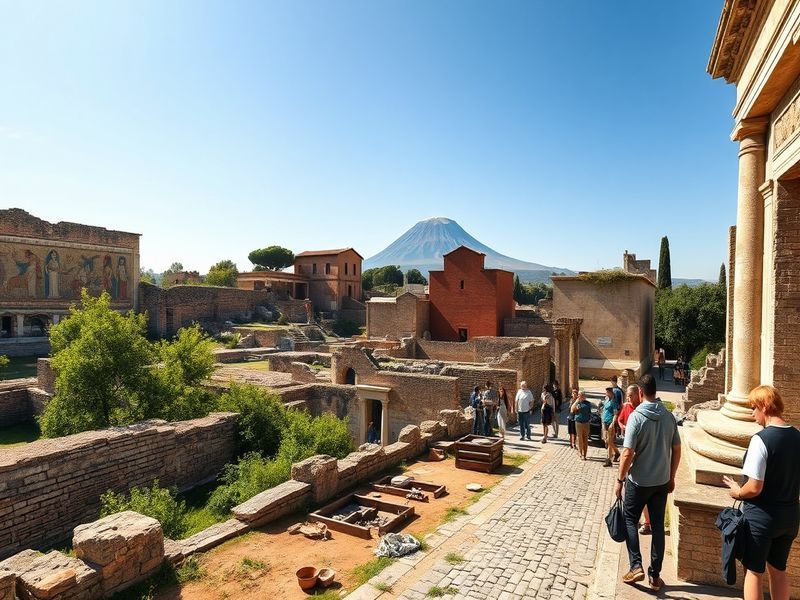
The Historical Significance of Pompeii
Pompeii, a city frozen in time, offers an unparalleled glimpse into ancient Roman life. Located near the modern city of Naples, Italy, it was buried under volcanic ash and pumice following the catastrophic eruption of Mount Vesuvius in 79 AD. This natural disaster preserved buildings, artifacts, and even human remains, providing invaluable insights into the daily lives of its inhabitants.
The city was a bustling hub of commerce, culture, and social interaction. Its streets were lined with shops, homes, and public spaces, revealing a vibrant community. The preservation of Pompeii allows historians and archaeologists to study Roman architecture, urban planning, and social structures in unprecedented detail.
Life in Pompeii Before the Eruption
Before its destruction, Pompeii was a thriving city with a population estimated between 10,000 and 20,000 people. The residents engaged in various trades, including pottery, textiles, and food production. The wealth generated by these activities contributed to the city’s elaborate public buildings and luxurious villas.
The following aspects of daily life in Pompeii illustrate the city’s rich culture:
- Public Baths: A central aspect of social life, these baths were places for relaxation and socialization.
- Markets: The forum served as the city’s main market area, where citizens conducted business and exchanged goods.
- Entertainment: The amphitheater hosted gladiatorial games and theatrical performances, showcasing the importance of entertainment in Roman society.
- Religion: Temples dedicated to various gods and goddesses reflected the residents’ spiritual beliefs and rituals.
The Eruption of Mount Vesuvius
The eruption of Mount Vesuvius was a catastrophic event that changed the course of history for Pompeii and its inhabitants. On August 24, 79 AD, the volcano erupted with a force that released a cloud of stones, ashes, and fumes to a height of 33 km (20.5 miles). The eruption lasted for two days, blanketing the city in approximately 4 to 6 meters of volcanic material.
This sudden disaster caught the citizens off guard. Many residents attempted to flee, while others sought refuge in their homes. The rapid burial of the city preserved not only the structures but also the tragic stories of its inhabitants. Excavations have uncovered plaster casts of victims, capturing their final moments and evoking a poignant sense of loss.
Modern Archaeological Discoveries
Since its rediscovery in the 18th century, Pompeii has been a site of ongoing archaeological research. The site continues to yield new findings that enhance our understanding of Roman life. Recent excavations have uncovered previously hidden buildings, frescoes, and artifacts, revealing details about the city’s social hierarchy and daily activities.
Some notable discoveries include:
- The Villa of the Mysteries: This villa is famous for its well-preserved frescoes depicting mysterious initiation rites.
- The House of the Vettii: A luxurious residence that showcases intricate frescoes and an elaborate layout, indicating the wealth of its owners.
- Fast Food Joints: The remains of thermopolia (ancient fast food restaurants) have been found, highlighting the social and culinary habits of the time.
These findings not only tell us about the daily life of Pompeii’s residents but also reflect the broader aspects of Roman culture. The preservation of Pompeii serves as a crucial resource for historians and archaeologists, allowing them to piece together the complexities of ancient society.
Conclusion
Pompeii remains one of the most significant archaeological sites in the world. The city’s destruction and subsequent preservation offer a unique opportunity to study ancient Roman life in detail. As excavations continue and new technologies emerge, our understanding of Pompeii will only deepen. The lessons learned from this ancient city resonate today, reminding us of the fragility of human existence and the enduring power of nature.
For more insights on historical sites, visit our Travel category or explore our Culture section for related articles.