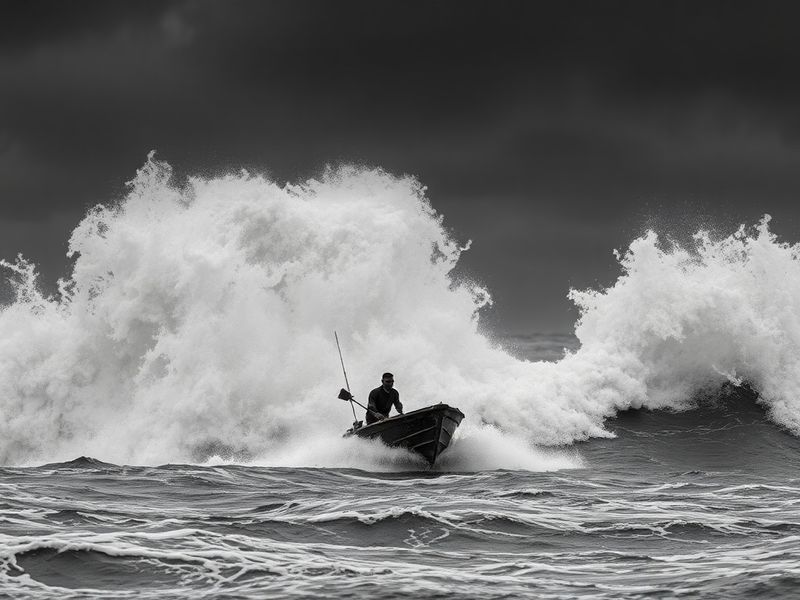
Tormenta: A Word That Crosses Borders
Few words in the Spanish language carry as much weight as tormenta. It translates simply to “storm” in English, but its resonance stretches far beyond meteorology. The term embodies chaos, transformation, and renewal. Whether whispered in the streets of Madrid, shouted in the markets of Mexico City, or etched into the poetry of Pablo Neruda, tormenta is a cultural touchstone that defies borders.
This duality—its literal and metaphorical meanings—has cemented tormenta in global lexicons. In regions where storms dictate survival, the word takes on spiritual and historical dimensions. The Caribbean, for instance, has long personified storms as both destroyers and purifiers. Hurricanes like María and Katrina were not just weather events; they became tormentas in the collective consciousness, symbols of resilience and loss.
The Meteorological Meaning: More Than Just Rain and Wind
At its core, a tormenta is a violent disturbance in the atmosphere. Meteorologists classify it into several types: thunderstorms, snowstorms, dust storms, and tropical cyclones. Each carries its own destructive potential and geographical footprint. A thunderstorm, for example, can spawn lightning, hail, and tornadoes, while a tropical cyclone—known as a hurricane in the Atlantic or typhoon in the Pacific—brings sustained winds over 74 mph and torrential rains.
The study of storms has evolved dramatically. Ancient civilizations attributed them to divine wrath. Aristotle’s Meteorologica (4th century BCE) was one of the first attempts to explain storms scientifically. Today, satellites and supercomputers model storm paths with increasing precision, saving lives and resources.
- Thunderstorms: Common in temperate regions, they produce lightning and thunder, often accompanied by heavy rain.
- Blizzards: Severe snowstorms with winds over 35 mph and visibility below 0.25 miles for at least three hours.
- Tropical Cyclones: Rotating low-pressure systems forming over warm ocean waters, classified by intensity from tropical depression to Category 5.
- Dust Storms: Prevalent in arid regions like the Sahara or American Southwest, they reduce visibility and pose health risks.
The Cultural Weight: Storms in Art, Myth, and Identity
Across cultures, storms are rarely neutral. In Greek mythology, Zeus wielded thunderbolts as tools of justice. Norse legends feature the god Thor, who summoned storms to protect Midgard. In the Yucatán Peninsula, the Maya god Chaac was both feared and revered for sending rain and storms to nourish crops—or destroy them.
Literature, too, has immortalized storms. Shakespeare’s The Tempest uses a shipwreck caused by a storm as the catalyst for political intrigue. In Gabriel García Márquez’s One Hundred Years of Solitude, storms are recurring symbols of fate and cyclical time. The novel’s apocalyptic downpours mirror the collapse of the Buendía family, suggesting that storms are not just external forces but reflections of human turmoil.
Music has also embraced the storm as metaphor. From Beethoven’s Pastoral Symphony—which evokes a thunderstorm’s grandeur—to Bob Dylan’s Blowin’ in the Wind, artists use atmospheric imagery to convey struggle and hope. In Latin America, the cumbia sonidera genre often references storms as metaphors for social upheaval during the late 20th century.
The Human Response: Preparedness and Community
When a tormenta approaches, human behavior shifts from curiosity to urgency. In coastal communities, evacuation plans and early warning systems are critical. The 2004 Indian Ocean tsunami and 2017 Hurricane Maria revealed both the failures and successes of disaster response. Preparedness saves lives, but infrastructure and socioeconomic factors determine survival rates.
In rural areas, traditional knowledge often complements modern forecasting. Indigenous communities in the Andes, for example, read cloud patterns and animal behavior to predict storms—a practice increasingly studied by climate scientists. Meanwhile, in cities like Miami or Mumbai, architects design buildings to withstand high winds and flooding, integrating drainage systems into urban planning.
- Early Warnings: Systems like NOAA’s Hurricane Watch and Mexico’s SMN provide crucial lead time.
- Evacuation Routes: Clear signage and community drills reduce panic during emergencies.
- Emergency Kits: Water, non-perishable food, flashlights, and first aid are essential for 72-hour survival periods.
- Community Networks: Neighborhood associations and local radio stations disseminate real-time updates in remote areas.
The Climate Change Factor: Are Storms Getting Worse?
Scientists agree: the intensity and frequency of storms are increasing due to global warming. Warmer ocean temperatures fuel tropical cyclones, while shifting jet streams alter storm tracks. The 2020 Atlantic hurricane season broke records with 30 named storms, including six major hurricanes. In 2023, Cyclone Freddy became the longest-lasting tropical cyclone on record, wreaking havoc in Mozambique and Malawi for over five weeks.
The economic toll is staggering. According to the World Meteorological Organization, weather-related disasters cost the global economy $280 billion annually. Small island nations like Dominica and Vanuatu face existential threats from rising seas and intensifying storms. Meanwhile, insurance models are collapsing as payouts outpace premiums.
Yet, amid these challenges, innovation emerges. Coral reef restoration projects in the Caribbean aim to buffer coastlines from storm surges. Solar-powered desalination plants in Puerto Rico provide clean water post-hurricane. The phrase tormenta is no longer just a warning—it’s a call to action.
A Global Phenomenon with Local Faces
From the monsoons of India to the typhoons of the Philippines, storms are universal yet deeply personal. In the Philippines, the term bagyo (a local word for typhoon) is part of daily vocabulary, embedded in school drills and emergency broadcasts. In the Netherlands, flood barriers like the Maeslantkering are testaments to human ingenuity against the sea’s fury.
In the United States, the National Weather Service’s Storm Prediction Center issues daily convective outlooks, predicting severe thunderstorms with the same rigor as hurricanes. Meanwhile, in Africa, the African Centre of Meteorological Applications for Development (ACMAD) works to improve early warning systems across the Sahel, where droughts and floods are worsening.
What unites these diverse experiences is the shared language of tormenta. It is a word that transcends translation, carrying warnings, stories, and survival strategies across continents. Whether in a farmer’s prayer for rain or a scientist’s satellite image, the storm remains a constant—unpredictable, powerful, and deeply human.