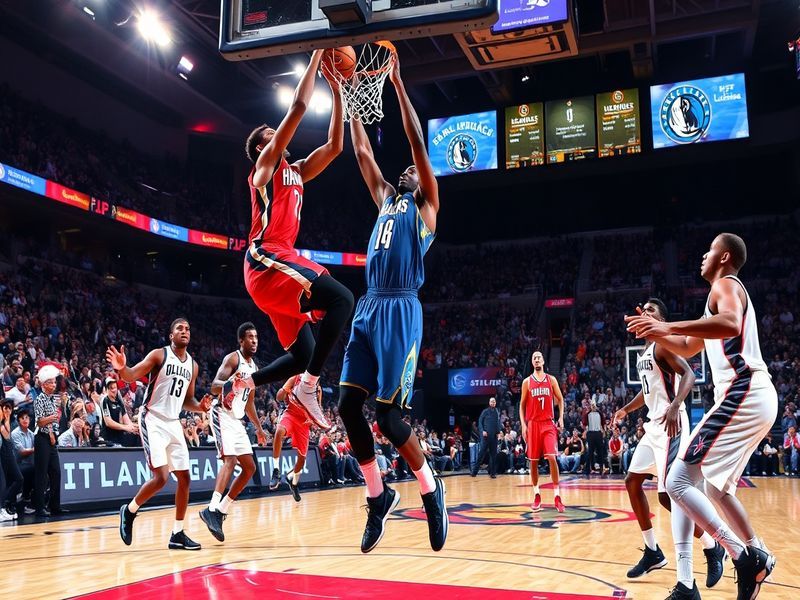
The Atlanta Hawks and Dallas Mavericks represent two distinct approaches to building a championship-caliber team in the NBA. While both franchises have followed unconventional paths to success, their strategies—one rooted in balanced development and the other in high-risk, high-reward moves—could not be more different. These contrasting philosophies extend beyond basketball, offering a case study in organizational culture and adaptability in professional sports.
The Hawks have spent the last decade emphasizing player development, culture, and a clear basketball identity. Meanwhile, the Mavericks have leaned on star power and bold decisions, often defying conventional wisdom. Both methods have produced results, but their divergent paths highlight the tension between process and outcome in sports.
The Hawks’ Patient Rebuild: From Lottery Picks to Playoff Contenders
Atlanta’s transformation from a struggling franchise to a consistent playoff team did not happen overnight. The Hawks’ front office, led by general manager Landry Fields, prioritized long-term growth over short-term wins. This philosophy was evident in their draft strategy, where they selected players like Dejounte Murray and Jalen Johnson—athletes with high ceilings but who required time to develop.
The Hawks’ offensive system under head coach Quin Snyder emphasizes ball movement, spacing, and defensive versatility. Their roster reflects this identity, featuring players who can contribute in multiple ways rather than relying on a single superstar. This approach has made them one of the NBA’s most balanced teams, capable of competing with any opponent on any given night.
Key to Atlanta’s success has been their ability to maximize the potential of role players. Players like Bogdan Bogdanović and Clint Capela have thrived in systems that prioritize their strengths, proving that a well-structured organization can elevate talent regardless of draft position.
Atlanta’s Core Principles
- Development First: Investing in young players with high upside rather than chasing established stars.
- System Over Stars: Building a cohesive system where roles are clearly defined, and individual egos do not overshadow team success.
- Defensive Identity: A commitment to defense, even when it means sacrificing offensive firepower in key moments.
- Cultural Cohesion: Fostering a locker room environment where accountability and trust are prioritized over individual accolades.
The Mavericks’ High-Stakes Gamble: Star Power and Bold Moves
Dallas has taken a starkly different route, built on the belief that transcendent talent can outweigh organizational structure. The Mavericks’ 2021 championship run, led by Luka Dončić and an unconventional supporting cast, validated their high-risk approach. Since then, they have doubled down on this philosophy, making aggressive moves to surround Dončić with complementary stars rather than role players.
General manager Nico Harrison has overseen a series of blockbuster trades and signings, including the acquisition of Kyrie Irving and Grant Williams. These moves reflect a willingness to sacrifice draft capital and financial flexibility for the chance to maximize Dončić’s prime years. The Mavericks’ offensive system is designed around their superstar, with isolation sets and high pick-and-roll actions that cater to his strengths.
While this approach has led to regular-season success, it has also raised questions about sustainability. The Mavericks’ defense often struggles, and their lack of depth has been exposed in playoff series against elite teams. Their reliance on Dončić to bail them out in close games has drawn criticism, particularly as his workload has increased over time.
Dallas’ High-Risk, High-Reward Strategy
- Star-Centric Roster Construction: Prioritizing elite talent over balanced depth, even if it means overpaying or trading future assets.
- Offensive Freedom: Allowing players like Dončić and Irving to operate in isolation-heavy sets, which maximizes their individual brilliance but can limit team cohesion.
- Defensive Neglect: Accepting defensive deficiencies in exchange for offensive firepower, betting that their scoring will outweigh their liabilities.
- Short-Term Thinking: Willingness to mortgage the future for present success, even if it risks long-term competitiveness.
Broader Implications: What These Philosophies Mean for the NBA
The Hawks and Mavericks represent two competing visions for how to build a championship team in the modern NBA. Atlanta’s model suggests that patience, culture, and system-driven basketball are the keys to sustained success. Dallas, on the other hand, argues that superstar talent is so scarce that teams must do whatever it takes to acquire it, even if it means sacrificing balance.
These contrasting approaches reflect broader trends in the league. The rise of analytics and player empowerment has led many teams to prioritize development and fit over star power. Meanwhile, franchises like the Mavericks continue to bet on individual brilliance, even when it defies conventional wisdom.
For fans, this debate is more than just a basketball discussion—it’s a reflection of how organizations value different types of success. The Hawks’ model rewards stability and process, while the Mavericks’ approach celebrates boldness and creativity. Both have merit, but their differing outcomes will continue to shape the league for years to come.
What’s Next for Both Teams?
The Hawks face a critical juncture this offseason. With Dejounte Murray entering his prime and Jalen Johnson developing into a potential All-Star, they have a core that could contend for years. However, their ability to retain key players and make shrewd additions will determine whether their development-first model can translate into a championship.
For Dallas, the challenge is maintaining their high-wire act. Luka Dončić is entering the prime of his career, and the Mavericks must decide whether to double down on their star-centric approach or begin integrating more young talent to ensure long-term sustainability. Their 2024 playoff struggles against the Oklahoma City Thunder exposed vulnerabilities in their system, forcing a reckoning with their defensive limitations.
Both teams offer valuable lessons for the NBA. The Hawks prove that a well-constructed system can elevate good players into great ones. The Mavericks demonstrate that superstar talent, when paired correctly, can overcome almost any deficiency. The question now is whether one model will prove superior—or if the future of the league lies in finding a balance between the two.
For fans, the Hawks vs. Mavericks rivalry is more than just a matchup between two teams. It’s a clash of philosophies, a debate about what it truly means to build a champion. And as both franchises continue to evolve, their contrasting paths will keep shaping the NBA’s future.
For more on how team philosophies shape player development, check out our Analysis section. To see how these strategies play out in real time, follow our Sports coverage.