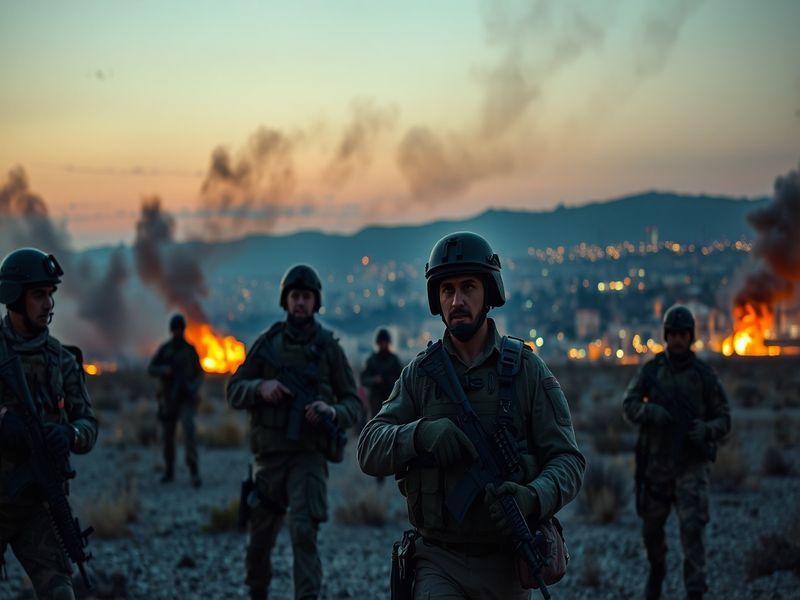
The recent escalation between Iran and Israel marks one of the most significant military confrontations in the Middle East in years. On April 13, 2024, Iran launched a direct attack on Israeli territory, involving more than 300 drones, ballistic missiles, and cruise missiles. This unprecedented assault followed Israel’s strike on Iran’s consulate in Damascus, Syria, which killed several high-ranking Iranian officials. The attack signals a dangerous shift in regional dynamics, drawing immediate condemnation and calls for restraint from global leaders.
Israel’s military, with support from the United States and allied nations, intercepted the majority of the incoming projectiles. However, the sheer scale of the attack underscores Iran’s growing military capabilities and its willingness to challenge Israel directly. The international community now faces a critical moment in determining how to de-escalate tensions while addressing the broader implications of this conflict.
Timeline of Events Leading to the Attack
The roots of this confrontation trace back to a series of tit-for-tat strikes between Israel and Iran, each side targeting the other’s strategic assets. The most recent flashpoint occurred on April 1, 2024, when Israel conducted a precision airstrike on the Iranian consulate in Damascus. The attack killed seven Iranian Revolutionary Guard Corps (IRGC) officers, including Brigadier General Mohammad Reza Zahedi, a senior figure in Iran’s military operations in Syria and Lebanon.
Iran vowed retaliation, and over the following weeks, both nations engaged in a war of words and covert operations. Israel reportedly carried out additional strikes in Syria, targeting IRGC positions and allied militia groups. Meanwhile, Iran heightened its military posture, including the deployment of advanced air defense systems and increased naval activity in the Persian Gulf.
On April 13, Iran executed its promised retaliation. The attack began with a barrage of drones launched from Iranian territory, followed by a coordinated missile strike. Israel’s multi-layered defense system, including the Arrow, David’s Sling, and Iron Dome interceptors, neutralized most of the incoming threats. However, several missiles breached defenses, causing minor damage to infrastructure in southern Israel.
Key Moments in the Escalation
- April 1, 2024: Israel strikes the Iranian consulate in Damascus, killing IRGC officers.
- April 10, 2024: Iran warns of retaliation, signaling an imminent attack.
- April 13, 2024: Iran launches over 300 drones and missiles at Israel.
- April 14, 2024: Israel, with U.S. support, intercepts most projectiles; global calls for de-escalation intensify.
Israel’s Defense Strategy and International Support
Israel’s ability to thwart Iran’s attack demonstrated the effectiveness of its integrated air defense network. The Technology behind these systems, developed in collaboration with the U.S. and other allies, played a crucial role in minimizing damage. The Arrow system, designed to intercept ballistic missiles, and the Iron Dome, which counters short-range rockets, worked in tandem to neutralize threats.
International support was swift and decisive. The United States deployed additional military assets to the region, including fighter jets and naval vessels, to assist Israel in its defense. President Joe Biden reaffirmed America’s commitment to Israel’s security, stating that the U.S. would take “all necessary steps” to protect its ally. European nations, including the United Kingdom and France, also condemned Iran’s actions and offered logistical support.
However, the attack has raised questions about the long-term sustainability of Israel’s defense strategy. While the interception rate was high, the sheer volume of projectiles launched by Iran suggests that Israel may need to bolster its capabilities further. Analysts point to the potential for Iran to refine its tactics, including the use of decoys and hypersonic missiles, which could overwhelm current defenses.
Iran’s Motivations and Regional Implications
Iran’s decision to launch a direct attack on Israel reflects a calculated gamble. By striking Israeli territory rather than proxy forces in Syria or Lebanon, Iran sought to assert its military prowess and deter future Israeli aggression. The attack also served as a message to regional allies, particularly Hezbollah in Lebanon and the Houthis in Yemen, that Iran remains a formidable force despite economic sanctions and internal challenges.
Domestically, the attack may have bolstered the standing of Iran’s hardline factions, who have faced criticism over economic mismanagement and social unrest. Supreme Leader Ayatollah Ali Khamenei framed the retaliation as a response to Israeli “terrorism,” rallying public support behind the regime. However, the attack also risks further isolating Iran on the global stage, particularly as it faces renewed scrutiny over its nuclear program and human rights record.
The regional implications of this escalation are profound. Neighboring countries, including Jordan and Iraq, found themselves inadvertently involved as Iranian projectiles passed through their airspace. Jordan, a key U.S. ally, intercepted several drones that violated its sovereignty, highlighting the collateral risks of such conflicts. Meanwhile, Saudi Arabia and other Gulf states face a dilemma: condemning Iran’s aggression while avoiding entanglement in a broader regional war.
Paths to De-escalation and Long-Term Stability
In the aftermath of the attack, diplomats and world leaders have scrambled to prevent further escalation. The United Nations Security Council convened an emergency session, with calls for restraint from both sides. UN Secretary-General António Guterres warned that the attack could “spark a wider conflagration with devastating consequences for all.”
One potential pathway to de-escalation lies in backchannel negotiations. Qatar, which has mediated past conflicts between Israel and Hamas, has offered to facilitate talks. However, the depth of mistrust between Israel and Iran makes meaningful dialogue difficult. Israel’s Prime Minister Benjamin Netanyahu has vowed to respond to Iran’s attack, though the timing and nature of any retaliation remain unclear.
The international community also faces pressure to address the underlying issues fueling this conflict. Iran’s nuclear program, its support for militant groups, and its regional ambitions remain flashpoints. Meanwhile, Israel’s military actions against Iranian targets in Syria and Lebanon continue to provoke retaliatory strikes, creating a cycle of violence that shows no signs of abating.
For now, the focus remains on preventing further bloodshed. The U.S. and its allies are urging Israel to exercise caution, while Iran has signaled a willingness to stand down—provided Israel does not escalate further. Yet, the fragile nature of this détente underscores the urgent need for a broader diplomatic initiative to address the root causes of the conflict.
Conclusion: A Region on the Brink
The Iran-Israel conflict has entered a dangerous new phase, with the potential to destabilize an already volatile region. While Israel’s defenses proved resilient, the attack exposed vulnerabilities that could be exploited in future confrontations. Iran, meanwhile, has demonstrated its willingness to challenge Israel directly, even at the risk of further isolation.
The global response has been swift, with calls for restraint echoing across diplomatic corridors. Yet, the path to peace remains elusive. Until the underlying grievances—Israel’s security concerns, Iran’s regional ambitions, and the lack of a viable peace process—are addressed, the risk of further escalation will persist. The world must now act decisively to prevent this conflict from spiraling into a wider war, with consequences that could reverberate far beyond the Middle East.