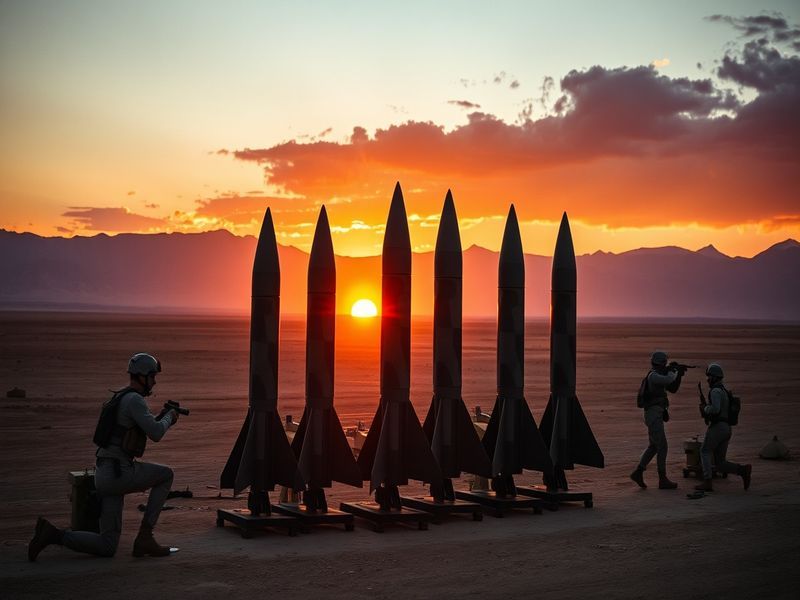
The Evolution of Iran’s Missile Capabilities
Over the past few decades, Iran has significantly advanced its missile technology, transforming it into a pivotal element of its military strategy. The country’s missile program has evolved from basic ballistic systems to a sophisticated arsenal capable of reaching regional adversaries and potentially beyond. This progression reflects not only Iran’s military ambitions but also its responses to perceived threats from both regional and global powers.
Historical Context
Iran’s missile development can be traced back to the aftermath of the Iran-Iraq War in the 1980s. The conflict highlighted the necessity for Iran to enhance its defensive capabilities. Initially, the focus was on acquiring technology from foreign sources, including Russia and North Korea. Over time, however, Iran shifted towards indigenous development, leading to the establishment of a robust domestic defense industry.
Today, Iran possesses a range of missiles, including short-range ballistic missiles (SRBMs), medium-range ballistic missiles (MRBMs), and cruise missiles. This diversification allows Iran to strike targets at various distances, enhancing its deterrent capabilities.
Key Features of Iran’s Missile Arsenal
The Iranian missile program is characterized by several key features:
- Diversity: Iran has developed a variety of missile systems, including the Shahab and Ghadr series, which can deliver conventional, chemical, and potentially nuclear warheads.
- Range: Many of Iran’s missiles can reach targets throughout the Middle East, including Israel and U.S. military bases in the region.
- Precision: Advances in guidance systems have improved the accuracy of Iranian missiles, making them more effective in striking strategic targets.
- Indigenous Production: Iran’s focus on self-sufficiency has led to the development of homegrown technologies, reducing reliance on foreign suppliers.
Broader Implications of Iran’s Missile Program
The implications of Iran’s missile capabilities extend beyond its borders. They have significant ramifications for regional security dynamics. Iran’s missile arsenal serves as a deterrent against potential adversaries, particularly Israel and the United States. This capability also enables Iran to exert influence over neighboring countries, often through proxy groups that can utilize Iranian technology.
Furthermore, the missile program has raised concerns among other nations, leading to increased military spending and defense initiatives in the region. Countries like Saudi Arabia and the United Arab Emirates have sought to bolster their own military capabilities in response to Iran’s advancements. This arms race could escalate tensions and lead to further instability in an already volatile region.
International Reactions and Diplomatic Challenges
Internationally, Iran’s missile program has been met with a mix of condemnation and strategic caution. The United States and several European nations have expressed concerns regarding the potential for these missiles to carry nuclear warheads, particularly in light of Iran’s nuclear ambitions. Sanctions have been imposed to curb Iran’s missile development, but these measures have had limited success in halting progress.
Diplomatic efforts, including the Joint Comprehensive Plan of Action (JCPOA), initially aimed to restrict Iran’s nuclear capabilities but did not adequately address the missile program. As negotiations continue to evolve, the challenge remains to find a balance between ensuring regional security and respecting Iran’s right to develop its defense systems.
Conclusion
Iran’s missile program represents a critical aspect of its national defense strategy and regional power projection. As Iran continues to refine its capabilities, the implications for regional security and international diplomacy grow increasingly complex. The interplay of military advancements, regional rivalries, and international responses will shape the future of not only Iran but also the broader Middle East. Understanding these dynamics is essential for policymakers and analysts alike as they navigate the challenges posed by Iran’s military ambitions.
For more insights on Iran and its geopolitical implications, visit our Politics category or explore the latest News updates.