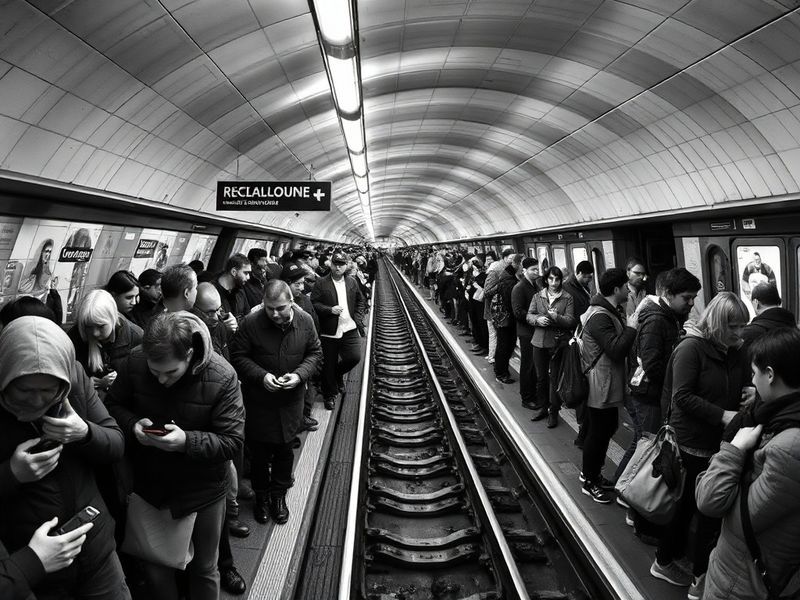
The London Underground, affectionately known as the Tube, is one of the world’s oldest and most extensive metro systems. Serving over 250 stations with 11 lines, it transports millions daily. Yet, when strikes disrupt this intricate network, the consequences extend far beyond delayed commutes. These walkouts reveal deeper issues about labor rights, urban planning, and the resilience of global cities.
The Immediate Impact on Daily Life
When Tube workers strike, London’s rhythm falters. Commuters accustomed to swift underground journeys face overcrowded buses, bumper-to-bumper traffic, and delays that can stretch for hours. The city’s economic engine slows as workers arrive late or miss meetings entirely. Small businesses near stations, like cafés and newsstands, report sharp drops in foot traffic on strike days.
The ripple effects are immediate:
- Schools and universities scramble to adjust schedules or shift to remote learning.
- Healthcare services adjust staffing to account for delayed medical personnel.
- Tourist hotspots, such as Covent Garden and Westminster, see fewer visitors due to accessibility challenges.
London’s reputation as a “24-hour city” takes a hit when essential workers—from delivery drivers to emergency responders—struggle to reach their posts. Even the city’s nightlife, a cornerstone of its global appeal, feels the strain as late-night revellers face unreliable transport home.
A Historical Perspective on Labor Disputes
The London Underground has a long history of labor disputes. The first major strike occurred in 1911, during a period of intense industrial unrest. Since then, walkouts have become a recurring feature of the city’s labor landscape, often tied to disputes over wages, working conditions, or pension reforms.
In the 21st century, strikes have grown more frequent. The 2010s saw a wave of industrial action over proposed cuts to pensions and safety concerns during the COVID-19 pandemic. These disputes are not unique to London; cities like New York and Paris have faced similar challenges. However, London’s strikes carry particular weight due to the Tube’s central role in the city’s identity.
Analysts argue that these strikes reflect broader tensions in urban labor markets. As cities expand, the cost of living rises, and workers demand fair compensation. Public transport employees, who operate in high-stress environments, are no exception. Their strikes are a reminder that even essential services are not immune to the pressures of modern labor economics.
The Global Context: How Other Cities Handle Transport Strikes
London is not alone in facing transport strikes, but its approach to managing these disruptions differs from other global cities. In Tokyo, for instance, labor disputes are rare due to lifelong employment traditions and strong corporate-labor relations. When strikes do occur, they are often brief and highly coordinated.
Paris, another city with a deep-rooted metro culture, has seen its share of strikes, particularly in response to pension reforms. However, the French government has historically intervened more aggressively to minimize disruption, sometimes deploying military personnel to keep services running.
In contrast, London’s strikes are frequently prolonged and decentralized, reflecting the fragmented nature of its labor unions. The RMT (National Union of Rail, Maritime and Transport Workers) and TSSA (Transport Salaried Staffs’ Association) often lead walkouts, each with its own demands and strategies. This lack of unity can amplify the impact of strikes, making them harder to resolve.
The contrast between these cities highlights a key question: How can urban transport systems balance worker rights with the need for reliable public services? The answer often depends on local labor laws, cultural attitudes toward strikes, and the political climate.
Beyond the Headlines: The Human Cost of Disruptions
While economic and logistical impacts dominate media coverage, the human stories behind Tube strikes are equally compelling. For many Londoners, these disruptions are more than inconveniences—they are daily struggles that shape livelihoods.
Take the case of Maria, a nurse who works night shifts at a hospital in North London. On strike days, her two-hour commute becomes a four-hour ordeal, leaving her exhausted before she even begins her shift. “I’ve missed critical moments with patients because I couldn’t get to work on time,” she says. “It’s not just about money; it’s about the people who depend on us.”
Then there’s Ahmed, a small business owner who runs a halal food stall near King’s Cross Station. During strikes, his sales plummet by 40%. “My customers can’t reach me,” he explains. “I have to rely on word of mouth and social media to stay afloat.”
These stories underscore a harsh reality: Tube strikes disproportionately affect those who can least afford the disruption. Essential workers, gig economy laborers, and low-income families bear the brunt of these walkouts, while the broader public often views strikes as mere inconveniences.
Looking Ahead: Can London Avoid Future Strikes?
The question of whether London can prevent future Tube strikes is complex. Some experts advocate for stronger mediation between unions and management, pointing to cities like Berlin, where labor disputes are resolved more amicably. Others argue that technological solutions, such as automated ticketing systems, could reduce the need for human labor and thus minimize strikes.
However, automation brings its own challenges. In 2017, London introduced Night Tube services, which operate on Fridays and Saturdays. The move was hailed as a boost for the city’s nightlife economy but also sparked concerns about worker safety and job security. The RMT union opposed the plan, citing inadequate staffing and safety risks.
Ultimately, the path forward may lie in a combination of dialogue, innovation, and compromise. Cities like London must find ways to honor the rights of transport workers while ensuring that the broader public can rely on efficient, accessible services. This balance is not easy to achieve, but it is essential for the health of urban life.
As London continues to grow and evolve, its Tube system will remain a symbol of both its challenges and its resilience. The strikes may disrupt the city’s rhythm, but they also force a reckoning with the systems that keep it running. In that sense, these walkouts are more than mere disruptions—they are a mirror held up to the city itself.
For more insights into urban challenges and their global implications, explore our News and Analysis sections.