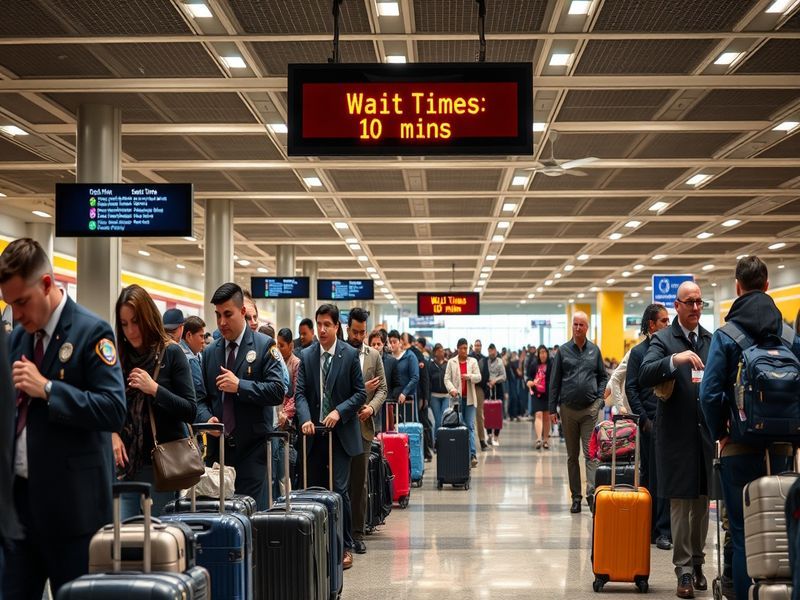
Hartsfield-Jackson Atlanta International Airport (ATL) serves as the busiest airport in the world, handling over 275,000 passengers daily. With such volume, security checkpoint wait times can fluctuate dramatically depending on time of day, season, and operational factors. Understanding these patterns helps travelers plan smarter and avoid unnecessary stress before flights.
How TSA Wait Times Are Measured and Reported
The Transportation Security Administration (TSA) uses multiple metrics to track security checkpoint efficiency at ATL. Real-time wait times are displayed on digital boards throughout the airport and on the TSA website. These estimates reflect the average time passengers spend in security lines from arrival at the checkpoint until they reach the screening area.
Several factors influence reported wait times:
- Time of day: Early mornings (4:00 AM – 7:00 AM) typically see shorter wait times as business travelers dominate. Afternoon and evening peaks (1:00 PM – 8:00 PM) often extend wait times to 30 minutes or more.
- Day of the week: Weekends, especially Sundays, tend to have longer lines due to leisure travelers. Wednesdays and Thursdays generally offer the most efficient screening.
- Seasonal patterns: Holidays like Thanksgiving and Christmas create extreme spikes, with wait times sometimes exceeding two hours. Summer vacation periods also see elevated numbers.
- Operational changes: Staffing shortages, technology upgrades, or security alerts can temporarily disrupt normal flow patterns.
Current Trends and Recent Improvements
Atlanta Airport has implemented several initiatives to reduce TSA wait times. In 2023, the airport installed 24 new automated screening lanes across five checkpoints, increasing throughput by approximately 30%. These lanes use advanced imaging technology and automated bin return systems to speed up the process.
Recent data from the TSA shows that average wait times at ATL have decreased by 15% compared to 2022 levels. During peak summer travel in July 2024, the average wait time was 18 minutes, down from 24 minutes in July 2023. However, these averages mask significant variations depending on specific terminals and times.
Notably, Terminal F (International) consistently reports longer wait times than domestic terminals due to additional passport control and customs requirements. Travelers connecting through ATL should budget extra time, especially when arriving from international destinations.
Strategies to Minimize Security Wait Times
Passengers can take several proactive steps to reduce time spent in security lines at Hartsfield-Jackson:
- Check wait times in advance: Use the TSA Wait Times tool or download the MyTSA app before leaving for the airport. These resources provide real-time estimates for each checkpoint.
- Arrive at the optimal time: For domestic flights, arriving at the airport between 2:00 PM and 4:00 PM on weekdays often means shorter security lines. Domestic terminals are typically least crowded between 9:00 AM and 11:00 AM on weekdays.
- Use TSA PreCheck or CLEAR: Enrollment in these programs can reduce wait times significantly. TSA PreCheck members average less than 5 minutes in security lines, while CLEAR users bypass traditional lines entirely.
- Pack efficiently: Place liquids, electronics, and shoes in easily accessible locations to speed up the screening process. Consider using a travel organizer to keep prohibited items separate.
- Monitor airport alerts: Follow @ATLairport on Twitter or sign up for text alerts to receive notifications about security line changes or terminal closures.
Understanding Terminal-Specific Differences
Hartsfield-Jackson’s five domestic terminals (A-E) and Terminal F operate with distinct security configurations. Terminal A processes Delta Air Lines’ largest hub operations and typically experiences the highest passenger volumes. Terminals B and C serve a mix of legacy carriers and low-cost airlines, while Terminals D and E handle most international arrivals.
The new Terminal A expansion, completed in 2022, added eight additional security lanes and improved baggage handling systems. This renovation has reduced wait times in Terminal A by nearly 25% during peak periods. However, Terminal F remains the bottleneck for international travelers, with wait times frequently exceeding 45 minutes during peak hours.
For connecting passengers, the time required to move between terminals varies significantly. The ATL SkyTrain connects Terminals A-E in under 10 minutes, but Terminal F requires a shuttle bus transfer that can add 15-20 minutes to the journey. Travelers should factor this additional time into their security planning.
Long-Term Solutions and Future Plans
The City of Atlanta and Delta Air Lines have committed $1.2 billion to airport improvements through 2028. Key initiatives include:
- Adding 12 new security lanes in Terminal F to address international processing bottlenecks
- Implementing biometric screening technology to reduce manual ID checks
- Expanding automated screening capabilities to all domestic terminals
- Creating dedicated TSA PreCheck and CLEAR lanes in each terminal
These improvements aim to reduce average wait times to under 10 minutes for 90% of passengers by 2026. However, achieving these targets depends on consistent staffing levels and ongoing technological upgrades.
Expert Recommendations for Travelers
Airport operations experts offer several practical suggestions for navigating ATL’s security efficiently:
Travel consultant Maria Rodriguez recommends arriving at the airport three hours before domestic flights and four hours before international departures during peak travel periods. “The difference between a stressful experience and a smooth journey often comes down to that extra hour,” she notes.
Aviation analyst David Chen emphasizes the importance of checking terminal assignments before arriving at the airport. “Many passengers don’t realize that their airline might have moved to a different terminal for operational reasons. Always verify your departure terminal the night before your flight,” he advises.
For families traveling with children, pediatrician Sarah Williams suggests using the family lanes available in most terminals. “These dedicated lanes help reduce stress for parents with young children by providing a more controlled security environment,” she explains.
Conclusion: Planning for Efficiency at ATL
Navigating security at Hartsfield-Jackson Atlanta International Airport requires more than just arriving early—it demands strategic planning and awareness of current conditions. While the airport continues to implement technological and operational improvements, travelers must take responsibility for understanding their specific situations.
The most successful passengers combine real-time information with flexible scheduling. By monitoring wait times, choosing optimal travel times, and leveraging available programs like TSA PreCheck, travelers can transform a potentially stressful experience into a manageable part of their journey.
As Atlanta’s airport authority continues its modernization efforts, passengers can look forward to gradually improving conditions. However, the fundamental principles of efficient travel—preparation, flexibility, and awareness—remain the most reliable tools for navigating ATL’s security checkpoints.