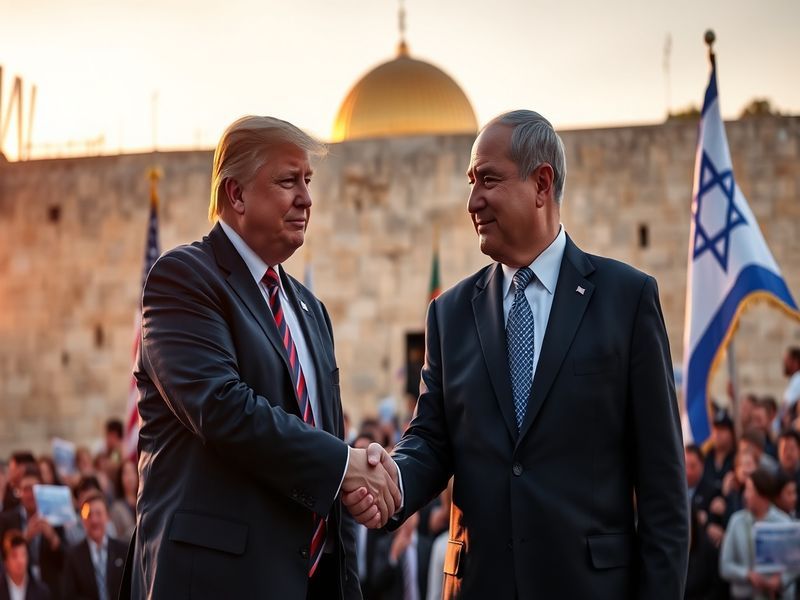
Donald Trump’s Impact on U.S.-Israel Relations: Key Policies and Implications
Donald Trump’s Relationship with Israel: A Comprehensive Overview
Donald Trump’s presidency marked a significant chapter in U.S.-Israel relations. His administration adopted policies that aimed to strengthen ties between the two nations, leading to both praise and criticism from various quarters. This article explores the key elements of Trump’s approach to Israel, the major decisions made during his term, and the broader implications of these actions on international relations.
Key Policies and Actions
Trump’s administration made several notable moves concerning Israel that reshaped diplomatic dynamics in the Middle East. Here are some key policies and actions:
- Recognition of Jerusalem: In December 2017, Trump announced the recognition of Jerusalem as the capital of Israel, a decision that reversed decades of U.S. foreign policy.
- US Embassy Move: Following the recognition of Jerusalem, the U.S. embassy was officially moved from Tel Aviv to Jerusalem in May 2018, a controversial act that was met with mixed reactions globally.
- Normalization Agreements: The Trump administration facilitated the Abraham Accords, which led to normalization agreements between Israel and several Arab nations, including the UAE and Bahrain.
- Support for Settlements: Trump’s administration expressed support for Israeli settlements in the West Bank, a stance that diverged from previous U.S. policies aimed at limiting settlement expansion.
Broader Implications of Trump’s Policies
The policies enacted during Trump’s presidency had far-reaching effects not only on U.S.-Israel relations but also on the broader Middle Eastern geopolitical landscape. The recognition of Jerusalem as Israel’s capital was viewed by many as a departure from the traditional U.S. stance, which sought to maintain a neutral position in the Israeli-Palestinian conflict. This shift prompted significant backlash from Palestinian leaders and further complicated peace negotiations.
The Abraham Accords, while celebrated by some as a breakthrough in Arab-Israeli relations, also highlighted divisions within the Arab world. Countries that normalized relations with Israel faced criticism from those who supported the Palestinian cause. This led to a new geopolitical alignment in the region, with some nations prioritizing economic and security partnerships with Israel over traditional support for Palestinian statehood.
Analysis of Trump’s Legacy in Israel
Trump’s approach to Israel can be analyzed through various lenses. Supporters argue that his policies strengthened Israel’s security and enhanced its standing in the region. The normalization agreements, in particular, are seen as a potential pathway to greater stability in the Middle East. However, critics contend that his administration’s actions undermined the prospects for a two-state solution and further marginalized Palestinian voices.
In addition to the immediate effects of his policies, the long-term implications are still unfolding. The Biden administration has taken a different approach, emphasizing a return to diplomacy and a renewed focus on the Israeli-Palestinian conflict. This shift raises questions about the sustainability of the agreements reached during Trump’s term and the future of U.S.-Israel relations.
Conclusion
Donald Trump’s presidency brought about a transformative period in U.S.-Israel relations, characterized by bold policy decisions and significant geopolitical shifts. While some of his actions were hailed as historic, they also stirred controversy and raised concerns regarding the peace process in the Middle East. The legacy of his administration continues to influence diplomatic discussions and relationships in the region today. As new leadership emerges and global dynamics evolve, the impact of Trump’s policies will remain a critical point of analysis for scholars and policymakers alike.