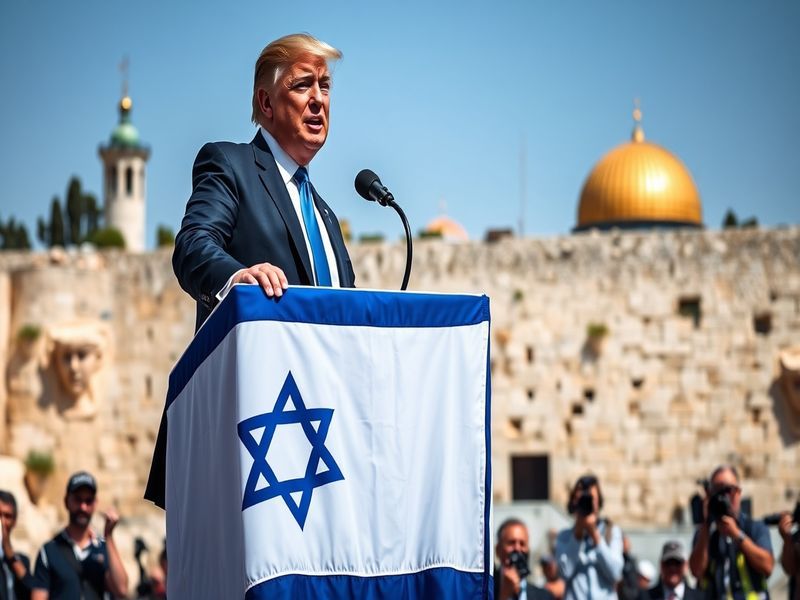
How Trump’s Policies Reshaped U.S.-Israel Relations
Donald Trump’s presidency reshaped the United States’ relationship with Israel in ways that continue to influence Middle East policy today. From recognizing Jerusalem as Israel’s capital to brokering normalization deals between Israel and Arab states, Trump’s approach marked a significant departure from decades of diplomatic precedent. These moves were celebrated by his supporters as bold and pragmatic, while critics warned of undermining long-standing international consensus.
Historically, U.S. administrations had maintained a careful balance in their Middle East policies, often prioritizing negotiations over unilateral actions. Trump’s tenure, however, saw a willingness to challenge conventional wisdom, particularly on issues central to Israeli-Palestinian relations. This shift not only redefined America’s role in the region but also set new expectations for future U.S. foreign policy under subsequent administrations.
Key Policies and Diplomatic Moves
Trump’s approach to Israel was defined by a series of high-profile decisions that broke from decades of U.S. policy. These actions were often framed as correcting perceived injustices or outdated approaches, but they also sparked intense debate about their long-term consequences.
- Recognition of Jerusalem as Israel’s Capital: In December 2017, Trump announced the U.S. would recognize Jerusalem as Israel’s capital and move its embassy there from Tel Aviv. This decision was widely condemned by Palestinian leaders and many international allies but was met with enthusiasm by the Israeli government and pro-Israel advocates in the U.S.
- The Abraham Accords: In 2020, the Trump administration brokered normalization agreements between Israel and several Arab states, including the United Arab Emirates, Bahrain, Sudan, and Morocco. These deals were hailed as historic breakthroughs, normalizing relations in a region long divided over the Israeli-Palestinian conflict.
- Withdrawal from the Iran Nuclear Deal: Trump’s decision to pull the U.S. out of the Joint Comprehensive Plan of Action (JCPOA) in 2018 was driven by his skepticism of the agreement’s effectiveness. The move was applauded by Israeli leaders, who viewed Iran as an existential threat, but it also heightened tensions in the region and strained relations with European allies.
- Support for Israeli Sovereignty in the Golan Heights: In 2019, the Trump administration officially recognized Israel’s sovereignty over the Golan Heights, a move that was largely symbolic but reinforced the U.S. stance on key security issues in the region.
These policies were not just symbolic; they had tangible effects on regional dynamics. The Abraham Accords, in particular, demonstrated that Arab states were willing to engage with Israel despite the unresolved Palestinian issue, signaling a potential shift in Middle East alliances. Meanwhile, the U.S. withdrawal from the Iran deal left Israel to navigate its own security concerns without the framework of international oversight.
Impact on U.S.-Israel Relations
The Trump administration’s policies fostered an unprecedented level of alignment between the U.S. and Israel. This closeness was not just ideological but also operational, with increased military cooperation, intelligence sharing, and joint exercises. For many in Israel, Trump’s presidency represented a golden era of U.S. support, particularly in the face of regional threats.
However, the relationship was not without its complexities. While Trump’s policies were popular among Israel’s right-wing government, they also deepened divisions within the U.S. political landscape. Progressive Democrats and some foreign policy experts criticized the administration’s approach as destabilizing, arguing that unilateral actions like embassy relocations undermined the possibility of a two-state solution. Meanwhile, Republicans and pro-Israel groups praised Trump’s unwavering support for Israel, seeing it as a necessary correction to years of perceived U.S. passivity.
The broader implications of this shift extend beyond the Middle East. Trump’s policies reinforced the idea that U.S. foreign policy could be driven by transactional relationships rather than traditional alliances. This approach has since been echoed in other areas of U.S. diplomacy, from trade deals to defense agreements, raising questions about the future of American leadership on the global stage.
Broader Implications for Middle East Geopolitics
Trump’s policies did more than reshape U.S.-Israel relations; they also altered the geopolitical landscape of the Middle East. The Abraham Accords, in particular, demonstrated that Arab states were increasingly prioritizing economic and security interests over the Palestinian cause, a trend that continues to this day. This shift has created new opportunities for regional cooperation but has also marginalized Palestinian aspirations for statehood.
The U.S.’s withdrawal from the Iran deal further complicated the region’s security dynamics. Without the constraints of the JCPOA, Iran resumed its nuclear activities, and tensions between Israel and Iran escalated. Israel, emboldened by U.S. support, conducted a series of covert operations targeting Iranian nuclear sites and proxy forces, raising the risk of direct conflict.
For the Palestinians, Trump’s policies were a setback. His administration cut funding to the Palestinian Authority, recognized Israeli sovereignty over the Golan Heights, and unveiled a Middle East peace plan that was widely rejected by Palestinian leaders. These actions reinforced the perception that the U.S. had abandoned its role as an impartial mediator in the Israeli-Palestinian conflict.
What Comes Next?
The Biden administration has sought to recalibrate U.S. policy toward Israel and the Middle East, but the legacy of Trump’s approach remains influential. While Biden has reaffirmed the U.S.’s commitment to Israel’s security, he has also signaled a return to multilateral diplomacy, particularly on issues like Iran and the Palestinian conflict. This shift reflects a broader debate about the future of U.S. foreign policy: Should America continue to prioritize unilateral actions and strong alliances with like-minded nations, or return to a more traditional, consensus-driven approach?
The answer to this question will have profound implications for Israel, the Palestinians, and the broader Middle East. As regional dynamics continue to evolve, the U.S.’s role in shaping them remains a critical—and contentious—issue.
For those interested in exploring more about U.S. foreign policy and its global impact, Dave’s Locker Politics section offers in-depth analysis and commentary. Additionally, readers looking for perspectives on international relations can visit the Dave’s Locker Analysis section for expert insights.
Conclusion
Donald Trump’s policies on Israel undeniably left a lasting mark on U.S. foreign policy and Middle East geopolitics. By challenging long-standing norms and prioritizing strong alliances over multilateralism, his administration reshaped the dynamics of the region in ways that continue to unfold. While his supporters view these changes as necessary corrections, critics argue they have deepened divisions and complicated the path to peace.
As the U.S. and Israel navigate an increasingly complex global landscape, the lessons of Trump’s presidency—both its successes and its controversies—will shape future decisions. Whether this legacy leads to greater stability or further conflict remains one of the most pressing questions in international relations today.