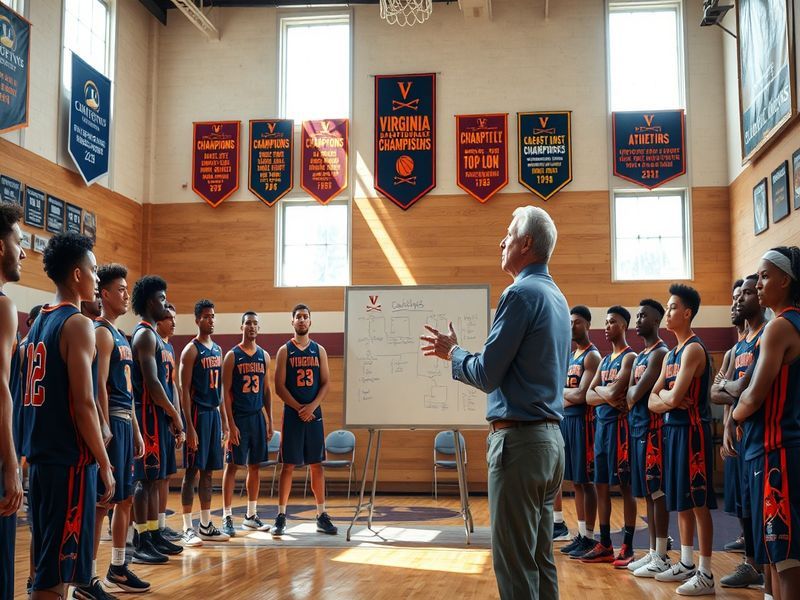
How Virginia Basketball Coach Shapes Success and Culture
The University of Virginia’s basketball program has long been a symbol of consistency and innovation under the guidance of its head coaches. From Tony Bennett’s defensive masterclasses to the foundational work of Dave Leitao, the Cavaliers have cultivated a reputation for strategic brilliance and player development. The role of the Virginia basketball coach extends beyond the court, shaping the culture of the program and impacting the broader landscape of college basketball.
The Tony Bennett Era: Defensive Prowess and Sustainable Success
Tony Bennett took over the Virginia basketball program in 2009, inheriting a team that had struggled to find footing in the ACC. His arrival marked a turning point, as he implemented his signature pack-line defense, a system that prioritizes communication, positioning, and intensity. Under Bennett, the Cavaliers transformed from a middling program into a perennial contender, culminating in the program’s first national championship in 2019.
Bennett’s tenure is defined by more than just wins and losses. His ability to recruit players who fit his system—often overlooked prospects with high basketball IQ—has redefined how Virginia competes at the highest level. The Cavaliers’ 2019 title run was a testament to Bennett’s philosophy, as his team relied on suffocating defense and efficient offense to outlast opponents. This approach has not only brought sustained success but has also influenced how other programs prioritize defense and player development.
Off the court, Bennett’s leadership style emphasizes humility and accountability, traits that have resonated with players and fans alike. His commitment to the university’s values has fostered a culture of excellence that extends beyond basketball, making him one of the most respected figures in college sports.
Dave Leitao: Rebuilding the Foundation
Before Bennett’s arrival, Dave Leitao served as Virginia’s head coach from 2005 to 2009, leaving a lasting impact on the program. Leitao inherited a team that had struggled to compete in the ACC, but he quickly turned things around, leading the Cavaliers to back-to-back NCAA Tournament appearances in 2007 and 2008. His emphasis on player development and discipline laid the groundwork for the program’s future success.
Leitao’s tenure was marked by a balanced approach, blending offensive creativity with a commitment to defense. While his time in Charlottesville was relatively short, his contributions to the program’s culture and infrastructure cannot be overstated. His ability to recruit and develop talent set the stage for Bennett’s later success, proving that sustainable success in college basketball requires a long-term vision.
Today, Leitao serves as the head coach at DePaul University, where he continues to emphasize the same principles that defined his time at Virginia. His journey underscores the importance of building a program from the ground up, a lesson that resonates with coaches at all levels.
Broader Implications: How Virginia’s Coaching Legacy Influences College Basketball
The success of Virginia’s basketball coaches has had a ripple effect across college basketball. Bennett’s defensive system has become a blueprint for programs looking to compete with traditional powerhouses, while Leitao’s emphasis on player development highlights the importance of investing in long-term growth. Together, their approaches have redefined what it means to build a sustainable program in a sport often dominated by short-term results.
Virginia’s model has also influenced how recruits view the program. The Cavaliers’ ability to attract players who thrive in Bennett’s system has made them a destination for high-character athletes who prioritize winning over individual accolades. This shift in recruiting philosophy has forced other programs to adapt, as they seek to balance immediate success with sustainable development.
Moreover, the program’s emphasis on defense has challenged the conventional wisdom that offense sells tickets. Bennett’s teams have thrived in an era where offensive firepower often takes center stage, proving that a well-executed defensive system can be just as effective—and just as entertaining.
What’s Next for Virginia Basketball Under New Leadership
As Tony Bennett’s tenure evolves, the question of succession looms large. Bennett, now in his mid-50s, has indicated that he plans to continue coaching for the foreseeable future, but the program must prepare for the inevitable transition. The Cavaliers have already begun to see the fruits of their development pipeline, with younger players stepping into larger roles.
One potential successor could emerge from within the program’s ranks, as assistant coaches like Kyle Getter and Jason Williford have been groomed in Bennett’s system. Alternatively, Virginia may look externally for a coach who embodies the program’s values of discipline, defense, and player development. Regardless of the path, the program’s commitment to its core principles will remain unchanged.
The future of Virginia basketball is bright, with a roster that blends experienced leaders and promising young talent. The Cavaliers are poised to remain a force in the ACC and a contender on the national stage, thanks to the foundation laid by Bennett, Leitao, and the generations of coaches who came before them.
For fans and analysts alike, the Virginia basketball program offers a masterclass in how to build and sustain success. It’s a reminder that in college basketball, the right leadership and culture can elevate a program from afterthought to champion.
Key Takeaways from Virginia’s Coaching Legacy
- Defensive Systems Matter: Tony Bennett’s pack-line defense has become a model for programs seeking sustainable success.
- Player Development is Paramount: Both Bennett and Dave Leitao prioritized developing players who fit their systems, proving that long-term growth is more valuable than short-term wins.
- Culture Trumps Everything: The culture cultivated by Virginia’s coaches has made the program a destination for high-character athletes.
- Recruiting Philosophy Matters: Virginia’s ability to attract overlooked prospects has redefined how programs build competitive teams.
- Succession Planning is Critical: As Bennett ages, Virginia must prepare for the future, whether through internal promotions or external hires.
For more insights into college basketball programs and coaching strategies, explore Sports and Analysis on Dave’s Locker.
“Virginia basketball isn’t just about wins and losses. It’s about building a culture that lasts, both on and off the court.” — Anonymous Cavaliers Fan
As the program continues to evolve, one thing remains clear: the Virginia basketball coach plays a pivotal role not just in the team’s success, but in shaping the future of college basketball itself.