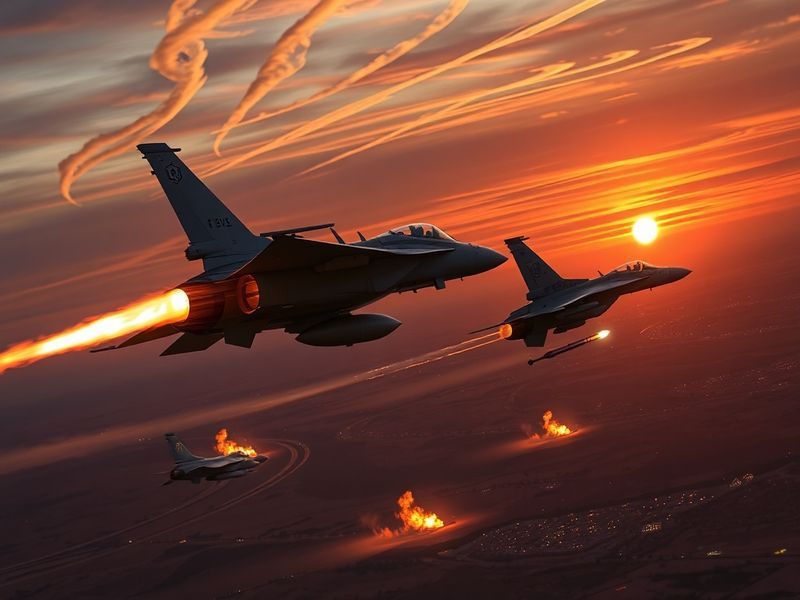
israel iran war
The simmering conflict between Israel and Iran has escalated into a high-stakes shadow war, characterized by covert operations, proxy battles, and periodic direct confrontations. While neither country has declared full-scale war, the past decade has seen a dangerous escalation in hostilities, with both sides engaging in cyberattacks, targeted assassinations, and military strikes. The latest flare-ups—including Israel’s reported strikes on Iranian nuclear sites and Iran’s retaliatory missile launches—have pushed the region to the brink of a broader conflict.
The stakes couldn’t be higher. A full-blown war between Israel and Iran would not only reshape the geopolitical landscape of the Middle East but also draw in global powers, disrupt energy supplies, and trigger a humanitarian crisis. Understanding the roots of this conflict, its recent escalations, and the potential consequences is critical to grasping the fragility of regional stability.
The Historical Roots of the Conflict
The animosity between Israel and Iran dates back to the 1979 Islamic Revolution, when Iran’s new theocratic regime vowed to destroy Israel and support militant groups opposed to it. Ayatollah Ruhollah Khomeini’s regime framed Israel as an “illegitimate entity” and a tool of Western imperialism, while Israel viewed Iran’s nuclear ambitions as an existential threat.
The conflict intensified in the 2000s as Iran accelerated its uranium enrichment program, raising international concerns about its nuclear capabilities. Israel, backed by the United States, has repeatedly warned that Iran’s nuclear program poses an existential risk. Meanwhile, Iran has accused Israel of sabotaging its nuclear facilities, including the 2010 Stuxnet cyberattack and the assassinations of nuclear scientists like Mohsen Fakhrizadeh in 2020.
Beyond nuclear tensions, the two countries have clashed through proxy forces. Iran funds and arms militant groups like Hezbollah in Lebanon and Hamas in Gaza, both of which have fought multiple wars with Israel. Israel, in turn, has targeted Iranian military advisors and weapons shipments bound for these groups, further fueling the cycle of violence.
Recent Escalations: A Timeline of Conflict
The past five years have seen a dramatic increase in direct confrontations between Israel and Iran. Below is a timeline of key events that have shaped the current crisis:
- 2018: Israel launches a series of airstrikes on Iranian military positions in Syria, targeting Iranian Revolutionary Guard Corps (IRGC) forces and their proxies. Iran responds by firing rockets at Israeli positions in the Golan Heights.
- 2019: A series of mysterious attacks on oil tankers in the Strait of Hormuz and Saudi oil facilities are attributed to Iran, raising fears of a wider conflict. Israel conducts covert operations to disrupt Iranian arms shipments to Hezbollah.
- 2020: Israel assassinates top Iranian nuclear scientist Mohsen Fakhrizadeh, crippling Iran’s nuclear program temporarily. Iran vows revenge but avoids immediate retaliation.
- 2022: Israel carries out airstrikes on Iranian-backed militias in Syria and Iraq, killing dozens of fighters. Iran responds by launching ballistic missiles at targets in Iraq, Syria, and Pakistan.
- 2023: Israel’s war in Gaza against Hamas prompts Hezbollah in Lebanon to launch rocket attacks on northern Israel. Iran’s Supreme Leader Ayatollah Ali Khamenei declares that “Israel will be erased from the map” if it continues its aggression.
- 2024: Israel conducts a daring raid on Iran’s nuclear enrichment facility in Natanz, reportedly using a cyberattack to disable centrifuges. Iran retaliates by launching over 300 missiles and drones at Israel, the largest-ever direct attack by Tehran.
These escalations have transformed what was once a proxy war into a direct confrontation, with both sides testing the other’s resolve and capabilities. The 2024 Iranian missile and drone attack on Israel marked a turning point, as it was the first time Iran launched a large-scale direct strike on Israeli soil rather than through proxies.
The Broader Implications of a Wider War
A full-scale war between Israel and Iran would have devastating consequences far beyond the Middle East. Here’s what’s at risk:
- Global Energy Markets: The Strait of Hormuz, through which 20% of the world’s oil passes, would become a flashpoint. Any disruption could send oil prices skyrocketing, triggering economic instability worldwide.
- Humanitarian Crisis: Israel’s Iron Dome missile defense system could be overwhelmed by Iran’s arsenal of ballistic missiles, leading to civilian casualties. Iran’s proxies in Lebanon, Yemen, and Syria could escalate attacks, further destabilizing the region.
- Geopolitical Realignment: The U.S. and its allies would likely intervene on Israel’s side, while Russia and China might support Iran. This could reignite Cold War-style tensions and draw NATO into a direct confrontation with Iran-backed forces.
- Nuclear Proliferation: If Iran’s nuclear facilities are targeted, it could provoke a nuclear response or accelerate Iran’s nuclear program under the guise of self-defense. Other regional powers, like Saudi Arabia, might pursue their own nuclear deterrents.
- Refugee Crisis: A war would displace millions, creating a refugee crisis that could overwhelm neighboring countries like Jordan and Turkey and strain European resources.
The risk of miscalculation is high. Israel’s policy of “preemptive strikes” and Iran’s doctrine of “forward defense” create a volatile mix where a single incident could spiral into all-out war. Diplomacy has so far failed to de-escalate tensions, with both sides prioritizing military deterrence over negotiation.
Can Diplomacy Still Prevent War?
Despite the escalating violence, diplomatic efforts to prevent a wider war are ongoing, albeit with limited success. Key players in the region and beyond are attempting to mediate, but obstacles remain significant.
Qatar and Oman have historically served as intermediaries between Israel and Iran, hosting indirect talks. However, Iran’s hardline leadership has shown little interest in negotiations, viewing any compromise as a sign of weakness. Meanwhile, Israel’s current government, led by Prime Minister Benjamin Netanyahu, has taken a hardline stance, refusing to engage with Iran unless its nuclear program is dismantled.
The international community is divided. The U.S. has reaffirmed its “ironclad” support for Israel but has also called for restraint. European nations, concerned about regional stability, have urged both sides to return to the negotiating table. Russia and China, however, have criticized U.S. influence in the region and positioned themselves as neutral brokers—though their neutrality is often questioned.
One potential avenue for diplomacy is the revival of the 2015 Iran nuclear deal (JCPOA), which was abandoned by the Trump administration in 2018. While the deal is far from perfect, it provided a framework for limiting Iran’s nuclear program in exchange for sanctions relief. Renewing the deal could reduce tensions, but Iran’s recent enrichment of uranium to near-weapons-grade levels and Israel’s opposition to the agreement make its revival unlikely in the near term.
Another possibility is a tacit understanding between Israel and Iran to avoid direct large-scale conflict while continuing their shadow war. Both sides have shown a degree of restraint in the past, even after provocations, suggesting that neither wants a full-blown war. However, the risk of accidental escalation remains a constant threat.
What’s Next for the Israel-Iran Conflict?
The coming months will be critical in determining whether the Israel-Iran conflict remains a contained shadow war or escalates into a regional conflagration. Several factors will shape the trajectory of this crisis:
- Israel’s Military Strategy: Israel’s ability to degrade Iran’s nuclear and military capabilities without triggering a wider war will be tested. Prime Minister Netanyahu’s government has signaled a willingness to take bold actions, but the potential for unintended consequences looms large.
- Iran’s Domestic Pressures: Iran’s leadership is facing growing public discontent due to economic sanctions and political repression. A war could serve as a distraction, but it could also further destabilize the regime if it leads to increased casualties and economic hardship.
- U.S. Involvement: The Biden administration has sought to balance support for Israel with efforts to prevent a wider conflict. However, if Israel launches a major strike on Iran’s nuclear facilities, the U.S. could be drawn into the conflict, either directly or through its military presence in the region.
- Regional Alliances: The outcome of the Israel-Hamas war in Gaza and the Israel-Hezbollah conflict in Lebanon will influence Iran’s calculations. If Israel succeeds in neutralizing Hamas and Hezbollah, Iran may lose leverage in the region. Conversely, if these conflicts escalate, Iran could gain more influence.
One thing is clear: the status quo is unsustainable. The cycle of violence, retaliation, and counter-retaliation cannot continue indefinitely without risking a catastrophic war. The international community must redouble its efforts to prevent escalation, whether through renewed diplomacy, economic pressure, or deterrence strategies.
For now, the world watches as Israel and Iran dance on the edge of a precipice. The question is no longer whether a wider war will happen, but when—and how much destruction it will bring.
Read more about regional geopolitics and conflict analysis on Dave’s Locker.