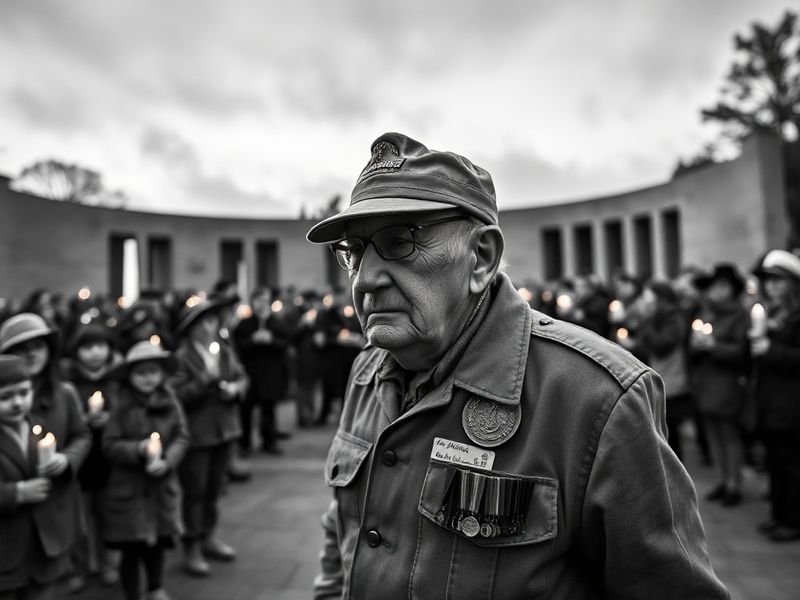
As the first light of April 25th breaks over dawn services from Sydney to London, Anzac Day 2026 will mark its centenary of commemoration since the Gallipoli landings of 1915. This anniversary arrives at a moment when global conflicts once again dominate headlines, making remembrance not just historical but urgently contemporary. More than a national holiday for Australia and New Zealand, Anzac Day has evolved into a shared ritual of gratitude that connects diaspora communities across Europe, North America, and beyond.
The tradition began in 1916, just months after the ill-fated campaign in Turkey that claimed thousands of lives from both nations. What started as a modest observance has grown into a ritual observed by over a million people worldwide. By 2026, organizers anticipate even greater participation, driven by younger generations reclaiming heritage and digital platforms facilitating global connection. The ceremonies themselves remain rooted in ritual: the last post, the minute’s silence, the laying of wreaths, and the recitation of the ode. Yet beneath this continuity lies a shifting cultural landscape where memory is both preserved and reimagined.
Globalization of Remembrance: From Dawn to Dusk
Anzac Day’s expansion beyond its Antipodean origins reflects broader patterns in diaspora identity and memorial culture. In 2026, cities like London, Toronto, Los Angeles, and even Berlin will host dawn services led by local veterans’ associations, often in partnership with Australian and New Zealand embassies. These events serve dual purposes: they honor the fallen and assert the presence of Antipodean communities abroad. For many second- and third-generation migrants, participation becomes an act of cultural affirmation in an era increasingly defined by questions of belonging.
The digital transformation of remembrance is equally significant. Social media platforms, particularly TikTok and Instagram, will play a central role in 2026. Short-form videos documenting marches, interviews with veterans, and virtual memorial tours are expected to reach millions. Museums and cultural institutions, including Australia’s Shrine of Remembrance and New Zealand’s Pukeahu National War Memorial, will launch augmented reality experiences that allow users to “stand” at Gallipoli or walk through trenches on the Western Front. This fusion of technology and tradition reflects a broader shift in how younger audiences engage with history—not as passive spectators, but as active participants in narrative construction.
Yet this globalization also raises delicate questions about authenticity. When a London dawn service includes bagpipes, Māori haka, and Aboriginal didgeridoo performances, does it enrich the commemoration or dilute its meaning? The answer often lies in the intent of the participants. For many, the inclusion of diverse cultural expressions is not a dilution but an expansion—a recognition that service and sacrifice transcend national borders.
Youth, Memory, and the Anzac Brand
By 2026, the youngest cohort of Anzac Day observers will be the grandchildren of those who marched in the 1980s. This demographic shift brings both challenges and opportunities. While some critics argue that commercialization—through Anzac biscuits sold in supermarkets or branded merchandise—risks trivializing solemnity, others see opportunity in reclaiming the narrative. Schools in Australia and New Zealand are integrating Anzac history into broader units on global conflict, human rights, and reconciliation. Programs like the Anzac Day Student Ambassador Program empower young people to lead commemorations in their communities, fostering leadership and deepening understanding.
The Anzac brand itself has become a cultural asset. From rugby jerseys to literary festivals, the red poppy and the phrase “Lest We Forget” circulate widely. This branding carries both power and peril. It can mobilize collective memory and fundraising for veteran support services. But it can also obscure the complexity of the original campaign—its strategic failures, its human cost, and its contested legacy in Turkey, where the Gallipoli Peninsula is a site of both mourning and national pride.
- Commemoration: Dawn services, marches, wreath-laying, and the Last Post ceremony remain the core rituals.
- Education: School programs and digital archives are making history accessible to new generations.
- Cultural Expression: Music, art, and storytelling are being reimagined to reflect diverse voices.
- Technology: VR tours, social media campaigns, and interactive maps are reshaping how we remember.
- Contestation: Debates continue over commercialization, authenticity, and the meaning of sacrifice in a global context.
The Geopolitical Echo: Anzac Day in an Age of Conflict
Anzac Day 2026 arrives at a time when the world is again witnessing large-scale warfare in Europe and the Middle East. The parallels are hard to ignore. As images of destroyed cities and displaced families fill screens, the stories of Gallipoli—of courage in the face of impossible odds, of the cost of strategic miscalculation—resonate with fresh urgency. Veterans’ groups and peace advocates are using Anzac Day platforms to call for renewed diplomacy and support for refugees fleeing modern conflicts.
In Turkey, where the 2026 centenary of the Gallipoli campaign will be observed with particular solemnity, the government has announced plans to host joint ceremonies with Australian and New Zealand officials. This marks a significant evolution from the fraught relations of the early 20th century to a mature acknowledgment of shared history. The Turkish government’s emphasis on “peace and friendship” in its 2026 commemorations reflects a strategic pivot toward soft power and regional stability.
Meanwhile, in Australia and New Zealand, debates continue over how to honor service members while confronting the realities of colonial violence and the treatment of Indigenous soldiers. The Māori Battalion, for instance, fought with distinction in World War II, yet their contributions were long overshadowed by narratives focused on white ANZACs. In 2026, new exhibitions and documentaries aim to center these voices, acknowledging that the Anzac story is not monolithic but multilayered.
A Ceremony of Continuity and Change
Anzac Day 2026 will unfold under skies from Wellington to Wellington (the one in Somerset, England), each location shaped by local rhythms yet united by a shared ritual. The ceremonies will begin at dawn, echoing the time of the original landings. The air will carry the scent of rosemary, the herb that symbolizes remembrance, and the sound of “Advance Australia Fair” and “God Defend New Zealand” in cities far from the Tasman Sea.
What will distinguish 2026 is not the absence of change, but the presence of intention. Communities are choosing how to remember—not just by looking back, but by asking what these stories mean for the future. Will Anzac Day become a moment of passive nostalgia, or a living tradition that inspires ethical reflection and civic action? The answer may lie in how well the rituals of memory serve the needs of today’s world: fractured, plural, and in search of meaning.
As the sun rises on April 25, 2026, millions will pause. Some will weep. Others will stand in quiet pride. A few will question. But all will be part of a global chorus of remembrance that began a century ago in a place called Gallipoli—and continues wherever people choose to honor the past in the service of a better future.