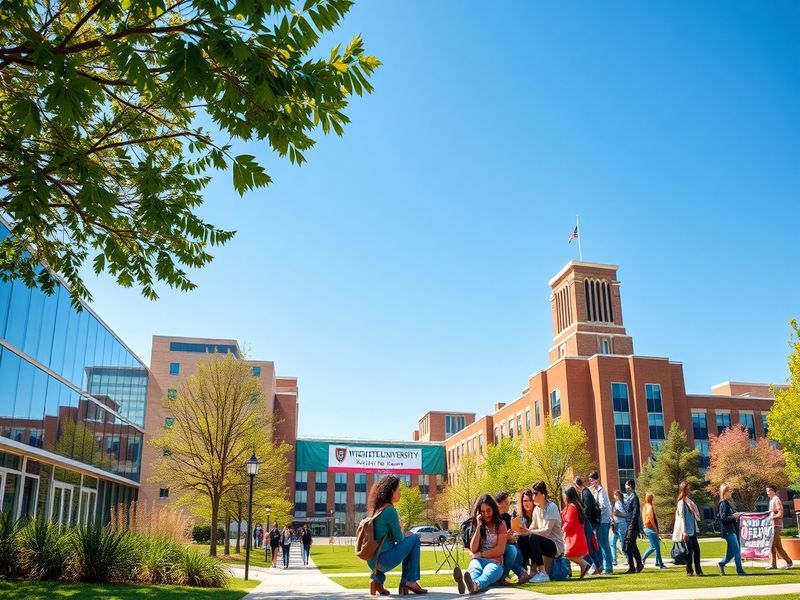
Why Wright State University Stands Out in Higher Education
Wright State University: A Midwestern Hub of Innovation and Opportunity
Nestled in the heart of Dayton, Ohio, Wright State University has quietly established itself as a key player in American higher education. Since its founding in 1964, the institution has grown from a small branch campus of Miami University and Ohio State University into a comprehensive research university known for its strong programs in engineering, business, and health sciences. With a student body of over 10,000 and a global alumni network spanning continents, Wright State reflects the evolving priorities of modern academia—balancing accessibility with academic rigor, tradition with innovation.
The university’s name pays homage to the Wright brothers, Orville and Wilbur, who conducted early flight experiments just miles from campus in the early 20th century. This connection to innovation extends beyond symbolism. Wright State has long been a leader in aerospace engineering and unmanned aerial systems, programs that align with Ohio’s legacy as the birthplace of aviation. Today, the university continues to push boundaries in drone technology, cybersecurity, and renewable energy, reinforcing its role in shaping the future of industry and technology.
The Global Reach of Wright State’s Alumni Network
Wright State’s influence extends far beyond the Midwest through its diverse student population and global partnerships. International students from over 60 countries contribute to a multicultural campus environment where collaboration and cross-cultural exchange are central to the educational experience. Alumni of the university are found in leadership positions across the globe—from engineers in Silicon Valley to healthcare professionals in Europe and entrepreneurs in Asia.
The university’s Office of International Affairs actively fosters these connections by facilitating study abroad programs, faculty exchanges, and research collaborations with institutions in countries like Germany, Japan, and India. These initiatives not only enrich the student experience but also strengthen Wright State’s reputation as a globally engaged institution. Graduates often cite the university’s emphasis on practical experience and mentorship as key factors in their professional success abroad.
One notable example is the Wright State alumni network in Technology hubs like Bangalore and Berlin. Many former students have returned to their home countries or settled in new ones, bringing with them skills honed in Dayton’s classrooms and labs. Their achievements highlight how Wright State serves as a bridge between regions, connecting diverse talent pools with opportunities in industries ranging from IT to renewable energy.
Research and Innovation: Wright State’s Quiet Revolution
While Wright State may not always dominate headlines like larger state universities, its research output tells a compelling story. The university is classified as an R2 research institution by the Carnegie Classification, placing it among doctoral universities with high research activity. This status reflects a growing investment in research that addresses real-world challenges.
One area of particular strength is healthcare. Wright State’s Boonshoft School of Medicine is a leader in community-based medical education and research, with a focus on primary care and rural health. Faculty and students work closely with regional hospitals and clinics to improve healthcare access, a mission that resonates globally as nations grapple with healthcare disparities and workforce shortages.
The university is also making strides in sustainability. The Wright State Woods, a 200-acre preserve on campus, serves as both a living laboratory and a model for environmental stewardship. Research conducted here informs conservation strategies and climate resilience efforts, contributing to broader discussions about urban green spaces and biodiversity. These initiatives align with global movements toward sustainability, positioning Wright State as a participant in a worldwide conversation.
Cultural Contributions and Community Engagement
Beyond academics and research, Wright State plays an active role in Dayton’s cultural life. The university is home to the Entertainment Arts & Engineering (EAE) program, which combines digital art, music, and game design into interdisciplinary degrees. Graduates of this program have gone on to work in animation studios, game development firms, and music production companies, bringing creative energy to industries that shape global pop culture.
The Schuster Center, a performing arts venue on campus, hosts world-class concerts, theater productions, and lectures. These events attract audiences from across Ohio and beyond, reinforcing the university’s role as a cultural hub. In a region known for its rich artistic heritage—Dayton was the birthplace of the Wright brothers and the home of poet Paul Laurence Dunbar—Wright State continues this tradition by fostering creativity and intellectual curiosity.
The university also maintains strong ties to the local community through outreach programs. Initiatives like the Wright State Works initiative connect students with regional employers, providing hands-on experience while supporting economic growth. These partnerships reflect a broader trend in higher education: universities as engines of regional development, not just centers of learning.
A Look Ahead: Wright State’s Evolving Mission
As Wright State approaches its 60th anniversary, the university is focused on adapting to the changing needs of students and industries. Enrollment challenges, financial constraints, and evolving workforce demands have prompted strategic shifts, including an emphasis on online and hybrid learning. These changes aim to make higher education more accessible without compromising quality.
The university is also expanding its footprint in high-demand fields like cybersecurity and data science. With cyber threats growing globally, Wright State’s programs in these areas are increasingly relevant. The university’s Center for Cybersecurity Systems and Operations is one example of how it is addressing global challenges through education and research.
Another priority is diversity and inclusion. Wright State has made strides in recruiting and retaining students from underrepresented backgrounds, reflecting a commitment to equity in higher education. These efforts are part of a larger movement in American universities to create environments where all students can thrive.
Looking to the future, Wright State is poised to play an even larger role in shaping the next generation of leaders, innovators, and creators. Its blend of Midwestern values, global perspective, and commitment to practical learning sets it apart in an increasingly competitive educational landscape.
What’s Next for Wright State?
For prospective students, Wright State offers a unique blend of affordability, strong programs, and a supportive community. Current students benefit from hands-on learning opportunities, global connections, and a campus culture that values both tradition and innovation. Alumni continue to make their mark around the world, carrying with them the skills and values instilled in Dayton.
As the university evolves, it remains rooted in the principles that have guided it since its founding: a belief in the power of education to transform lives, a commitment to serving the community, and a dedication to pushing the boundaries of what’s possible. In an era of rapid change, Wright State stands as a reminder of the enduring value of higher learning—and the quiet, steady work of building a better future.