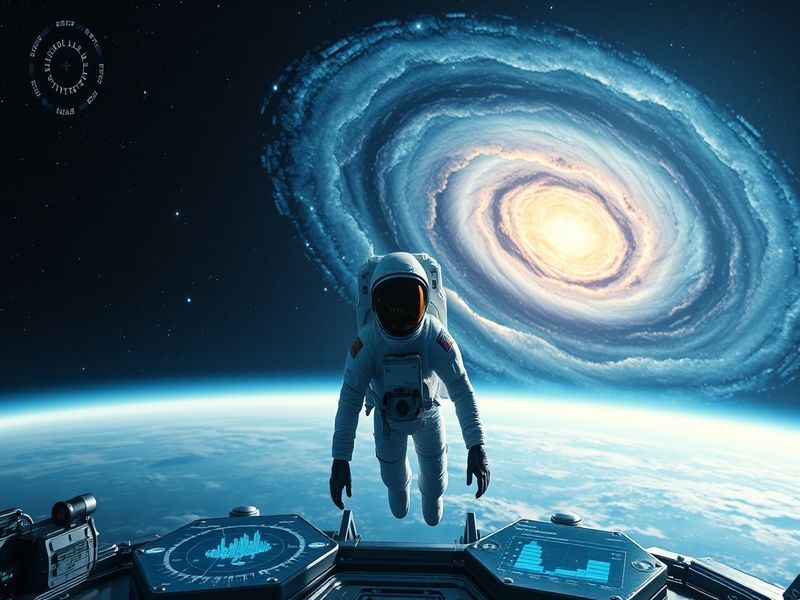
Andy Weir’s Project Hail Mary: The Science Behind the Sci-Fi Hit
Andy Weir’s Return to Space: Project Hail Mary
Andy Weir, the author behind science fiction hits like The Martian, has once again captured readers’ imaginations with Project Hail Mary. Published in 2021, the novel follows Ryland Grace, a high school science teacher who wakes up from a coma to discover he’s the sole survivor of a mission to save Earth from extinction. The twist? He must rely on his fading memories and scientific ingenuity to pull off an interstellar rescue.
The book isn’t just a sequel to The Martian—it’s a standalone adventure that expands Weir’s signature blend of hard science and dark humor. While The Martian focused on survival on Mars, Project Hail Mary thrusts its protagonist into the vast unknown of space, where every decision could mean the difference between life and total annihilation. The novel’s global appeal lies in its universal themes: the fragility of human existence, the power of collaboration, and the unyielding drive to overcome impossible odds.
From Page to Screen: The Hollywood Treatment
Hollywood took notice almost immediately. Project Hail Mary has been adapted into a film starring Ryan Gosling, marking Weir’s second collaboration with the actor after The Martian. The movie’s production faced delays due to the pandemic, but anticipation is building as fans await its release. Early reports suggest the film will stay true to the book’s technical rigor while adding cinematic spectacle.
The adaptation process has been closely watched in the sci-fi community. Unlike many science fiction films that prioritize spectacle over accuracy, Project Hail Mary’s production team worked with NASA consultants to ensure its depiction of space travel and physics remains plausible. This commitment to realism could set a new standard for hard science fiction on screen, much like The Martian did.
A Global Phenomenon: Why Readers Worldwide Connect
Project Hail Mary has resonated across cultures, selling millions of copies in over 30 languages. Its appeal isn’t limited to hardcore sci-fi fans—it’s drawn in readers who might not typically pick up space operas. The novel’s strength lies in its accessibility. Weir avoids excessive jargon, instead focusing on Ryland Grace’s relatable struggles: self-doubt, grief, and the pressure of being humanity’s last hope.
In Japan, where science fiction has a massive following, the book became a bestseller shortly after its release. Local reviewers praised Weir’s ability to balance technical detail with emotional depth. In Europe, where hard science fiction has a niche but dedicated audience, Project Hail Mary sparked debates about the future of space exploration and humanity’s place in the cosmos. The novel even inspired university courses on astrophysics and storytelling, proving its academic as well as entertainment value.
The Science Behind the Story: Real-World Inspirations
Weir’s background as a software engineer and his love for physics shine through in Project Hail Mary. The novel’s plot hinges on real scientific concepts, from asteroid deflection to the challenges of interstellar travel. Here are some key scientific ideas the book explores:
- Kessler Syndrome: A real phenomenon where space debris collides, creating a cascade of destruction. The novel’s premise revolves around this concept threatening Earth.
- Fusion Propulsion: The story features advanced propulsion systems that, while fictional, are based on current research into fusion drives.
- Lagrange Points: Ryland Grace uses these stable points in space as strategic locations, a concept already utilized in real space missions like the James Webb Telescope.
- Memory and Trauma: The novel delves into how memory loss affects decision-making, a topic Weir ties to real psychological studies on stress and cognition.
Weir’s meticulous research extends beyond physics. He consulted experts in neurology, linguistics, and even botany to craft a world that feels authentic. This attention to detail has earned him praise from scientists and astronauts alike, including NASA’s former chief scientist Ellen Stofan, who called the book “a love letter to science.”
The Cultural Impact: More Than Just a Space Opera
Project Hail Mary arrives at a pivotal moment in space exploration. With private companies like SpaceX and Blue Origin making headlines, and governments from the U.S. to China investing in lunar and Martian missions, the novel taps into a cultural fascination with humanity’s future among the stars. It’s no coincidence that its release coincided with a surge in space documentaries and podcasts exploring the same themes.
The book has also sparked conversations about isolation and mental health, themes Weir explores through Ryland Grace’s psychological journey. In an era where global crises—from pandemics to climate change—have left many feeling helpless, Grace’s story offers a metaphor for resilience. Readers have drawn parallels between his struggle and real-world challenges, from the COVID-19 lockdowns to the refugee crises in Europe and the Middle East.
Weir’s work has even influenced a new generation of writers. In India, where science fiction is growing rapidly, authors have cited Project Hail Mary as inspiration for their own stories. Online communities, from Reddit’s r/printSF to Goodreads groups, buzz with theories and analyses, proving the book’s staying power.
What’s Next for Andy Weir and Project Hail Mary?
With the film adaptation on the horizon and a potential TV series in development, Project Hail Mary shows no signs of slowing down. Weir has hinted at future projects, though he’s remained tight-lipped about details. Fans are already speculating whether he’ll return to the world of The Martian or explore entirely new territory.
The novel’s success has also opened doors for Weir to advocate for science education. He’s given talks at schools and universities, emphasizing the importance of STEM fields. His message is clear: science isn’t just about equations and experiments—it’s about solving the world’s biggest problems, whether on Earth or beyond.
As humanity stands on the brink of a new space age, Project Hail Mary serves as both a warning and an inspiration. It reminds us that the universe is vast, unpredictable, and sometimes terrifying—but also full of possibilities. Whether you’re a scientist, a dreamer, or just someone who loves a good story, Weir’s tale of sacrifice and discovery is one that lingers long after the last page.
For more on science fiction and its cultural impact, explore our Entertainment section.