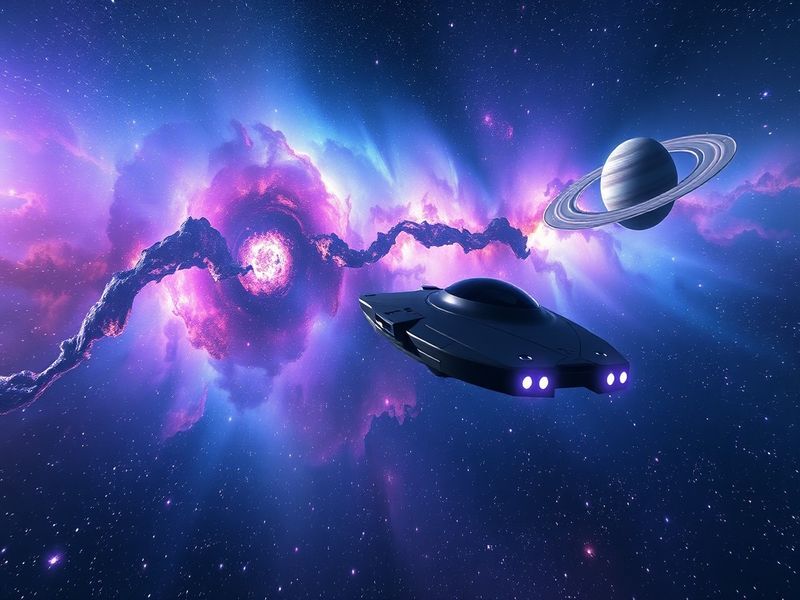
Exploring the Cosmos: The Significance of Space Exploration
The Quest for Knowledge Beyond Earth
Space exploration has fascinated humanity for centuries. From ancient astronomers gazing at the stars to modern missions venturing beyond our planet, the pursuit of knowledge about the cosmos has driven scientific innovation and cultural shifts. Today, as we stand on the brink of new discoveries, the importance of space exploration is more pronounced than ever.
Historical Milestones in Space Exploration
The journey into space began with the launch of Sputnik 1 by the Soviet Union in 1957. This small satellite marked the dawn of the space age and ignited a fierce competition between nations. The following decades saw remarkable achievements, including:
- The first human in space, Yuri Gagarin, in 1961.
- The Apollo 11 mission, where Neil Armstrong and Buzz Aldrin landed on the Moon in 1969.
- The launch of the Space Shuttle program in the 1980s, allowing for reusable spacecraft.
- The establishment of the International Space Station (ISS) in 1998, promoting international collaboration.
Each of these milestones not only advanced our understanding of space but also inspired generations to look beyond their terrestrial confines. Today, space exploration is a global endeavor, with numerous countries and private companies contributing to this multifaceted field.
Modern Space Exploration Initiatives
In recent years, the landscape of space exploration has evolved significantly. Nations like China and India have made substantial strides, launching ambitious missions that challenge traditional power dynamics in space. For instance, China’s Chang’e program has successfully landed rovers on the Moon and Mars, while India’s Mars Orbiter Mission demonstrated the country’s capabilities in interplanetary exploration.
Meanwhile, private companies such as SpaceX and Blue Origin are revolutionizing the industry. Their focus on reducing costs and increasing access to space has opened new avenues for research, tourism, and commercial ventures. SpaceX’s Crew Dragon, which transports astronauts to the ISS, exemplifies the potential for public-private partnerships in space exploration.
Cultural and Scientific Implications
The implications of space exploration extend far beyond scientific advancement. Culturally, the quest for knowledge in the cosmos has inspired countless works of art, literature, and film. Iconic movies like “Interstellar” and “2001: A Space Odyssey” explore profound themes of existence, humanity, and the unknown, prompting audiences to reflect on their place in the universe.
On a scientific level, space exploration has led to groundbreaking discoveries about our solar system and beyond. Missions like the Hubble Space Telescope have revealed the beauty of distant galaxies, while rovers like Curiosity and Perseverance are uncovering the mysteries of Mars. These findings not only enhance our understanding of the universe but also raise questions about the potential for life beyond Earth.
The Future of Space Exploration
Looking ahead, the future of space exploration holds exciting prospects. NASA’s Artemis program aims to return humans to the Moon by the mid-2020s, paving the way for future missions to Mars. The potential for colonization, resource extraction, and even interstellar travel is no longer confined to the realm of science fiction.
However, these ambitious plans come with challenges. Ethical considerations, environmental impacts, and international cooperation will play crucial roles in shaping the future of space exploration. As nations and private entities continue to push boundaries, it is essential to foster a collaborative approach to ensure that the exploration of space benefits all of humanity.
In conclusion, space exploration remains a vital pursuit that transcends borders and cultures. It is a testament to human curiosity and ingenuity. As we continue to explore the cosmos, we must also reflect on our responsibilities as stewards of both our planet and the universe. The journey is just beginning, and the possibilities are limitless.