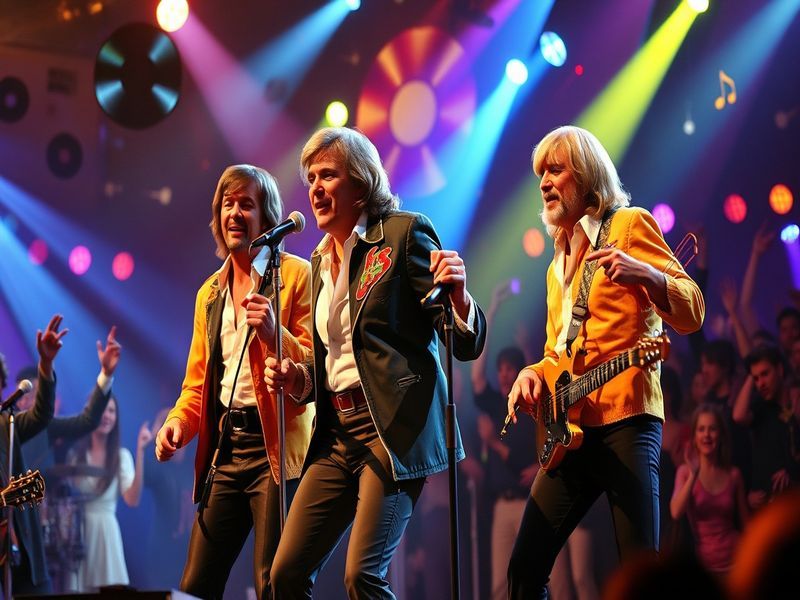
The Bee Gees were more than a band—they were architects of a musical era. Active for over five decades, the trio of brothers from Manchester, England, became synonymous with the disco revolution of the 1970s. Yet their influence stretched far beyond dance floors. They shaped pop, rock, and R&B, crafting melodies that resonated across continents and generations.
Born in 1946 on the Isle of Man to parents Hugh and Barbara Gibb, Barry, Robin, and Maurice Gibb began performing as children. Their early years were marked by relocation to Australia, where they honed their vocal harmonies and instrumental skills. By the mid-1960s, they had returned to the UK, where their career took flight. Their breakthrough came with New York Mining Disaster 1941 (1967), a song that introduced the world to their distinctive falsetto-driven sound.
From Pop to Disco: A Decade of Reinvention
The Bee Gees’ career was defined by constant evolution. In the late 1960s and early 1970s, they crafted baroque pop masterpieces like Massachusetts and I Started a Joke, songs that showcased their lush harmonies and melancholic lyricism. These tracks cemented their status as global stars, particularly in Europe and Australia. Yet it was their pivot to disco in the mid-1970s that would redefine their legacy.
Their 1975 album Main Course marked the turning point. Hits like Jive Talkin’ introduced a funkier, more rhythmic approach. But it was the release of Saturday Night Fever in 1977 that propelled them into the stratosphere. The soundtrack, featuring classics like Stayin’ Alive, Night Fever, and How Deep Is Your Love, became the best-selling album of the decade. It wasn’t just music—it was the heartbeat of a cultural movement, blending disco’s energy with the Bee Gees’ signature vocals.
Their success during this era wasn’t accidental. The band worked tirelessly with producer Arif Mardin, who helped refine their sound into something sleek, polished, and irresistibly danceable. The Bee Gees became the voice of an era defined by glitter balls, polyester suits, and a collective desire to forget the troubles of the 1970s.
Global Impact: A Soundtrack for the World
The Bee Gees’ influence extended far beyond the United States. In Europe, their music was embraced as an anthem of liberation and joy. In Asia, their songs became staples of nightclubs and radio stations from Tokyo to Manila. Even in Latin America, where disco wasn’t as dominant, their ballads like Words and Too Much Heaven found a home in romantic playlists.
This global reach was partly due to the band’s ability to blend universal themes with irresistible melodies. Songs like Tragedy (1979) and You Win Again (1987) transcended language barriers, their emotional core speaking directly to listeners regardless of nationality. The Bee Gees didn’t just perform music—they created emotional experiences that united crowds across continents.
In Africa, their music was adopted by local artists who reinterpreted their hits in genres like highlife and mbaqanga. In the Middle East, their songs were played in upscale venues, becoming symbols of sophistication and modernity. Even in the Soviet Union, where Western pop was often restricted, their music found a way to circulate, proving the universal power of a well-crafted tune.
The Art of Vocal Harmony: A Legacy of Sound
At the core of the Bee Gees’ sound was their unparalleled vocal harmony. The Gibbs’ ability to blend their voices into a single, shimmering instrument set them apart from their contemporaries. Barry’s soaring falsetto, Robin’s rich mid-range, and Maurice’s smooth baritone created a texture that was instantly recognizable and deeply emotional.
Their harmonies weren’t just technical achievements—they were emotional conveyors. Whether delivering the bittersweet lyrics of First of May or the euphoric highs of You Should Be Dancing, their voices worked in concert to evoke joy, sorrow, and everything in between. This mastery influenced countless artists, from Boyz II Men to the Backstreet Boys, who cited the Bee Gees as a primary inspiration for their own harmonic styles.
Their influence can also be heard in genres beyond pop and disco. Rock bands like The Police and Queen incorporated vocal layering techniques reminiscent of the Bee Gees. Even in hip-hop, producers have sampled their grooves, proving that their musical DNA is woven into the fabric of modern music.
Key Elements of Their Vocal Style
- Falsetto Dominance: Barry Gibb’s high-pitched vocals became a signature, particularly in their disco-era hits.
- Close Harmonies: The brothers’ ability to blend their voices seamlessly created a rich, textured sound.
- Emotional Nuance: Their harmonies weren’t just pretty—they conveyed deep emotion, whether in love songs or ballads.
- Rhythmic Vocals: In their disco phase, their vocal stylings became part of the rhythm section, driving the beat.
A Cultural Paradox: Fame and Tragedy
The Bee Gees’ story wasn’t one of unalloyed success. Behind the glittering facade lay personal struggles and professional challenges. Maurice Gibb’s untimely death in 2003 marked the end of the original trio. His passing left a void that neither Barry nor Robin could fully fill, and the band officially disbanded shortly afterward.
Their later years were marked by public disputes, including a bitter feud between Barry and Robin that lasted over a decade. These conflicts highlighted the pressures of fame and the challenges of maintaining personal relationships within a high-profile family. Yet, despite these struggles, the Bee Gees’ music endured. Their songs continued to be played at weddings, parties, and nostalgic radio stations, proving that their legacy was indelible.
Robin Gibb’s death in 2012 solidified the end of an era. The brothers’ passing left a cultural void, but their music ensured they would never be forgotten. Today, their songs remain timeless, a testament to their genius and the universal language of music.
Conclusion: The Brothers’ Eternal Beat
The Bee Gees’ story is one of reinvention, resilience, and raw talent. From their early days in Australia to their reign as disco kings and their enduring influence on global pop culture, they left an indelible mark on the world. Their music wasn’t just background noise—it was the soundtrack to millions of lives, a source of joy, comfort, and connection.
As we look back on their career, it’s clear that the Bee Gees were more than a band. They were innovators who pushed the boundaries of pop music, harmonizers who created sonic magic, and global ambassadors who united people through song. Their legacy is a reminder that great art transcends time, continuing to inspire and uplift long after its creators have moved on.
For new generations discovering their music, the Bee Gees offer a gateway into the past—a chance to experience the joy, energy, and emotion of an era that continues to resonate today. Whether you’re dancing to Stayin’ Alive or reflecting on the bittersweet beauty of How Can You Mend a Broken Heart, the Bee Gees’ music remains as vital and vibrant as ever.