Escalating Tensions: The Iran-Israel Conflict Through a Global Lens
The latest chapter in the decades-long rivalry between Iran and Israel has once again thrust the Middle East into the global spotlight. Recent escalations have raised concerns about regional stability, drawing reactions from world leaders, financial markets, and cultural observers alike. To understand the current conflict, it’s essential to examine its historical roots, geopolitical implications, and the broader cultural responses shaping public perception.
The Historical Backdrop of Hostilities
Tensions between Iran and Israel date back to the 1979 Iranian Revolution, which saw the establishment of an Islamic Republic under Ayatollah Ruhollah Khomeini. This ideological shift marked a turning point, as Iran’s new leadership declared Israel an illegitimate state and called for its destruction. Over the years, proxies like Hezbollah in Lebanon and Hamas in Gaza have become key players in this proxy war, often backed by Tehran.
The nuclear issue has further complicated relations. Iran’s nuclear program, which it insists is for peaceful purposes, has been a point of contention with Israel and Western powers. The 2015 Joint Comprehensive Plan of Action (JCPOA), or Iran Nuclear Deal, temporarily eased tensions but was abandoned by the U.S. in 2018 under the Trump administration. Since then, Iran has resumed uranium enrichment, bringing it closer to weapons-grade levels.
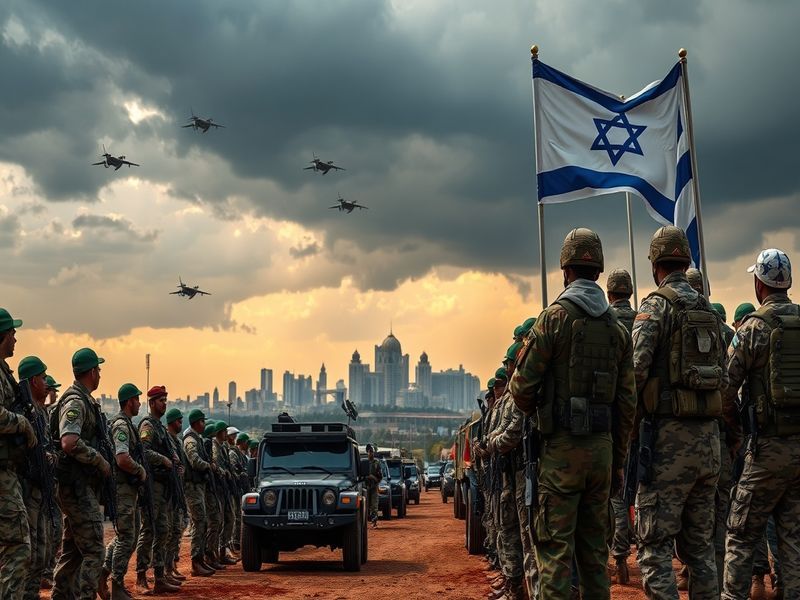
Israel, for its part, has adopted a policy of preemptive strikes to counter perceived threats. The 2020 assassination of Iranian nuclear scientist Mohsen Fakhrizadeh and the 2024 attack on Iran’s consulate in Damascus are just two examples of Israel’s willingness to act unilaterally. These actions underscore the high-stakes nature of the conflict, where each move risks triggering a wider regional war.
Regional and Global Reactions
The international community has responded to the escalating tensions with a mix of alarm and diplomatic maneuvering. The United Nations has repeatedly called for restraint, while the U.S. has reaffirmed its commitment to Israel’s security. However, the Biden administration’s approach has been marked by caution, balancing support for Israel with efforts to prevent a full-scale conflict.
In Europe, leaders have expressed concern over the potential humanitarian and economic fallout. Germany, a key ally of Israel, has warned against further escalation, emphasizing the need for diplomatic solutions. Meanwhile, Russia and China have positioned themselves as mediators, leveraging their relationships with Iran to push for dialogue.
Financial markets have also reacted to the instability. Oil prices have surged amid fears of supply disruptions, particularly in the Strait of Hormuz, a critical chokepoint for global oil shipments. Investors are closely monitoring the situation, as any prolonged conflict could destabilize energy markets and trigger economic ripple effects worldwide.
Cultural and Media Responses
The conflict has not only been a geopolitical issue but also a cultural one, shaping narratives in media, art, and public discourse. Western media outlets have largely framed the conflict through the lens of Israel’s right to self-defense, while Iranian state media portrays Israel as an aggressor threatening regional peace. This dichotomy reflects broader ideological divides, with each side using media to rally domestic and international support.
In the realm of pop culture, the conflict has inspired films, documentaries, and even music. For example, the 2023 documentary Shadow War: Iran and Israel explores the covert operations and espionage that define this shadow conflict. Meanwhile, musicians from both sides have used their platforms to voice their perspectives, with some songs becoming anthems of resistance or defiance.
Social media has amplified these narratives, with hashtags like #StandWithIran and #ProtectIsrael trending globally. Influencers and celebrities have weighed in, further polarizing opinions. This digital battlefield adds another layer to the conflict, where misinformation and propaganda can spread rapidly, shaping public opinion in real time.
Potential Paths Forward
As the situation evolves, several potential outcomes could emerge. One possibility is a return to diplomatic negotiations, though the prospects appear slim given the current level of mistrust. Another scenario involves a limited military confrontation, where neither side seeks a full-scale war but engages in targeted strikes to send a message.
Alternatively, the conflict could escalate into a broader regional war, drawing in other actors like Hezbollah, Hamas, or even Saudi Arabia. Such a development would have catastrophic consequences, not only for the Middle East but for global stability. The international community must act swiftly to prevent this worst-case scenario.
For now, the world watches and waits, hoping that cooler heads will prevail. The stakes could not be higher, and the consequences of miscalculation are dire. Whether through diplomacy, deterrence, or sheer luck, the path forward remains uncertain—but the need for a solution has never been more urgent.
Key Takeaways for Observers
- Historical Roots: The conflict stems from the 1979 Iranian Revolution and has evolved into a complex web of proxy wars, nuclear tensions, and covert operations.
- Global Implications: The conflict affects energy markets, diplomatic alliances, and cultural narratives worldwide.
- Media and Culture: Both sides use media and pop culture to shape narratives, with social media amplifying these efforts.
- Uncertain Future: The potential for escalation looms large, with the international community playing a critical role in preventing a wider war.
For more on the geopolitical dynamics shaping the Middle East, explore our Politics section. To understand how conflicts like this influence global markets, check out our Finance coverage.