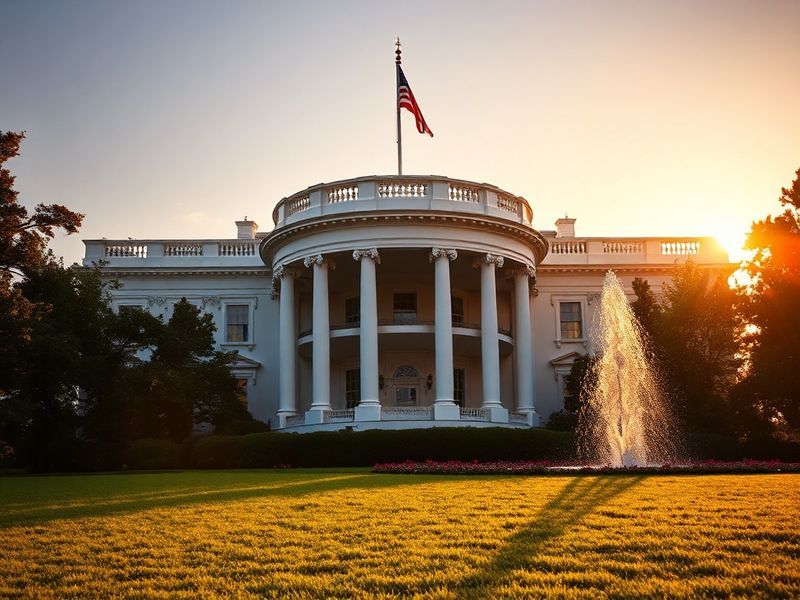
The White House is more than just an address—1600 Pennsylvania Avenue NW, Washington, D.C.—it is a symbol of American governance, history, and global influence. Since its completion in 1800, the Executive Mansion has weathered wars, economic crises, and political upheavals, standing as a physical and ideological cornerstone of the United States. The building itself reflects the nation’s evolution, from its neoclassical design to its role in modern media and public discourse.
A Brief History of the White House
The White House’s origins trace back to George Washington, who selected the site in 1791. Irish-born architect James Hoban designed the original structure, inspired by Leinster House in Dublin and the Roman villa of the first-century statesman Cicero. Construction began in 1792, and despite setbacks—including the burning of the building by British troops during the War of 1812—the White House was rebuilt and expanded over time.
Theodore Roosevelt officially named it the “White House” in 1901, though the nickname had been in use for decades due to its white-painted sandstone walls. The building has undergone numerous renovations, including the addition of the West Wing in 1902 under Theodore Roosevelt and the construction of the Oval Office in 1934 under Franklin D. Roosevelt. Today, the White House complex includes the Executive Residence, the West Wing, the East Wing, and the Eisenhower Executive Office Building.
Key Historical Moments
- 1814: British forces set fire to the White House during the War of 1812, leaving only the exterior walls standing.
- 1909: William Howard Taft oversaw the installation of the first presidential automobile, replacing horse-drawn carriages.
- 1942: During World War II, a bunker known as the “Octagon” was constructed beneath the East Wing for emergency use.
- 1961: Jacqueline Kennedy led a major restoration effort, redecorating the White House with period-appropriate furnishings and opening it to public tours.
The White House in Modern Politics
The White House remains the epicenter of U.S. political power, serving as the official residence and workplace of the president. Its role extends beyond symbolism—it is where decisions shaping domestic and foreign policy are made, where press briefings influence global markets, and where crises unfold in real time. The building’s public image is carefully curated, yet its inner workings often become subjects of intense scrutiny.
Presidential communications from the White House have evolved dramatically. From FDR’s “fireside chats” on radio to Barack Obama’s use of social media, technology has reshaped how leaders connect with the public. Today, live broadcasts from the White House Briefing Room and viral moments on platforms like Twitter and TikTok can shape perceptions overnight.
Security and Secrecy
The White House is one of the most secure buildings in the world. The U.S. Secret Service oversees a multi-layered security apparatus, including barriers, surveillance, and airspace restrictions. Despite these measures, breaches have occurred, most notably in 2014 when an intruder scaled the fence and entered the residence before being apprehended.
Security concerns have intensified in the digital age. Cyber threats, classified leaks, and the proliferation of drones have forced the Secret Service to adapt. In 2023, the agency announced plans to expand its use of AI and machine learning to detect potential threats before they materialize.
The White House as a Cultural and Economic Force
Beyond politics, the White House wields significant cultural and economic influence. Its image is instantly recognizable, appearing in films, advertisements, and merchandise. Tourism to Washington, D.C., is a major industry, with the White House a top attraction. In 2022, the National Park Service reported over 1.5 million visitors to the White House and its grounds.
The building also serves as a backdrop for national celebrations and protests. During times of crisis, such as the COVID-19 pandemic or the January 6 Capitol riot, the White House becomes a focal point for national unity—or division. Public opinion of the White House often mirrors broader attitudes toward the presidency itself.
Tourism and Public Access
Public tours of the White House are available to U.S. citizens through advance requests submitted through their members of Congress. International visitors can request tours through their embassies. The White House Visitor Center, located near the National Mall, offers exhibits on the building’s history and the First Families.
Controversies have occasionally arisen over public access. In 2020, the Trump administration limited tours during the pandemic, sparking criticism from lawmakers and the public. Meanwhile, the Biden administration has reinstated more open policies, though security concerns continue to shape access.
The White House and Media Representation
The White House and the media share a symbiotic, often contentious relationship. The press corps stationed at the White House—known as the “White House Press Corps”—plays a critical role in informing the public. Daily briefings, pool reports, and off-camera interviews provide glimpses into the administration’s inner workings.
However, the relationship between the White House and the media has become increasingly polarized. Accusations of “fake news,” selective reporting, and the rise of partisan media outlets have complicated public trust. Presidents from Nixon to Trump have clashed with journalists, while others, like Obama, sought to leverage media platforms for direct communication.
The Role of Social Media
Social media has transformed how the White House communicates. Barack Obama’s 2008 campaign pioneered digital outreach, while Donald Trump’s use of Twitter reshaped political discourse. Today, the White House maintains active accounts on platforms like Twitter, Instagram, and TikTok, often bypassing traditional media to reach audiences directly.
This shift has democratized information but also amplified misinformation. The White House’s social media presence is closely watched, with every post scrutinized for tone, accuracy, and intent. The Biden administration has emphasized fact-based messaging, though challenges remain in combating disinformation.
The White House is more than a building—it is a living institution that reflects the nation’s ideals, struggles, and aspirations. From its historical significance to its modern-day challenges, the Executive Mansion remains a powerful symbol of American democracy. As technology and politics evolve, the White House will continue to adapt, ensuring its relevance for generations to come.
For those interested in exploring more about American governance, consider reading our analysis of Politics or diving into the history of Washington, D.C., History.