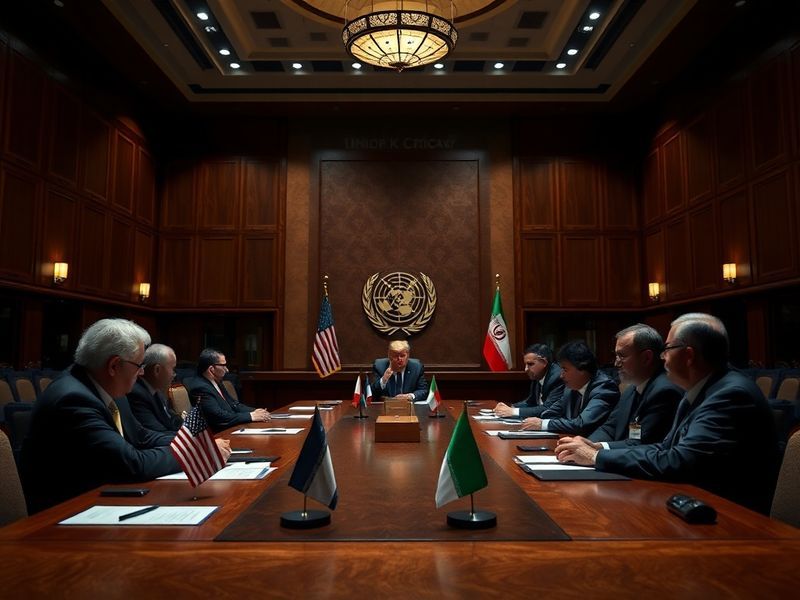
Trump Iran Talks: How Diplomatic Tensions Shaped Global Politics
“`html
Trump Iran Talks: A High-Stakes Diplomatic Chessboard
The relationship between the United States and Iran has long been one of the most volatile dynamics in global geopolitics. Under the Trump administration, these tensions reached new heights, culminating in a series of high-stakes negotiations that sought to either de-escalate or further inflame an already fragile situation. These talks were not merely diplomatic exchanges; they were a reflection of broader global power struggles, regional ambitions, and the shifting sands of international alliances.
The Trump administration’s approach to Iran was marked by a combination of aggressive rhetoric, economic sanctions, and sporadic attempts at dialogue. Unlike the Obama administration, which pursued the Joint Comprehensive Plan of Action (JCPOA), Trump withdrew from the agreement in 2018, citing its inadequacies in curbing Iran’s nuclear ambitions and its failure to address other regional behaviors. This withdrawal set the stage for a complex and often contradictory diplomatic dance that played out over the next several years.
The Backdrop: Sanctions and Standoffs
At the heart of Trump’s strategy was the reimposition of stringent economic sanctions on Iran. These sanctions, designed to cripple Iran’s economy and force a change in its foreign policy, had a profound impact on the daily lives of ordinary Iranians. The Iranian rial plummeted in value, inflation soared, and access to essential goods became increasingly difficult. Yet, despite the economic hardship, Iran’s leadership remained defiant, framing the sanctions as an act of economic warfare rather than a tool for negotiation.
The sanctions also had ripple effects across the region. Countries like Iraq, which relies heavily on Iranian energy imports, found themselves caught in the middle. Meanwhile, Iran’s regional allies, such as Hezbollah in Lebanon and the Houthis in Yemen, faced their own economic challenges, further complicating the geopolitical landscape. The sanctions created a domino effect, where economic pain in Iran translated into political instability in neighboring countries.
A Patchwork of Negotiations
The Trump administration’s approach to negotiations was anything but consistent. At times, it seemed as though the U.S. was open to dialogue, while at other moments, the rhetoric suggested a willingness to escalate military tensions. One of the most notable moments came in 2019, when a series of attacks on oil tankers in the Strait of Hormuz raised fears of a direct military confrontation. The U.S. blamed Iran for the attacks, though Tehran denied involvement. This incident highlighted the fragility of the situation and the ease with which tensions could spiral out of control.
Despite these challenges, there were moments of diplomatic engagement. In 2020, the U.S. and Iran engaged in indirect talks mediated by Iraq, focusing on de-escalation in the region. These talks were a rare instance of dialogue between the two nations, though they ultimately yielded little in terms of tangible progress. The talks were fraught with mistrust, with both sides accusing the other of bad faith and failing to meet key demands.
The Human Cost of Diplomatic Failure
The consequences of these diplomatic failures extended far beyond the halls of power. In Iran, ordinary citizens bore the brunt of the economic collapse and political isolation. The healthcare system, already under strain, struggled to cope with the demands of a population facing increasing poverty and unemployment. Meanwhile, in the U.S., the debate over Iran policy became a polarizing issue, with critics arguing that the sanctions were causing unnecessary suffering and supporters insisting that they were necessary to curb Iran’s aggressive regional behavior.
The human toll was not limited to Iran. In Iraq, the economic fallout from U.S. sanctions on Iran contributed to widespread protests and political instability. The country’s fragile government, already struggling to maintain control, found itself caught between the demands of its citizens and the pressures of regional and international powers. The situation in Iraq underscored how closely tied the fates of neighboring countries can be, especially when it comes to economic stability and political sovereignty.
A Global Perspective: Allies and Adversaries
The Trump administration’s Iran policy also strained relationships with key allies. European nations, which had remained committed to the JCPOA, found themselves at odds with the U.S. over the reimposition of sanctions. The dispute highlighted the challenges of maintaining a united front in the face of divergent national interests. Meanwhile, Russia and China capitalized on the U.S.-Iran standoff, deepening their own economic and military ties with Iran. This shift in alliances further complicated the global power dynamics, making it increasingly difficult for the U.S. to assert its influence in the region.
The situation also had implications for global security. The Middle East, already a powder keg of sectarian and geopolitical conflicts, became even more volatile. The U.S. withdrawal from the JCPOA emboldened hardliners in Iran, who argued that diplomacy with the West was futile. This, in turn, fueled a cycle of mistrust and hostility that showed little sign of abating.
Lessons Learned and the Road Ahead
The Trump administration’s approach to Iran offers several lessons for future policymakers. First, it underscored the importance of consistency in diplomatic engagement. The mixed signals and contradictory policies only served to deepen mistrust and complicate negotiations. Second, it highlighted the need for a more nuanced understanding of the human impact of economic sanctions. While sanctions may have been intended to pressure Iran’s leadership, they also caused widespread suffering among ordinary citizens, further destabilizing the region.
Looking ahead, the road to any lasting resolution remains fraught with challenges. The Biden administration has signaled a willingness to re-engage with Iran, but the path forward is far from clear. The JCPOA, though imperfect, remains the most viable framework for dialogue. However, the political landscape in both the U.S. and Iran has shifted significantly since the agreement was first signed, making it difficult to envision a straightforward path to renewed negotiations.
For now, the Trump-Iran talks serve as a cautionary tale about the complexities of diplomacy in a fractured world. They remind us that geopolitical conflicts are not merely about power and influence; they are also about human lives, economic stability, and the fragile threads that hold international relations together.
As the global community continues to grapple with the aftermath of these talks, one thing is clear: the lessons learned from this period must inform future efforts to build a more stable and peaceful world. Whether through renewed diplomacy, economic cooperation, or a combination of both, the path forward will require patience, persistence, and a willingness to confront the hard truths that lie beneath the surface of international relations.