How The Mandalorian Redefined Star Wars for a New Generation
The Mandalorian arrived on Disney+ in November 2019 as a gamble—a single-camera space Western set in the outer reaches of the Star Wars galaxy. Few expected the show to redefine live-action Star Wars storytelling, yet four seasons later, it has cemented itself as the franchise’s most consistently compelling series. With its blend of practical effects, serialized storytelling, and a reluctant hero archetype, The Mandalorian has not only entertained millions but also reshaped expectations for what a Star Wars property can achieve on television.
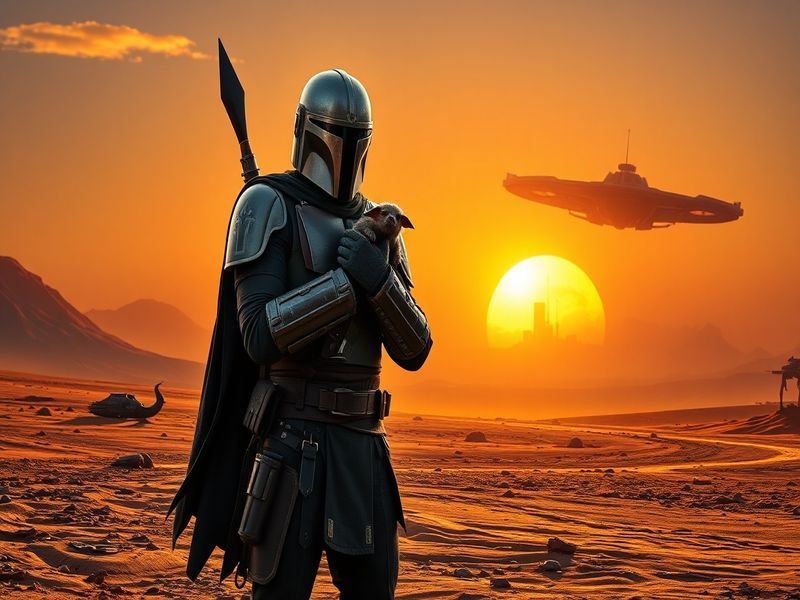
At its core, The Mandalorian follows Din Djarin, a lone bounty hunter navigating the lawless fringes of the galaxy. His journey from solitary enforcer to surrogate father to Grogu—popularly known as Baby Yoda—mirrors the heart of Star Wars itself: redemption, family, and the struggle between duty and personal connection. The show’s strength lies in its ability to balance episodic adventures with long-form character growth, all while expanding the Star Wars universe in thoughtful, sometimes unexpected ways.
The Evolution of a Lone Hero
The Mandalorian’s first season introduced Din Djarin as a near-silent protagonist, his motivations obscured by a beskar armor exterior. Played by Pedro Pascal, the character was a deliberate throwback to classic Western heroes like the Man with No Name, yet the show gradually peeled back layers to reveal a man shaped by loss and a strict moral code. The introduction of Grogu in Chapter 10, “The Passenger,” transformed the series from a procedural bounty hunt into a deeply emotional character study.
By Season 2, Din’s journey became one of reluctant guardianship. His choice to protect Grogu, despite his culture’s prohibition on forming attachments, created compelling internal conflict. This theme reached its peak in Season 3, where Din’s path led him to reconcile with his past, including his Mandalorian roots and his role in the Great Purge. The show’s writers deftly avoided making him a traditional “chosen one,” instead framing him as a flawed but honorable figure who earns his place through action rather than destiny.
The character’s evolution culminated in a striking visual moment during Season 3’s finale. After removing his helmet—a forbidden act among Mandalorians—to kiss Grogu goodbye, Din symbolically embraced both his humanity and his community. This scene underscored the show’s central thesis: that true strength comes from connection, not isolation. It was a quiet revolution in Star Wars storytelling, proving that even in a galaxy far, far away, emotional vulnerability could be revolutionary.
Expanding the Star Wars Galaxy—Without Overwhelming It
One of the most impressive aspects of The Mandalorian is its world-building. Unlike some Star Wars properties that sprawl across planets and subplots, the show grounds its narrative in a specific corner of the galaxy: the Outer Rim. This approach allows it to explore diverse cultures, political factions, and ecosystems without diluting the story’s focus. From the neon-lit streets of Nevarro to the desert wastes of Tatooine, each location feels lived-in and purposeful.
The show also introduces new species, technologies, and historical events that enrich the Star Wars lore. Notable additions include:
- The Mythosaur skulls: These ancient relics hint at a lost Mandalorian civilization and tie Din’s people to the Star Wars mythos in a tangible way. Their presence in Season 3’s finale reinforced the Mandalorians’ deep connection to their past.
- The Living Waters of Mandalore: Introduced in Season 3, this concept reimagined the planet’s healing properties and added a mystical dimension to the Mandalorian identity.
- The New Republic’s struggles: The show doesn’t shy away from depicting the fledgling government’s flaws, from bureaucratic inefficiency to corruption. This grounded the story in a post-Empire galaxy that feels politically complex.
- The rise of the Nihil: Though primarily explored in The Mandalorian and its spin-offs, the Nihil’s chaotic threat added a fresh layer of danger to the Star Wars universe.
Critics and fans alike have praised the show’s restraint. Rather than cramming in cameos or Easter eggs, The Mandalorian prioritizes narrative coherence and character moments. Even its crossover episodes—like the Boba Fett-centric Season 2 arc—serve a purpose, deepening Din’s relationships and advancing his arc.
Behind the Scenes: How Practical Effects Saved the Galaxy
The Mandalorian’s visual style is inseparable from its production techniques. Executive produced by Jon Favreau, Dave Filoni, and Kathleen Kennedy, the series embraced a return to practical effects at a time when CGI-heavy blockbusters dominated. Cinematographer Greig Fraser and the visual effects team, led by Industrial Light & Magic, used a combination of large-scale sets, animatronics, and LED volume technology (the “Volume”) to create immersive environments.
The Volume—a curved LED screen that displayed real-time backgrounds—allowed actors to perform in dynamic lighting conditions, reacting authentically to their surroundings. This technique was pioneered in The Lion King (2019) remake but reached new heights in The Mandalorian. Scenes like the speeder chase in Season 1 or the droid battles in Season 2 felt tactile and alive, a stark contrast to the often sterile digital environments of other sci-fi shows.
Jon Favreau’s insistence on practical effects wasn’t just aesthetic; it was financial and logistical. The Volume reduced post-production costs and allowed for quicker reshoots. It also gave the cast, particularly Pedro Pascal and the child actors playing Grogu, a more intuitive way to interact with their environment. The result was a show that felt both futuristic and timeless, a rare achievement in modern television.
The Legacy and Future of The Mandalorian
As The Mandalorian enters its fifth season, its impact on the Star Wars franchise is undeniable. It has spawned multiple spin-offs, including The Book of Boba Fett, Ahsoka, and Skeleton Crew, each expanding the interconnected “Stories of the Bounty Hunters” saga. More importantly, it has redefined what live-action Star Wars can be—leaner, more character-driven, and willing to take narrative risks.
The show’s success also reflects a broader trend in television: the rise of serialized storytelling in genre fiction. Where older Star Wars properties like The Clone Wars leaned heavily into lore, The Mandalorian proved that audiences crave emotional engagement over encyclopedic knowledge. Its focus on Din’s journey—from bounty hunter to father to leader—offered a relatable core that resonated across demographics.
Looking ahead, the fifth season is expected to delve deeper into Mandalore’s history and Din’s role in the galaxy’s future. Rumors suggest appearances from fan-favorite characters, as well as potential crossovers with other Entertainment properties. Whatever the future holds, The Mandalorian has already secured its place as a cornerstone of modern Star Wars storytelling.
For fans old and new, the show’s greatest triumph may be its reminder that Star Wars is more than just lightsabers and space battles—it’s a story about people, choices, and the bonds that define us. In a franchise often criticized for its sprawl, The Mandalorian found a way to be both epic and intimate, a balance that few have matched.