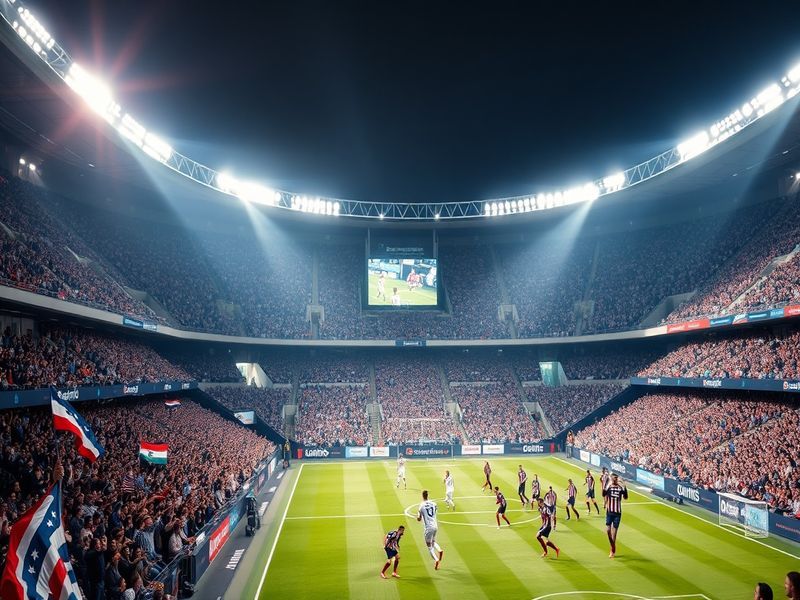
The clash between Real Madrid and Atlético Madrid transcends typical football rivalries. It embodies a collision of ideologies, histories, and ambitions. While both clubs call Madrid home, their identities could not be more different. Real Madrid, the glamorous institution with a global fanbase, faces off against Atlético Madrid, the gritty underdog that has clawed its way to the top through sheer determination.
This rivalry is not just about points in La Liga or Champions League glory. It reflects broader tensions within Spanish football—between tradition and innovation, between global prestige and local loyalty. The matches between these two sides are often intense, tactical, and unpredictable, offering fans drama that few other fixtures can match.
The Origins of a Fierce Rivalry
The roots of this rivalry stretch back over a century. Real Madrid was founded in 1902, quickly establishing itself as the club of the Spanish elite and later the global game’s most successful team. Atlético Madrid, originally formed by three Basque students in 1903, positioned itself as the working-class alternative, rooted in the industrial neighborhoods of Madrid.
The tension between the two clubs intensified in the 1950s and 1960s during European competitions. Real Madrid’s dominance in the early years of the European Cup contrasted sharply with Atlético’s scrappy, defensive style. Matches between them became high-stakes battles, not just for domestic supremacy but for ideological bragging rights.
This historical divide has only deepened over time. While Real Madrid has embraced a more cosmopolitan identity—signing global superstars and cultivating a brand synonymous with success—Atlético Madrid has maintained a stubbornly local character. The contrast is visible in everything from their stadiums to their fan cultures.
Key Moments That Shaped the Rivalry
Several matches between these two sides have etched themselves into football history. These encounters are not just about results; they are about narratives, turning points, and moments that define careers and legacies.
- 1996 Champions League Quarterfinal: Atlético stunned Real with a 1-0 win at the Santiago Bernabéu, a result that felt like a seismic upset at the time. The match highlighted Atlético’s defensive resilience and Real’s struggles against disciplined opponents.
- 2014 Champions League Final: The first time the two clubs met in a European final ended in Real Madrid’s 4-1 victory after extra time. Sergio Ramos’ equalizer in stoppage time remains one of the most dramatic moments in modern football.
- 2016 Champions League Round of 16: Atlético once again pushed Real to the brink, with Antoine Griezmann’s crucial away goal sending them through. The tie ended in controversy after a controversial refereeing decision in the second leg.
- 2020 La Liga Clash: A 2-0 victory for Atlético in Madrid, where they exposed Real’s defensive frailties. This result came at a time when Atlético was challenging for the title, while Real was reeling from a poor start to the season.
These moments are more than just highlights; they shape how the rivalry is perceived. Atlético’s ability to frustrate Real’s star-studded lineups has given them a psychological edge, while Real’s occasional struggles against their local rivals have added layers of complexity to the fixture.
The Tactical Battle: Style vs. Substance
The contrast between the two clubs extends beyond their histories. Their playing styles often clash in fascinating ways, creating a tactical chess match that extends beyond the 90 minutes.
Real Madrid’s approach is typically fluid, attacking, and built around individual brilliance. The club has long prioritized flair, creativity, and the ability to produce moments of magic. Under managers like Zinedine Zidane and Carlo Ancelotti, they have perfected a system that blends defensive solidity with rapid transitions and lethal finishing.
Atlético Madrid, on the other hand, is the anti-Real. They thrive on structure, pressing, and defensive organization. Diego Simeone’s tenure has embodied this philosophy, with Atlético becoming known for their physicality, compactness, and ability to suffocate opponents. Their style is less about aesthetics and more about efficiency.
When these two approaches collide, the result is often a tactical masterclass. Real’s attackers must navigate a wall of bodies, while Atlético’s forwards must break down a defense that prioritizes organization over risk-taking. The midfield battles are particularly intriguing, as players like Luka Modrić and Jan Oblak—two of Europe’s best in their positions—often dictate the flow of the game.
This tactical duel extends to the transfer market as well. Real Madrid’s willingness to spend lavishly on global superstars contrasts with Atlético’s shrewdness in identifying undervalued talents who fit their system. The contrast in recruitment strategies speaks volumes about their differing philosophies.
Broader Implications: More Than Just a Football Match
The Real Madrid vs. Atlético Madrid rivalry is a microcosm of broader trends in European football. It reflects the growing divide between the sport’s financial powerhouses and the clubs that prioritize sustainability and identity.
For Real Madrid, the rivalry is an opportunity to reinforce their status as the preeminent club in world football. Every victory against Atlético is a statement—a reminder that they are still the kings of the game. Yet, their occasional struggles against their neighbors serve as a cautionary tale about the dangers of complacency.
For Atlético Madrid, these matches are about proving that they belong among Europe’s elite. Their ability to compete with—and often defeat—Real Madrid has been instrumental in shifting perceptions. No longer are they seen as the bridesmaids of Spanish football; they are legitimate contenders, capable of challenging for titles on multiple fronts.
The rivalry also highlights the importance of local identity in an era of globalization. While Real Madrid’s brand is built on global appeal, Atlético’s appeal is rooted in its connection to Madrid’s working-class neighborhoods. This local pride resonates with fans who value authenticity over commercial success.
Moreover, the rivalry has implications for Spanish football as a whole. La Liga’s competitive balance has long been skewed in favor of Real Madrid and Barcelona. Atlético’s rise has injected new energy into the league, forcing the traditional giants to raise their game. The Madrid derby is no longer just a local affair; it is a cornerstone of Spanish football’s resurgence.
Looking Ahead: What the Future Holds
The rivalry between Real Madrid and Atlético Madrid shows no signs of fading. If anything, it is evolving, shaped by new generations of players, managers, and fans. The next chapter of this storied rivalry will likely be defined by several key factors.
First, the emergence of young talents on both sides will play a crucial role. Real Madrid’s focus on developing their academy, alongside their ability to integrate young stars like Eduardo Camavinga and Jude Bellingham, ensures a steady pipeline of talent. Atlético, meanwhile, continues to scout for hidden gems who can thrive in Simeone’s system.
Second, the tactical evolution of both clubs will be fascinating to watch. Real Madrid’s recent struggles against low-block teams have prompted questions about their adaptability. Atlético, meanwhile, must find ways to remain competitive in a league where financial disparities are growing.
Finally, the rivalry’s global appeal cannot be ignored. The Madrid derby is one of the most-watched fixtures in world football, with millions tuning in to witness the drama. This global audience ensures that the rivalry will remain a focal point of European football for years to come.
For fans, the Real Madrid vs. Atlético Madrid rivalry is a reminder of why football matters. It is not just about trophies or statistics; it is about identity, passion, and the unbreakable bonds that tie communities together. Whether it’s a league match, a cup final, or a Champions League showdown, these encounters are guaranteed to deliver unforgettable moments.
As the two clubs continue to write new chapters in their storied history, one thing is certain: the Madrid derby will always be more than just a football match. It is a celebration of everything that makes the beautiful game beautiful.
For more on the history of La Liga and its biggest rivalries, visit our Sports section. To explore tactical analysis of top European clubs, check out our Analysis category.