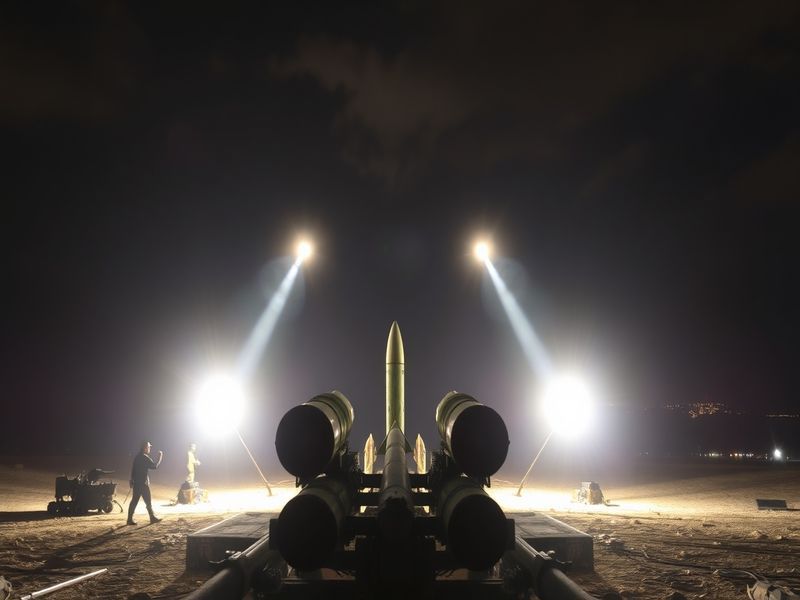
Overview of Iranian Missiles and Israel’s Security Concerns
The ongoing tension between Iran and Israel has escalated in recent years, particularly concerning missile capabilities. Iran’s missile program has become a focal point of regional security discussions, raising alarms not only for Israel but for global powers as well. The geopolitical landscape is shifting, and understanding the implications of Iranian missile development is crucial for comprehending the broader dynamics of Middle Eastern politics.
Iran’s Missile Capabilities
Iran has invested heavily in its missile technology, resulting in a diverse arsenal that poses a significant threat to its adversaries. The country’s missile program is characterized by:
- Ballistic Missiles: These are capable of delivering conventional and non-conventional warheads over long distances.
- Cruise Missiles: Iran has developed cruise missiles that can evade radar detection, making them more difficult to intercept.
- Precision-Guided Munitions: Recent advancements include missiles with enhanced accuracy, allowing for targeted strikes.
- Short-Range Missiles: Used primarily for regional conflicts, these missiles can be launched quickly and with little warning.
These capabilities have raised significant concerns for Israel, which perceives Iran as its primary threat. The strategic implications of Iran’s missile program extend beyond mere military might; they encompass political leverage and influence in the region.
Israel’s Response and Defense Strategies
In response to the perceived threat from Iranian missiles, Israel has developed a multi-layered defense strategy. This includes:
- Iron Dome: A mobile all-weather air defense system designed to intercept short-range threats.
- David’s Sling: A system aimed at intercepting medium- to long-range threats, complementing the Iron Dome.
- Arrow System: A long-range missile defense system capable of intercepting ballistic missiles outside the atmosphere.
- Cyber Warfare: Israel has invested in cyber capabilities to disrupt Iranian missile technology and infrastructure.
These defense systems are not only technological advancements but also symbolize Israel’s commitment to national security. By prioritizing missile defense, Israel aims to deter Iranian aggression and reassure its citizens of their safety.
International Implications and Reactions
The Iranian missile program has garnered international attention, prompting reactions from various global powers. The United States, European nations, and regional allies have voiced their concerns about Iran’s military ambitions. Sanctions have been imposed in an effort to curb Iran’s missile development, but the effectiveness of these measures is often debated.
Furthermore, the dynamics of the Israel-Iran conflict highlight broader geopolitical rivalries. Countries like Russia and China have supported Iran, complicating the international response to its missile capabilities. The situation is delicate, as any escalation could lead to wider conflicts involving multiple nations.
In addition to military and political responses, cultural narratives surrounding this conflict influence public perceptions. Media coverage often frames the Israeli-Iranian rivalry in existential terms, shaping the way citizens in both countries view each other.
Conclusion
The interplay between Iranian missile capabilities and Israel’s security measures is a critical aspect of Middle Eastern geopolitics. As both nations navigate this complex landscape, the implications extend beyond their borders, affecting global security dynamics. Understanding the nuances of this situation is essential for anyone interested in international relations, military strategy, and cultural narratives.
For more insights into related topics, consider exploring our Politics and News sections.