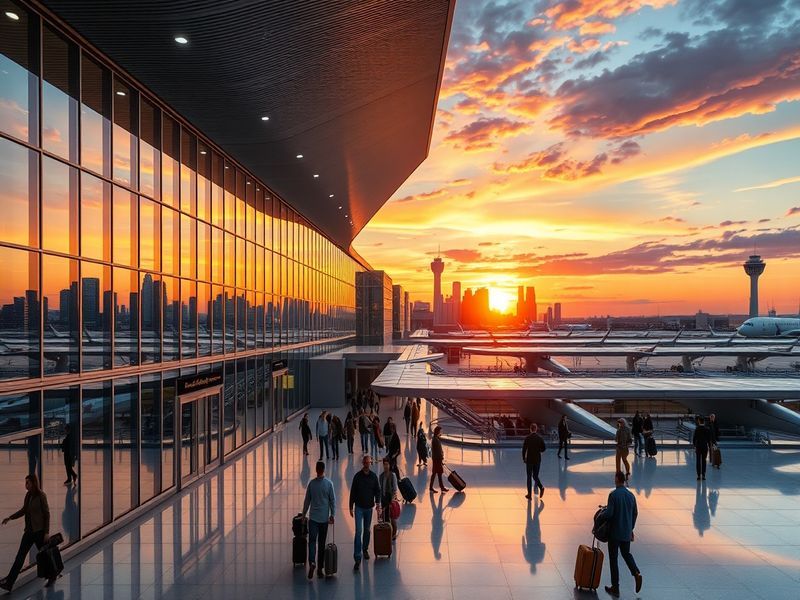
LaGuardia Airport: A Global Gateway with a New Identity
Few airports carry as much history or cultural weight as New York’s LaGuardia Airport. Named after former mayor Fiorello H. La Guardia, the airport has long served as a vital link between the United States and the world. Over the decades, it has evolved from a modest municipal facility into a modern transportation hub, reflecting broader shifts in aviation, urban development, and global mobility. Today, LaGuardia stands not just as a point of arrival or departure, but as a symbol of New York’s enduring role as a cultural and economic crossroads.
What makes LaGuardia unique is not just its location in one of the world’s most iconic cities, but its role in shaping how millions experience travel. Unlike larger international hubs such as JFK or Newark, LaGuardia primarily serves domestic flights and select international routes, making it a more intimate gateway for business travelers, families, and tourists alike. Its compact size and efficient layout encourage quick connections, a feature increasingly valued in an era where time is a luxury.
The Evolution of LaGuardia: From Humble Beginnings to Modern Revival
LaGuardia Airport opened in 1939 as New York Municipal Airport, a project championed by Mayor La Guardia himself to provide a cleaner, more accessible alternative to the crowded and polluted facilities of the time. At its inception, the airport was a marvel of engineering—one of the first to be built on a landfill in Flushing Bay, a testament to human ingenuity in reshaping the urban landscape. The original Art Deco terminal, designed by architect William A. Delano, became an architectural landmark and remains a nod to the glamour of early aviation.
By the late 20th century, however, LaGuardia had fallen into disrepair. Outdated infrastructure, limited capacity, and congestion led to frustrations among travelers. The airport became a symbol of inefficiency, earning nicknames like “Laguardia—Luggage Heaven” for its baggage mishaps. Recognizing the need for modernization, New York State and city officials launched a $8 billion redevelopment project in 2015, aiming to transform LaGuardia into a world-class facility by 2023.
The redevelopment was not just about aesthetics or comfort—it was a strategic move to maintain New York’s competitive edge in global travel. With JFK and Newark already handling long-haul international flights, LaGuardia’s role was redefined: to serve as the preferred airport for domestic travelers seeking speed, convenience, and a seamless experience. The new design, led by a consortium including firms like Gensler and WSP, emphasized open spaces, natural light, and intuitive wayfinding—elements once absent from the airport’s cramped corridors.
A Cultural Crossroads: Who Travels Through LaGuardia?
LaGuardia is more than a transit point; it’s a microcosm of global migration and cultural exchange. Each year, millions of passengers pass through its gates, representing a tapestry of backgrounds. Business professionals from Tokyo and São Paulo converge with families visiting relatives in Queens or Brooklyn. Musicians, athletes, and artists en route to performances or events often choose LaGuardia for its proximity to Manhattan and efficient connections.
The airport’s proximity to diverse neighborhoods like Astoria, Jackson Heights, and Flushing further enriches its cultural footprint. These areas are home to vibrant immigrant communities, and LaGuardia serves as their first or last point of contact with the city. For many international visitors, stepping off a plane at LaGuardia is their first impression of New York—not the skyline from a distance, but the sound of a thousand languages in the terminal, the aroma of halal carts and pizza slices, the energy of a city that never sleeps.
Even the airport’s food options reflect this diversity. Gone are the days of limited fast-food choices. Today, travelers can sample authentic ramen from a Japanese eatery, savor empanadas from a Venezuelan café, or enjoy a classic New York bagel—all within the same terminal. These culinary offerings are not just about convenience; they are a celebration of the city’s global identity, curated to reflect the communities it serves.
Challenges and Controversies: The Human Side of Travel
Despite its upgrades, LaGuardia remains a space of tension between efficiency and humanity. The airport’s compact size, once an advantage, now creates bottlenecks during peak hours. Delays ripple through the system quickly, affecting connections and traveler morale. The human cost of these disruptions is often overlooked in discussions about infrastructure—stressed parents with crying children, business travelers missing critical meetings, elderly passengers navigating crowded corridors.
Environmental concerns also loom large. LaGuardia sits on a former landfill, and its operations contribute to air and noise pollution in surrounding neighborhoods. While newer terminals have improved energy efficiency, the airport still faces scrutiny over its carbon footprint. Advocacy groups have pushed for stricter emissions standards and greater investment in public transit access, arguing that the airport’s growth must not come at the expense of community health.
Another layer of complexity is accessibility. While the new terminals feature improved accommodations for passengers with disabilities, older sections of the airport remain challenging to navigate. The Port Authority of New York and New Jersey, which operates LaGuardia, continues to face criticism for inconsistent enforcement of accessibility guidelines and delays in retrofitting older facilities.
LaGuardia in the Global Context: How It Compares to Other Airports
To understand LaGuardia’s role, it’s helpful to compare it with other major airports around the world. Like London Heathrow or Tokyo Haneda, LaGuardia is a gateway to a global city. But unlike those airports, which are designed to handle massive international traffic, LaGuardia specializes in short-haul and domestic flights. This specialization gives it a different rhythm—faster turnarounds, fewer passport checks, and a focus on regional connectivity.
The airport’s recent redesign has drawn comparisons to Changi Airport in Singapore or Dubai International Airport, both renowned for their passenger experience. While LaGuardia cannot match the scale of those facilities, its emphasis on comfort, aesthetics, and efficiency signals a shift in how airports are perceived. No longer just functional spaces, they are now designed to be destinations in their own right.
In Europe, airports like Amsterdam’s Schiphol or Paris’s Charles de Gaulle blend functionality with cultural experiences, offering art installations, local cuisine, and even libraries. LaGuardia’s new terminals incorporate similar ideas, with public art installations and spaces designed for relaxation. This evolution reflects a broader trend: airports are no longer seen as necessary evils of travel, but as integral parts of the urban experience.
Looking Ahead: The Future of LaGuardia and Air Travel
As air travel rebounds post-pandemic, LaGuardia faces both opportunities and challenges. The rise of sustainable aviation fuels and electric aircraft could transform how the airport operates, reducing its environmental impact. Meanwhile, the growth of remote work and digital nomadism may shift travel patterns, with more people opting for shorter, more frequent trips—exactly the kind of journeys LaGuardia is designed to facilitate.
Yet, the airport’s future is not without uncertainties. Rising operational costs, competition from high-speed rail, and the need for further expansion could strain its capacity. The Port Authority must balance modernization with affordability, ensuring that LaGuardia remains accessible to all travelers, not just the elite.
One potential solution lies in technology. From biometric check-ins to AI-powered crowd management, innovations could streamline the passenger experience. Imagine arriving at LaGuardia, scanning your face at security, and being guided to your gate via a personalized app—all without ever stopping at a counter. Such advancements are already being tested in other airports and could soon become standard in New York.
Why LaGuardia Matters Beyond the Runway
LaGuardia Airport is more than a place to catch a flight. It is a symbol of New York’s resilience, adaptability, and global reach. In an era where travel is often reduced to data points and delays, LaGuardia reminds us of the human stories that unfold within its terminals. It is where a grandmother hugs her grandson for the first time in years, where a musician walks off a plane with butterflies in their stomach, where a student takes their first solo trip to a new city.
The airport’s recent transformation reflects a deeper truth about modern life: even in a digital age, physical spaces still shape our experiences. LaGuardia’s new design is not just about aesthetics—it’s about creating a space that honors the dignity of travel. It’s about recognizing that airports are not just waypoints, but gateways to possibility.
As New York continues to evolve, so too will LaGuardia. But one thing is certain: for millions of travelers each year, it will always be the first and last taste of the city that never sleeps.
For those interested in exploring how airports intersect with urban development, consider reading about how transportation hubs shape city growth. And for a deeper look at the intersection of culture and travel, our culture section offers insights into how global identities are expressed in public spaces.