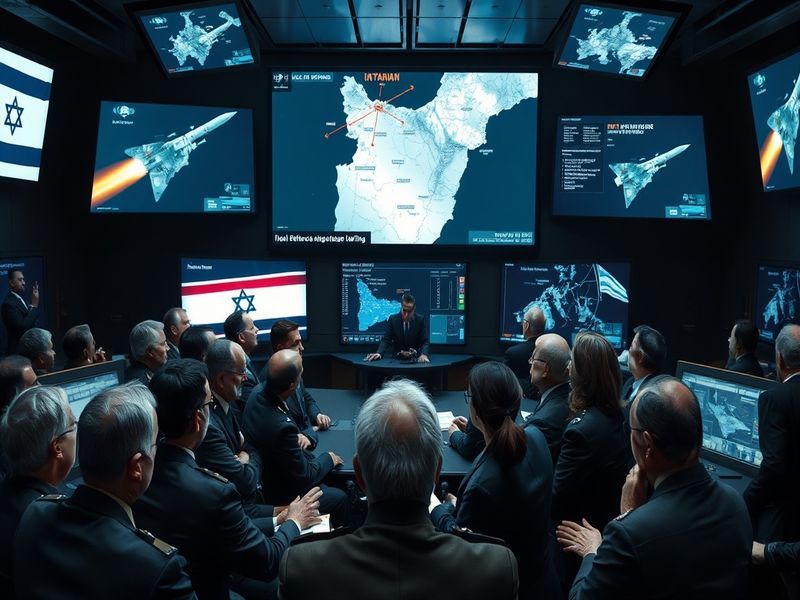
The Threat of Iranian Missiles: Implications for Israel and Beyond
Iranian Missiles: A Growing Threat to Israel
The ongoing tension between Iran and Israel has escalated significantly in recent years. Central to this conflict is Iran’s missile program, which poses a direct threat to Israeli security. The capabilities and reach of Iranian missiles have become a focal point of concern for Israel and its allies.
Context of the Iranian Missile Program
Iran’s missile development has been a priority for the regime for decades. Following the 1979 Islamic Revolution, the country sought to establish a robust military capacity to deter perceived threats, primarily from the United States and Israel. Over the years, Iran has developed an extensive range of ballistic missiles, including the Shahab and Sejjil series, which can reach targets across the Middle East and beyond.
Recent advancements in missile technology have raised alarms. Iran’s ability to produce missiles with increased precision and range presents a significant challenge for Israel’s defense systems. This development is not merely a military concern; it also has profound geopolitical implications.
Key Points of Concern
- Increased Range: Iranian missiles can now reach deep into Israeli territory, raising the stakes for any potential conflict.
- Precision Strikes: Advances in technology enable Iran to conduct targeted attacks, complicating Israel’s defensive strategies.
- Regional Alliances: Iran’s military partnerships with groups like Hezbollah enhance the missile threat to Israel.
- International Response: The global community’s reaction to Iran’s missile program remains mixed, impacting diplomatic efforts.
Broader Implications for Regional Stability
The implications of Iranian missile capabilities extend beyond Israel. They affect the entire Middle East’s stability. Neighboring countries, particularly those in the Gulf Cooperation Council (GCC), view Iran’s missile advancements as a direct threat. This perception has led to increased military cooperation among GCC nations and with Western allies, notably the United States.
Furthermore, Iran’s missile program influences the strategic calculus of countries like Saudi Arabia and Egypt. These nations may feel compelled to enhance their military capabilities or form new alliances in response to the perceived threat from Iran. Consequently, the arms race in the region could intensify, leading to a more volatile security environment.
Conclusion: The Path Forward
As tensions continue to rise, the international community must address the challenges posed by Iran’s missile program. Diplomatic efforts aimed at curbing missile proliferation are essential to prevent further escalation. Engaging Iran in dialogue while reinforcing defense systems in Israel and allied nations could provide a balanced approach to mitigating risks.
Ultimately, the future of Israeli-Iranian relations hinges on a complex interplay of military capabilities, diplomatic negotiations, and regional dynamics. The situation remains fluid, and continuous monitoring is vital as developments unfold.
For more insights into current geopolitical issues, visit our News and Analysis sections.