Thomas Shelby: The Antihero Who Defined Peaky Blinders
Thomas Shelby, the sharp-suited protagonist of Peaky Blinders, stands as one of modern television’s most compelling antiheroes. Played with magnetic intensity by Cillian Murphy, Shelby evolved from a street-smart gangster to a calculating industrialist over the show’s six-season run. His character arc—rooted in trauma, ambition, and moral ambiguity—resonated with audiences worldwide, cementing his place in pop culture history.
The Rise of a Working-Class Icon
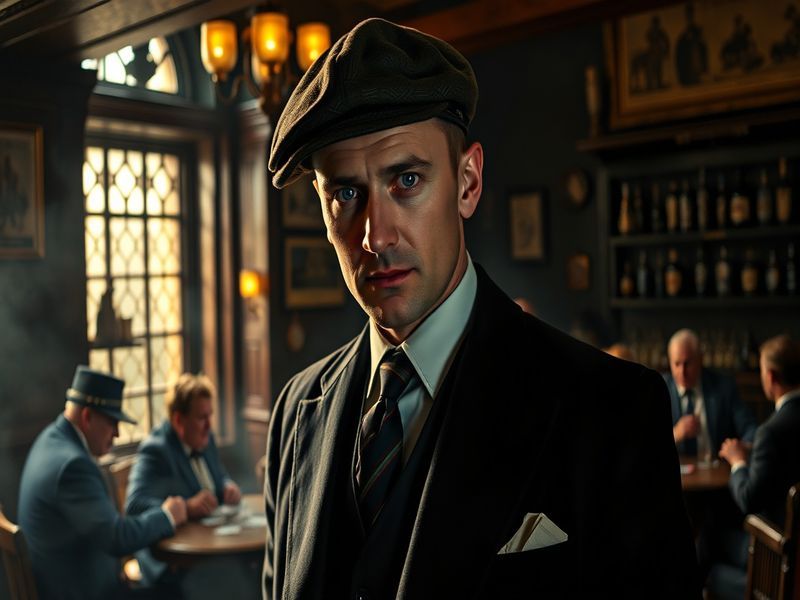
The post-World War I Birmingham setting of Peaky Blinders provides a gritty backdrop for Shelby’s ascent. Orphaned during the war and hardened by poverty, he inherits control of the Shelby crime family after his father’s death. Unlike traditional mob bosses, Shelby is a self-made strategist who leverages both brute force and cerebral tactics to expand his empire. His signature flat cap and piercing gaze became symbols of working-class resilience, embodying the shift from back-alley deals to corporate dominance.
Shelby’s leadership style was unconventional. He didn’t rely solely on fear or loyalty; instead, he fostered a cult-like following among his gang members. His younger brother John Shelby once remarked, “Tommy don’t need soldiers—he’s got ideas.” This philosophy set him apart from other gangsters of the era, blending old-world brutality with modern ambition.
A Mind Shaped by War
The horrors of World War I left Shelby with severe PTSD, a fact the show explored through hallucinations of his fallen comrades. These visions weren’t just dramatic flourishes; they humanized him, revealing the cost of his ruthlessness. His battlefield experiences taught him two key lessons: how to manipulate people and when to show mercy. This duality defined his actions, from ordering executions to sparing enemies who proved useful.
Shelby’s war trauma also fueled his paranoia, making him obsessively protective of his family. His relationship with his wife, Polly Gray, and children became the moral compass he often lacked in business dealings. Yet even this devotion had limits—Shelby’s ultimate loyalty was to his vision, not sentimentality.
The Shelby Empire: From Crime to Industry
By the show’s later seasons, Shelby’s ambitions transcended illegal enterprises. He pivoted toward legitimate industries, including real estate and automobiles, while maintaining ties to organized crime. This evolution reflected a broader trend in post-war Britain, where gangsters sought respectability through business fronts. Shelby’s ability to navigate both worlds demonstrated his adaptability, though it also blurred ethical lines.
His most ambitious project—the Shelby Company Limited—symbolized this transition. The company wasn’t just a front; it was a real business empire that produced cars and firearms. Shelby’s deal with the Italian mafia to fund this venture showcased his willingness to collaborate with former enemies, proving that pragmatism often outweighed ideology.
The Cost of Power
Power came at a price for Shelby. His mental health deteriorated as his empire grew, culminating in a breakdown where he confessed to hallucinating his dead brother Arthur. This moment underscored the loneliness of leadership—Shelby could trust no one, not even his closest allies. His final act in the series—leaving Birmingham for a life of exile—was less a defeat than a necessary surrender to the psychological toll of his choices.
Even in victory, Shelby wasn’t a traditional hero. He won battles but lost relationships, including those with his siblings. His departure wasn’t just a narrative twist; it was a meditation on the isolation of absolute control.
Legacy: Why Tommy Shelby Endures
Shelby’s appeal lies in his contradictions. He’s a villain who commands sympathy, a tyrant who inspires devotion, and a visionary whose methods alienate him from others. His fashion—tailored suits, polished shoes, and a perpetually tilted cap—became iconic, reflecting his blend of old-world grit and new-world ambition. The show’s creators used Shelby to critique class struggle, war’s psychological scars, and the seductive allure of power.
For fans, Shelby represented an aspirational figure—someone who overcame adversity through sheer will. Yet his story also served as a warning about the consequences of unchecked ambition. This duality is why his character remains discussed, dissected, and debated years after Peaky Blinders ended.
Cultural Impact and Spin-Offs
The show’s success spawned merchandise, a prequel novel, and even a rumored spin-off series. Shelby’s influence extended beyond television, inspiring fashion trends and academic analyses of antiheroes in modern storytelling. His character became a template for other morally ambiguous protagonists, proving that audiences crave complexity over clear-cut morality.
Even in death (or so it seemed), Shelby’s legend grew. Fan theories about his fate proliferated online, with some speculating he’d return in future projects. This enduring fascination speaks to the character’s depth—he was more than a gangster; he was a mirror reflecting society’s contradictions.
Final Thoughts: The Shelby Paradox
Thomas Shelby’s story is ultimately one of survival. He adapted to survive war, poverty, and betrayal, but his greatest challenge was surviving himself. His legacy isn’t just in the wealth he amassed or the enemies he defeated; it’s in the questions he left unanswered. Was he a hero? A villain? A product of his environment? The beauty of Shelby’s character is that he defies easy categorization, much like the world he inhabited.
For those looking to explore more about the gritty realism of Peaky Blinders, the Entertainment section on Dave’s Locker offers deeper dives into its themes and influences. The show’s blend of historical drama and modern storytelling continues to captivate, proving that some antiheroes never truly fade away.